K
Khách

Hãy nhập câu hỏi của bạn vào đây, nếu là tài khoản VIP, bạn sẽ được ưu tiên trả lời.

20 tháng 5
1. Used to (Đã từng)
  • Ý nghĩa: Chỉ một thói quen, hành động hoặc trạng thái thường xuyên xảy ra trong quá khứ nhưng bây giờ không còn nữa.
  • Cấu trúc:
    • Khẳng định: S + used to + V (nguyên thể)
    • Phủ định: S + did not + use to + V (nguyên thể)
    • Nghi vấn: Did + S + use to + V (nguyên thể)?
  • Ví dụ: I used to smoke, but I stopped columns ago. (Tôi từng hút thuốc, nhưng đã bỏ vài năm trước).
2. Be used to (Đã quen với)
  • Ý nghĩa: Chỉ một việc bạn đã làm nhiều lần, có kinh nghiệm và không còn cảm thấy lạ lẫm, khó khăn nữa.
  • Cấu trúc: S + be (am/is/are/was/were) + used to + V-ing / Danh từ
  • Ví dụ: She is used to driving on the left. (Cô ấy đã quen với việc lái xe bên cánh trái).
20 tháng 5
3. Cấu trúc mở rộng: Get used to (Bắt đầu quen với)
  • Ý nghĩa: Chỉ quá trình đang dần thích nghi, chuyển từ chưa quen sang quen với một việc gì đó.
  • Cấu trúc: S + get + used to + V-ing / Danh từ
  • Ví dụ: I am getting used to the cold weather here. (Tôi đang dần quen với thời tiết lạnh ở đây).


8 tháng 7 2021

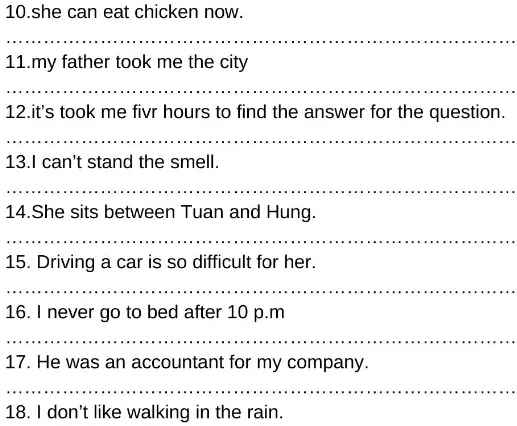
10 She is used to eating chicken now

11 My father used to take me to the city

12 It used to take me 5 hours to find the answer for the question

13 I don't get used to the smell

14 She is used to sitting between Tuan and Hung

15 She isn't used to driving a car

16 I don't get used to going to bed after 10p.m

17 He used to be an accountant....

18 I am not used to walking in the rain

I. The usages of "used to" (Cách sử dụng cụm "used to")"Used to" được dùng để miêu tả những thói quen hoặc trạng thái đã xảy ra và kết thúc trong quá khứ.Ví dụ:Farmers used to transport rice home on buffalo-driven carts. Now they use trucks. (Trước kia, nông dân thường chuyển lúa về nhà trên những chiếc xe trâu kéo. Bây giờ họ dùng xe tải.)People used to listen to the news programme through a loudspeaker. (Trước kia...
Đọc tiếp

I. The usages of "used to" (Cách sử dụng cụm "used to")

"Used to" được dùng để miêu tả những thói quen hoặc trạng thái đã xảy ra và kết thúc trong quá khứ.

Ví dụ:

Farmers used to transport rice home on buffalo-driven carts. Now they use trucks. 
(Trước kia, nông dân thường chuyển lúa về nhà trên những chiếc xe trâu kéo. Bây giờ họ dùng xe tải.)

People used to listen to the news programme through a loudspeaker. 
(Trước kia mọi người thường nghe chương trình thời sự qua loa phát thanh.)

Như vậy ta thấy “used to” còn được sử dụng với hàm ý tương phản giữa quá khứ và hiện tại.

II. The structures of sentences using "used to" (Cấu trúc câu chứa "used to")

1. Affirmative form (Khẳng định)

- Cấu trúc: 

S + used to + V …

- Ví dụ:
My mother used to be a teacher. 
(Mẹ tôi đã từng là giáo viên.)
He used to spend all his money on smoking. 
(Trước kia, anh ấy thường tiêu hết cả tiền vào việc hút thuốc.)

2. Negative form (Phủ định)

- Cấu trúc: 

S + did not/ didn’t + use to + V…

- Ví dụ:
Children didn’t use to play computer games. 
(Ngày trước trẻ em không thường chơi trò chơi trên máy tính.)
My father didn’t use to go to school by bus. 
(Ngày trước bố tôi không thường đi học bằng xe buýt.)

3. Interrogative form (Nghi vấn)

- Cấu trúc: 

Did + S + use to + V….?
Yes, S + did/ No, S + didn’t

- Ví dụ:
Son: Did you use to watch TV for entertainment?
Dad: No, I didn’t. We didn’t have a TV at that time. 
(Con trai: Ngày trước bố có thường xem ti vi để giải trí không ạ?)
(Bố: Không đâu. Ngày đó nhà mình không có ti vi con ạ.)
Did he use to go to the concert when he was young? 
(Anh ấy có thường đi xem hòa nhạc khi anh ấy còn trẻ không?)

Chúng ta cùng theo dõi bảng tổng hợp lại các cấu trúc câu sử dụng "used to".

Affirmative

S + used to + V

Negative

S + didn’t + use to + V

Interrogative

Did + S + use to + V?

E1: Complete the sentences using "used to", "didn't use to"

Hoàn thành câu sử dụng "used to", "didn't use to"

Use “used to” or “didn't use to” with the right form of the verbs in brackets to complete the sentences.
Sử dụng “used to” hoặc “didn't use to” với dạng đúng của động từ trong ngoặc để hoàn thành câu.

1. Mary  eating chocolate but now she hates it. (love)

2. My father  to work when he lived in Japan. (not/drive)

3. Her grandma  able to speak Russian, but she has forgotten it all. (be)

4. We  coffee after breakfast. (not/drink)

5. A: Did she use to read comic books?
B: No, she  detective novels when she was a child. (read)

E2:Choose the correct options

Chọn phương án đúng

Choose the correct options.
Chọn phương án đúng.

1. They built a hospital here. There _____________ a playground here.

A. is

B. used to

C. used to be

2. My grandparents _____________ light their house with oil lamps.

A. used to

B. use to

C. used to be

3. A: I wonder how the farmers _____________ transport their crops home in the past.
B: They _____________ buffalo-drawn carts.

A. used to/ used

B. use to/ used to

C.use/ used

4. I hated ice-cream; I _____________ eat ice-cream.

A. used to

B. didn’t use to

C. use to

5. This was my favorite bicycle. I _____________ ride everywhere on it.

A. didn’t use to

B. used to

C. use to

6. Entertainment for the children in my village _____________ as simple as playing hide-and-seek or going swimming in the river.

A. used to be

B. used to

C. didn't use to

E3:Change the sentences according to the prompts

Chuyển đổi câu theo gợi ý

Change the sentences according to the prompts in brackets.
Chuyển những câu sau theo gợi ý trong ngoặc.

1. Her birthday party used to be celebrated in the restaurant. (interrogative)


2. I used to write letters to my friends. (negative)


3. Did she use to write in her diary before going to bed? (affirmative)


4. When she was a little girl, she used to eat a lot of sweets. (interrogative)


5. When I lived in the countryside, I used to play football every weekend. (negative)


E4: Rewrite sentences using "used to"

Viết lại câu dùng "used to"

Rewrite the following sentences using “used to”.
Viết lại những câu sau sử dụng “used to”.


1. There was a secondary school here in the 1900s.


2. We didn't get up early to catch the bus several years ago.


3. He didn't know how to study English online, but now he can study well.


4. We often played hide and seek when we were children.


Rewrite the sentences without changing its meaning

1. He doesn’t raise dog anymore.

-> He used to ______________________________________________

2. She doesn’t get up late anymore.

-> She used to ______________________________________________

3. They don’t go fishing anymore.

-> They used to ______________________________________________

4. I don’t stay up late anymore.

-> I _______________________________________________________

5. Hoa doesn’t do morning exercises anymore.

-> Hoa ____________________________________________________

6. She used to get badmarks.

-> She doesn’t ______________________________________________

7. They used to walk to school.

-> They don’t ______________________________________________

8. I need to travel to work by bike.

-> I don’t ______________________________________________

9. Nam used to live in a small house.

-> Nam doesn’t ______________________________________________

10. Ba used to work in a small factory.

-> Ba doesn’t ______________________________________________

11. She often smoked last year.

-> She doesn’t ______________________________________________

12. They often got up late last year.

-> They used to ______________________________________________

13. I often got bad marks last year.

-> I used to ______________________________________________

14. Mai often phoned me when she was in Ha Noi.

-> Mai used ______________________________________________

15. She often stayed up late last year.

-> She used ______________________________________________

16. Minh used to play games last month.

-> Minh often ______________________________________________

17. Hung used to go fishing last year.

-> Hung often ______________________________________________

18. She used to go to bad early when she lived in Rome.

-> She often ______________________________________________
19. Peter used to play soccer when he was a student.

-> Peter often ______________________________________________

20. She used to cry and make water freely at night.

-> She doesn’t ______________________________________________

II. Wish sentences

I. Meaning (Ý nghĩa)

- Câu ước ở hiện tại dùng để diễn tả những mong ước về một sự việc không có thật ở hiện tại, hay giả định một điều ngược lại so với thực tế, thường là thể hiện sự nuối tiếc về một tình huống hiện tại mà chúng ta muốn nó khác đi.

- Ví dụ 1:

• Wish: I wish I had your pair of wings. 
Câu ước: Tôi ước tôi có đôi cánh của bạn.

• Reality: I don't have wings. 
Thực tế: Tôi không có cánh.

- Ví dụ 2:

• Wish: Sometimes I wish I were an angel. 
Câu ước: Đôi khi tôi ước mình là một thiên thần.

• Reality: I'm not an angel. 
Thực tế: Tôi không phải là một thiên thần.

- Ví dụ 3:

• Wish: Sometimes I wish I were you. 
Câu ước: Đôi khi tôi ước mình là bạn.

• Reality: I can't be you. 
Thực tế: Tôi không thể là bạn.

II. Sentence structure (Cấu trúc câu)

1. Cấu trúc:

S1 + wish + (that) + S2 + V2 (past simple/ past continuous)

- Trong cấu trúc trên, ta cần lưu ý:

• Động từ "wish" cần được chia theo thì và hòa hợp với chủ ngữ 1(S1).

• Chủ ngữ 1 (S1) và chủ ngữ 2 (S2) có thể chỉ cùng một đối tượng hoặc hai đối tượng khác nhau.

• S2 (tất cả các ngôi) + be (were).

• S2 (I/ he/ she/ it hoặc các chủ ngữ ngôi số ít khác) + be ( were/ was)

2. Ví dụ:

- Ví dụ 1:

• Wish: I wish I knew how to paint on ceramic pots. 
Câu ước: Tôi ước mình biết vẽ trang trí bình gốm.

• Reality: I don't know how to paint on ceramic pots. 
Thực tế: Tôi không biết vẽ trang trí bình gốm.

- Ví dụ 2:

• Wish:
She wishes it were not raining. 
She wishes it was not raining. 
Câu ước: Cô ấy ước trời không đang mưa.

• Reality: It is raining. 
Thực tế: Trời đang mưa.

III. Some notes (Một số lưu ý)

1. Lưu ý 1:

- Chúng ta dùng thì quá khứ đơn với mệnh đề sau "wish" khi muốn thể hiện ước muốn cho một sự việc ở hiện tại hoặc tương lai.

Ví dụ:

I wish he didn't play computer games so often. 
Tôi ước anh ấy không chơi trò chơi điện tử quá thường xuyên.

Nhưng trên thực tế, anh ấy chơi trò chơi điện tử rất nhiều (But in fact, he plays computer games a lot).

- Ta dùng thì quá khứ tiếp diễn để thể hiện mong ước một sự việc nào đó đang diễn ra ngay lúc này, tại thời điểm nói.

Ví dụ:

I wish he weren't playing computer games now. 
Tôi ước anh ấy đang không chơi trò chơi điện tử bây giờ.

Nhưng thực tế là hiện giờ anh ấy đang chơi trò chơi điện tử điện tử. (But in fact, he is playing computer games now.)

2. Lưu ý 2:

Chúng ta có thể dùng "could + động từ nguyên thể" để diễn tả mong muốn, khao khát nằm ngoài khả năng, không thể đạt được ở hiện tại.

- Cấu trúc:

S1 + wish + (that) + S2 + could + V2 (bare infinitive)

- Ví dụ:

• Wish: I wish I could swim. 
Câu ước: Tôi ước mình biết bơi.

• Reality: I can't swim. 
Thực tế: Tôi không biết bơi.

2
28 tháng 7 2023

post them in seperate post because you dont want people to get brain damages after reading a post that is 2 papers long

28 tháng 7 2023

Bạn ơi, không cần đăng cấu trúc đâu, chỉ cần đăng câu hỏi thôi.

Sử dụng '' used to '', '' be used to '' hoặc '' get used to ''và các động từ trong ngoặc để hoàn thành các câu:

1, European dirves find it difficult to be used to driving on the left when they visit Britain.

2, See that building there? I used to go  to school there , but now it's a factory.

12 tháng 10 2018

1, to be used to driving

2, used to.

học tốt

10 tháng 4 2016

Cho mình sửa lại nha:

1. Mr.Brown was used to gaving up smoking three years ago

2. My parents used to live in the USA when they were young

3. Jim used to be my best friend, but we are not friend anymore

TICK GIÚP NHA

10 tháng 4 2016

1. Mr. Brown used to smoke three years ago

2. My parents used to live in the USA when they were young

3. Jim was used to be my best friend, but we are not friend anymore

TICK GIÚP NHA

2 tháng 12 2021

1. not used to be

2 tháng 12 2021

didn't use to ấy ạ

7 tháng 5 2022

 Don' worry. You will get used to wearing contact lenses

7 tháng 5 2022

Don't worry. You will soon get used to (wear) contact lenses.

20 tháng 3 2020

He didn't used to be a doctor

sai:used \(\rightarrow\)use

Vì:did là trợ đông từ thì sau trợ đông từ là động từ nguyên thể là use

chúc bn học tốt!~

20 tháng 3 2020

he didn't used to be a doctor , he used to be a manager of a computer company

=> use

17 tháng 12 2021

1. When I was a child, I used to dream of being an astronaut.             Khi còn nhỏ, tôi từng mơ tới việc trở thành phi hành gia.

2. I'm terribly nervous. I'm not used to speaking (speak) to a large audience.                    Mình lo lắng kinh khủng. Mình không quen với việc nói trước đám đông.

3. It took us ages to get used to living (live) in an apartment house.                          Đã mất hàng năm trời để chúng tôi quen với việc sống ở một căn hộ.

4. Lots of trains used to stop (stop) here, but not many do now.                                      Nhiều tàu lửa từng dừng đỗ ở đây, nhưng giờ thì không nhiều nữa.

5. Didn't Nick use to work (work) on a building site?                                                Nick chưa từng làm việc ở một địa điểm xây dựng sao?

6. I'll have an orange juice, please. I'm not used drinking (drink) alcohol.                     Mình sẽ uống nước ép cam. Mình không quen uống rượu.

7. David doesn't seem to mind being in hospital. I suppose he's got used to being (be) there.                David dường như chẳng quan tâm tới việc nhập viện. Mình cá là bạn ấy đã quen ở đó rồi.

8. When Laura was at college, she used to have (have) a picture of Elvis Presley on her bedroom wall.                        Khi Laura còn ở đại học, cô ấy từng có một bức hình của Elvis Presley ở trên tường của bạn ấy.

9. There used to be (be) a cinema here but it was knocked down a few years ago.           từng có một rạp chiếu phim ở đây nhưng nó đã bị đóng một vài năm trước.


tất cả những động từ trong ngoặc đã được chia dạng đúng rồi; cô chưa hiểu em muốn hỏi gì lắm nhưng bài tập giúp em ôn tập về nội dung sau:


used to do sth: từng làm gì

be used to doing sth: quen với việc làm gì

get used to doing sth: dần quen với việc làm gì


tùy đằng trước là be / get hay không mà ta chia động từ theo sau ở dạng nguyên thể hoặc V-ing em nhé!

Choose the correct options to complete the sentences.1.Susan is / is used to being / used to be a nurse. Now she is / is used to being / used to be a doctor.2.Helen is used to playing / plays / used to play tennis. Now she is used to playing / plays / used to play squash.3.Robert is used to living / lives / used to live in Manchester. Now he is used to living / lives / used to live in London.4.Dave is used to travelling / travels / used to travel by train. Now he is used to travelling / travels...
Đọc tiếp

Choose the correct options to complete the sentences.

1.Susan is / is used to being / used to be a nurse. Now she is / is used to being / used to be a doctor.

2.Helen is used to playing / plays / used to play tennis. Now she is used to playing / plays / used to play squash.

3.Robert is used to living / lives / used to live in Manchester. Now he is used to living / lives / used to live in London.

4.Dave is used to travelling / travels / used to travel by train. Now he is used to travelling / travels / used to travel by car.

5.Jackie is used to studying / studies / used to study Italian. Now she is used to studying / studies / used to study French.

6.Steve is used to liking / likes / used to like football. Now he is used to liking / likes / used to like cricket.

7. Rachel has just moved to Alaska. She is getting used to / is used to / used to the cold weather.

8. When I was a child I got used to / used to /was used to play the piano.

9. I used to / was getting used to / was used to going to bed late when I lived in Madrid.

10. Spanish is really difficult. I never used to / used to / will never get used to speaking Spanish.

11. I got used to /used to / was used to like Amy Winehouse. Now I like Adele.

12. I don't mind getting up early. I am used / used to / was used to it now.

Complete the sentences with the verbs in brackets.

1. Pablo is used to ______________ (live) in England.

2. It's difficult to get used to _______________ (live) in a foreign country.
3. I am used to ______________ (walk) several kilometres a day.

4. I am getting used to ______________ (walk) to work.

5. He used to ______________ (live) in Paris.

6. She's used to _____________ (go) to bed late at night.

7. I'll never get used to ______________ (use) this computer.

8. She's used to _______________ (eat) very well.

9. I was used to _______________ (study) every night when I was young.

10. When I was little, I used to ________________ (eat) lots of sweets.

11. Did you use to _______________ (believe) in ghosts?

12. Are you getting used to _________________ (do) this?
Giúp mình vơi, mình cám ơn trước nhé


2
17 tháng 7 2021

Choose the correct options to complete the sentences.

1.Susan is / is used to being / used to be a nurse. Now she is / is used to being / used to be a doctor.

2.Helen is used to playing / plays / used to play tennis. Now she is used to playing / plays / used to play squash.

3.Robert is used to living / lives / used to live in Manchester. Now he is used to living / lives / used to live in London.

4.Dave is used to travelling / travels / used to travel by train. Now he is used to travelling / travels / used to travel by car.

5.Jackie is used to studying / studies / used to study Italian. Now she is used to studying / studies / used to study French.

6.Steve is used to liking / likes / used to like football. Now he is used to liking / likes / used to like cricket.

7. Rachel has just moved to Alaska. She is getting used to / is used to / used to the cold weather.

8. When I was a child I got used to / used to /was used to play the piano.

9. I used to / was getting used to / was used to going to bed late when I lived in Madrid.

10. Spanish is really difficult. I never used to / used to / will never get used to speaking Spanish.

11. I got used to /used to / was used to like Amy Winehouse. Now I like Adele.

12. I don't mind getting up early. I am used / used to / was used to it now.

Complete the sentences with the verbs in brackets.

1. Pablo is used to _______live_______ (live) in England.

2. It's difficult to get used to _______living________ (live) in a foreign country.
3. I am used to _______walking_______ (walk) several kilometres a day.

4. I am getting used to ________walking______ (walk) to work.

5. He used to ________live______ (live) in Paris.

6. She's used to _______going______ (go) to bed late at night.

7. I'll never get used to _______using_______ (use) this computer.

8. She's used to _______eating________ (eat) very well.

9. I was used to ________studying_______ (study) every night when I was young.

10. When I was little, I used to ________eat________ (eat) lots of sweets.

11. Did you use to ________believe_______ (believe) in ghosts?


12. Are you getting used to _________doing________ (do) this?


17 tháng 7 2021

Choose the correct options to complete the sentences.

1.Susan is / is used to being / used to be a nurse. Now she is / is used to being / used to be a doctor.

2.Helen is used to playing / plays / used to play tennis. Now she is used to playing / plays / used to play squash.

3.Robert is used to living / lives / used to live in Manchester. Now he is used to living / lives / used to live in London.

4.Dave is used to travelling / travels / used to travel by train. Now he is used to travelling / travels / used to travel by car.

5.Jackie is used to studying / studies / used to study Italian. Now she is used to studying / studies / used to study French.

6.Steve is used to liking / likes / used to like football. Now he is used to liking / likes / used to like cricket.

7. Rachel has just moved to Alaska. She is getting used to / is used to / used to the cold weather.

8. When I was a child I got used to / used to /was used to play the piano.

9. I used to / was getting used to / was used to going to bed late when I lived in Madrid.

10. Spanish is really difficult. I never used to / used to / will never get used to speaking Spanish.

11. I got used to /used to / was used to like Amy Winehouse. Now I like Adele.

12. I don't mind getting up early. I am used / used to / was used to it now.

Complete the sentences with the verbs in brackets.

1. Pablo is used to ______living________ (live) in England.

2. It's difficult to get used to ______living_________ (live) in a foreign country.
3. I am used to _______walking_______ (walk) several kilometres a day.

4. I am getting used to _______walking_______ (walk) to work.

5. He used to _______live_______ (live) in Paris.

6. She's used to _____going________ (go) to bed late at night.

7. I'll never get used to ______using________ (use) this computer.

8. She's used to _________eating______ (eat) very well.

9. I was used to _______studying________ (study) every night when I was young.

10. When I was little, I used to _________eat_______ (eat) lots of sweets.

11. Did you use to ______believe_________ (believe) in ghosts?

12. Are you getting used to _______doing__________ (do) this?