K
Khách

Hãy nhập câu hỏi của bạn vào đây, nếu là tài khoản VIP, bạn sẽ được ưu tiên trả lời.

26 tháng 12 2025

ooooo

27 tháng 12 2025

1 She gets up at eight fifteen on Sundays

2 She wants to be sailor

3 He plays the piano

4 He goes to work by underground

5 The zebra has a black-and-white striped body

16 tháng 10 2023

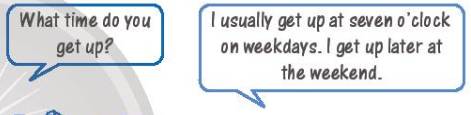
A: What time do you go to bed in the evening?

(Bạn đi ngủ lúc mấy giờ vào buổi tối?)

B: I often go to bed at twenty-two o’clock. Sometimes, I go to bed at eleven p.m to listen to music or read books.  How do you relax?

(Tôi thường đi ngủ lúc mười giờ tối. Thỉnh thoảng, tôi đi ngủ lúc mười một giờ để nghe nhạc hoặc đọc sách. Còn bạn thư giãn bằng cách nào?)

A: I normally go shopping on Saturday mornings with my Mom. Do you usually go shopping at the weekend?

(Tôi thường hay đi mua sắm vào các buổi sáng thứ Bảy với mẹ của tôi. Bạn có thường đi mua sắm vào cuối tuần không?)

B: No, only once a month. I’d like to cook at home and spend time tidying my room.

(Không, chỉ một lần một tháng thôi. Tôi thích nấu ăn ở nhà và dành thời gian dọn dẹp căn phòng của mình hơn.)

27 tháng 2 2018

1. What do you always do in the morning?

⇒ I always have breakfast

2. What do you often do in the morning?


⇒ I often do morning exercise.

3. What do you usually do in the afternoon?

⇒ I usually play chess with my friends.

4. What do you do in the evening?

⇒ I sometimes listen to music

Hướng dẫn dịch:

(Hỏi và trả lời các câu hỏi về thói quen hằng ngày của bạn.)

(Bạn làm gì vào buổi sáng/chiều / tối?)

(Mình luôn luôn / thường xuyên / thỉnh thoảng______)

1. Bạn luôn làm gì vào buổi sáng?

⇒ Mình luôn ăn sáng.

2. Bạn thường làm gì vào buổi sáng?

⇒ Mình thường tập thể dục buổi sáng.

3. Bạn hay làm gì vào buổi chiều?

⇒ Mình hay chơi cờ với bạn mình.

4. Bạn thi thoảng làm gì vào buổi tối?

⇒ Mình thi thoảng nghe nhạc.

16 tháng 7 2018

Hướng dẫn dịch:

(Hỏi và trả lời các câu hỏi về thói quen hằng ngày của bạn.)

(Bạn làm gì vào buổi sáng/chiều / tối?)

(Mình luôn luôn / thường xuyên / thỉnh thoảng______)

1. Bạn luôn làm gì vào buổi sáng?

⇒ Mình luôn ăn sáng.

2. Bạn thường làm gì vào buổi sáng?

⇒ Mình thường tập thể dục buổi sáng.

3. Bạn hay làm gì vào buổi chiều?

⇒ Mình hay chơi cờ với bạn mình.

4. Bạn thi thoảng làm gì vào buổi tối?

⇒ Mình thi thoảng nghe nhạc.

23 tháng 6 2018

eat strawberry

23 tháng 6 2018

My daily routines is to play .

WISH YOU GOOD STUDY !

VOCABULARY Daily routines(TỪ VỰNG: Các hoạt động hàng ngày)Exercise 8. Complete the sentences with the words.(Hoàn thành câu với các từ được cho trong khung.)brush             chat              get             go              have           help               relax              study            wash              watch1. I………… up at 6.15 every morning.2. I....
Đọc tiếp

VOCABULARY Daily routines

(TỪ VỰNG: Các hoạt động hàng ngày)

Exercise 8. Complete the sentences with the words.

(Hoàn thành câu với các từ được cho trong khung.)

brush             chat              get             go              have           help               relax              study            wash              watch

1. I………… up at 6.15 every morning.

2. I. …………breakfast at 7.00.

3. After breakfast, I always.…………my teeth and..…………. my face.

4. My sister and I.…………. to school by bus.

5. After school I..…………with my friends - we sometimes talk for hours!

6. I always.....…………. my parents with the housework.

7. In my bedroom, I...…………at my desk with all my school books.

8. Before bed, I usually..…………on the sofa and I sometimes.…………TV.

I can talk about my daily routines.

(Tôi có thể nói về các hoạt động hàng ngày.)

MY EVELUATION

(ĐÁNH GIÁ CỦA TÔI)


2
18 tháng 2 2023

1.get
2.have
3.brush;wash
4.go
5.chat
6.help
7.study
8.relax;watch

11 tháng 10 2023

1. I get up at 6.15 every morning.

(Tôi thức dậy lúc 6 giờ 15 mỗi buổi sáng.)

2. I have breakfast at 7.00.

(Tôi ăn sáng lúc 7.00.)

3. After breakfast, I always brush my teeth and wash my face.

(Sau khi ăn sáng, tôi luôn đánh răng và rửa mặt.)

4. My sister and I go to school by bus.

(Tôi và chị gái đi học bằng xe buýt.)

5. After school I chat with my friends - we sometimes talk for hours!

(Sau giờ học, tôi trò chuyện với bạn bè - đôi khi chúng tôi nói chuyện hàng giờ!)

6. I always help my parents with the housework.

(Tôi luôn giúp đỡ bố mẹ làm việc nhà.)

7. In my bedroom, I study at my desk with all my school books.

(Trong phòng ngủ của mình, tôi học ở bàn học với tất cả các sách vở.)

8. Before bed, I usually relax on the sofa and I sometimes watch TV.

(Trước khi đi ngủ, tôi thường thư giãn trên ghế sô-pha và đôi khi tôi xem TV.)

28 tháng 8 2019

undefinedundefined

Think about your daily life. Do you follow the same read to work every day? Do you sit in the same place in class? When you get dressed, do you always put the same leg or arm in first? You probably do, because we all have routines in our lives. Routines save time and energy because you do them without thinking, that's why they are so important in the morning when your brain isn't active. Here's Jo talking about her morning routine 'Oh yes. I always do exactly the same things. I...
Đọc tiếp

Think about your daily life. Do you follow the same read to work every day? Do you sit in the same place in class? When you get dressed, do you always put the same leg or arm in first? You probably do, because we all have routines in our lives.

Routines save time and energy because you do them without thinking, that's why they are so important in the morning when your brain isn't active. Here's Jo talking about her morning routine

'Oh yes. I always do exactly the same things. I wake up at seven o'clock every morning, but I don't get quarter past seven. I switch on the radio and listen to the news. Then I go to the too and I brush my-teeth. I have a shower and dry my hair. Then I choose my clothes and I get dressed. I don'y eat anything for breakfast. I just have a cup of coffee. Then I go to work. Yes, it's always the same.'

Routines are very useful. but they also make you uncreative. So sometimes it's a good idea to break your routines. Get out of bed on the opposite side. Listen to a different route to work. Eat something different for brealfast. Change your routine. You never know, it could change your life.

1. This passage is mainly concerned with...............................

a.our usual ways of doing things

b. our daily activities

c. Jo's timetable

d. changes in our lives

2. according to the passage, routines are useful because.........................

a. we can do them in the morning

b. they make a habit of never thinking

c. they save time and energy

d. we all have them in our lives

3. the word 'loo' in line 9 can best be replaced with.....................

a. balcony

b. bedroom

c. sink

d. toilet

4.what is the main disadvantage of routines?

a. Routines make us unable to create things or to have new ideas

b. Routines may change our life

c. Routines make a habit of never thinking before doing

d. Routines make us do the same things day after day

5. which of the sentences is true?

a. Routines make our brain creative

b.people who have routines are unable to think

c. we shouldn'r break our routines

d. our lives could be changed if we change our routines

0
23 tháng 7 2018

(Phỏng vấn hai trong số các bạn cùng lớp về hoạt động hằng ngày của các bạn ấy.)

- What do you do in the morning?

- What do you do after school?

- What games do you like to play?

- How often do you go to the library?

- How often do you read book in the evening?

- How often do you go to the cinema?

- What do do in the evening?

- What do you like to eat in the breakfast?

- How do you often go to school?

-…