

The boys told that they had to do that book then
Cấu trúc gián tiếp, có 3 quy tắc, đổi ngôi, lùi thì và thay đổi các từ chỉ thời gian
chứ ko có cấu trúc cụ thể nha bạn
còn nghĩa thì: Những cậu bé nói rằng họ cần làm quyển sách này ngay bây giờ
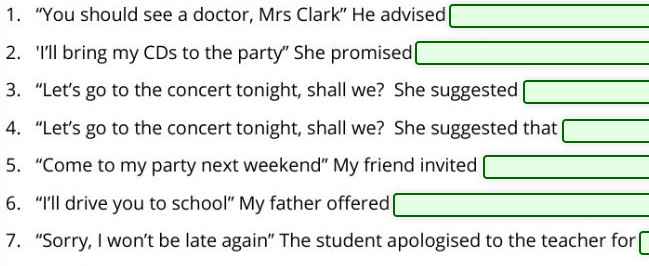
1."You should do exercises more regularly to keep fit," P.E teacher said to his students. (advise)
=> P.E teacher advised his students to do exercises more regularly to keep fit.
2.mom said me to go to bed early.
Không có từ để hỏi:
- Mrs Yen asked Hoa if she was a student
- She asked her friend if she liked English
- Mrs Yen asked the students whether they had done their homework the day before
- He asked his friend whether he would go to Ha Noi the next day
- My dad asked my brother if he was playing video games then
Có từ để hỏi :
- My friend asked me where I had gone the day before
- My mom asked me what I was doing then
- She asked her friends where they were from
- My mom asked me what I eaten the day before
- She asked her friend where she bought that car
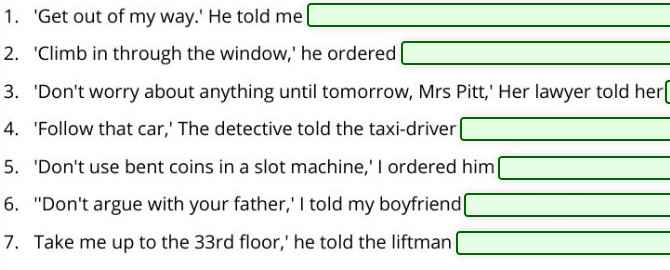
Mệnh lệnh :
- My mom told me to do my homework
- My dad told me to give him a newspaper
- My mom told me not to leave the house
- My mom told me not to go out with my friends tonight
- My teacher told us to do our homework 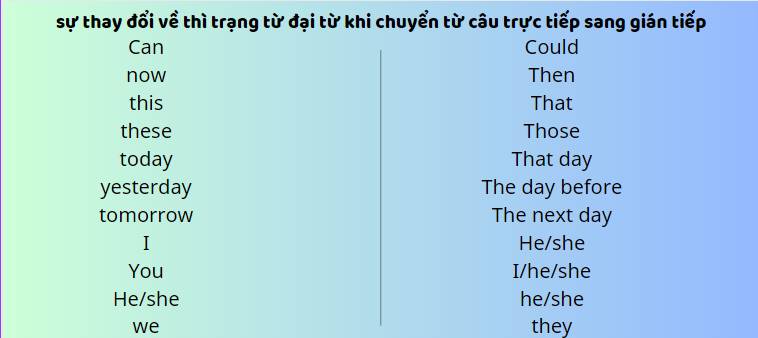
Exercise 3: Viết lại câu bằng cách chuyển từ câu trực tiếp sang câu gián tiếp
1. She told him to give her another glass of wine.
2. She asked me to bring her a book.
3. The mother told him to open the window.
4. The captain asked them to wait there still he/she came back.
5. She invited us to come and enjoy tea with her family.
6. He suggested coming to visit their teacher that day.
7. She advised me to do morning exercises.
8. Peter apologized for having broken glass.
9. He suggested putting my luggage under the seat.
10. She admitted having broken my old vase.
11. The bank robber threatened to shoot if the clerk moved.
12. She reminded him to phone the police.
13. The coach warned the boys not to swim out too far.
14. Linh said if her/his father repaired the bike then, she/he would ride the bike to school.
15. Binh said he/she would have passed the exam if he/she had tried his/her best.
She said to him: "Give me another glass of wine".
®She told him to give her another glass of wine
She said to me: "Bring me a book".
®She asked me to bring her a book
The mother said to him: "Open the window please!".
®The mother told him to open the door
The captain said to them: "Wait here until I come back".
®The captain asked them to wait here until she came back
"Do come and enjoy tea with my family" she said.
®She invited us to come and enjoy tea with her family
"Why don't we come to visit our teacher today?" he said.
®He suggested coming to visiting their teacher to day
"My advice to you is to do morning exercises" she said.
®She advised me to do morning exercises
"I'm sorry I broke the glass", said Peter.
®Peter apologized to me for having broken my glass
"Why don't you put your luggage under the seat?" he asked,
®He suggested me that I should put my luggage under the seat
"It's true that I broke your old vase", she said in tears.
®She admitted to breaking my old vase.
"Don't move or I'll shoot", said the bank robber to the clerk.
®The bank robber threatened to shot the clerk
"Don't forget to phone the police", she told him.
®She reminded him to phone the police
"Don't swim out too far, boys", said the coach.
®The coach warned the boys not to swim out too far
Linh said, "If my father repairs the bike now, I will ride the bike to school."
®Linh said if her father repaired the bike then, she would ride the bike to school
"I would have passed the exam if I had tried my best” Binh said.
®Binh said He would have passed the exam if he had tried his best
Chuyển câu trực tiếp thành gián tiếp
Judy hasn’t asked me about my holiday,’ said Mike.
>> Mike said Judy hadn't asked him about his holiday.
Chuyển câu trực tiếp thành gián tiếp
Judy hasn’t asked me about my holiday,’ said Mike.
Mike said that Judy hadn't asked her about her holiday
không chắc
- Nhiều lắm
hỏi cụ thể hơn đc koch]s nó nhiều trường hợp lắm
nhiều thật đó bạn, k lẽ là tất ak?
CÂU TRỰC TIẾP - GIÁN TIẾP
LỜI NÓI TRỰC VÀ GIÁN TIẾP
(Dicrect and Indirect Speeches)
1. Giới thiệu: Trong lời nói trực tiếp, chúng ta ghi lại chính xác những từ, ngữ của người nói dùng. Lời nói trực tiếp thường được thể hiện bởi: các dấu ngoặc kép " " - tức là lời nói đó được đặt trong dấu ngoặc.
Ví dụ: 1- He said, “I learn English”.
2- "I love you," she said.
2. Những thay đổi trong lời nói Trực và Gián tiếp:
2.1 Đổi thì của câu:
Thì của các động từ trong lời nói gián tiếp thay đổi theo một nguyên tắc chung là lùi về quá khứ (các thì xuống cấp):
Thì trong Lời nói trực tiếp
Thì trong Lời nói gián tiếp
- Hiện tại đơn
- Hiện tại tiếp diễn
- Hiện tại hoàn thành
- Hiện tại hoàn thành TD
- Quá khứ đơn
- Quá khứ hoàn thành
- Tương lai đơn
- Tương lai TD
- Is/am/are going to do
- Can/may/must do
- Quá khứ đơn
- Quá khứ tiếp diễn
- Quá khứ hoàn thành
- Quá khứ hoàn thành TD
- Quá khứ hoàn thành
- Quá khứ hoàn thành (không đổi)
- Tương lai trong quá khứ
- Tương lai TD trong quá khứ
- Was/were going to do
- Could/might/had to do
Hãy xem những ví dụ sau đây:
He does
He is doing
He has done
He has been doing
He did
He was doing
He had done
He will do
He will be doing
He will have done
He may do
He may be doing
He can do
He can have done
He must do/have to do
He did
He was doing
He has done
He had been doing
He had done
He had been doing
He had done
He would do
He would be doing
He would have done
He might do
He might be doing
He could do
He could have done
He had to do
2.2 Các thay đổi khác:
a. Thay đổi Đại từ
Các đại từ nhân xưng và đại sở hữu khi chuyển từ lời nóitr ực tiếp sang lời nói gián tiếp thay đổi như bảng sau:
ĐẠI TỪ
CHỨC NĂNG
TRỰC TIẾP
GIÁN TIẾP
Đại từ
nhân xưng
Chủ ngữ
I
he, she
we
they
you
they
Tân ngữ
me
him, her
us
them
you
them
Đại từ
sở hữu
Phẩm định
my
his, her
our
their
your
their
Định danh
mine
his, her
ours
theirs
yours
theirs
Ngoài quy tắc chung về các thay đổi ở đại từ được nêu trên đây, người học cần chú ý đến các thay đổi khác liên quan đến vị trí tương đối của người đóng vai trò thuật lại trong các ví dụ sau đây:
Ví dụ: Jane, "Tom, you should listen to me."
+ Jane tự thuật lại lời của mình:
I told Tom that he should listen to me.
+ Người khác thuật lại lời nói của Jane
Jane told Tom that he should listen to her
+ Người khác thuật lại cho Tom nghe:
Jane told you that he should listen to her.
+ Tom thuật lại lời nói của Jane
Jane told me that I should listen to her.
b. Các thay đổi ở trạng từ không gian và thời gian:
Trực tiếp
Gián tiếp
This
That
These
Here
Now
Today
Ago
Tomorrow
The day after tomorrow
Yesterday
The day before yesterday
Next week
Last week
Last year
That
That
Those
There
Then
That day
Before
The next day / the following day
In two day’s time / two days after
The day before / the previous day
Two day before
The following week
The previous week / the week before
The previous year / the year before
Ví dụ:
Trực tiếp: "I saw the school-boy here in this room today."
Gián tiếp: She said that she had seen the school-boy there in that room that day.
Trực tiếp: "I will read these letters now."
Gián tiếp: She said that she would read those letters then.
Ngoài quy tắc chung trên dây, người học cần chớ rằng tình huống thật và thời gian khi hành động được thuật lại đóng vai trò rất quan trọng trong khi chuyển từ lời nói trực tiếp sang lời nói gián tiếp.
3. Câu hỏi trong lời nói gián tiếp: Câu hỏi trong lời nói gián tiếp được chia làm loại:
3.1. Câu hỏi bắt đầu với các trợ động từ: Ta thêm If/whether
Ví dụ:
Trực tiếp: "Does John understand music?" he asked.
Gián tiếp: He asked if/whether John understood music.
3.2. Câu hỏi bắt đầu who, whom, what, which, where, when, why, how: Các từ để hỏi trên sẽ được giữ nguyên trong câu gián tiếp:
Trực tiếp: "What is your name?" he asked.
Gián tiếp: He asked me what my name was.
3.3. Các dạng đặc biệt của câu hỏi trong lời nói gián tiếp
a. Shall/ would dùng để diễn t ả đề nghi, lời mời:
Ví dụ:
Trực tiếp: "Shall I bring you some tea?" he asked.
Gián tiếp: He offered to bring me some tea.
Trực tiếp: "Shall we meet at the theatre?" he asked.
Gián tiếp: He suggested meeting at the theatre.
Đúng(0)
bn chép trên mạng thì ko cần đâu bn bn ấy cũng có mạng tra được hết bn ấy bảo viết công thức mà bn
chép mạng