
Hãy nhập câu hỏi của bạn vào đây, nếu là tài khoản VIP, bạn sẽ được ưu tiên trả lời.

Tham khảo:
THE ADVANTAGES AND DISADVANTAGES OF SMART CITIES
Smart cities are built on new technologies to improve people's lives. The idea of living in one of them sounds very exciting. But is a life controlled by smart technologies good or bad for us?
Let’s start with the advantages. One of the biggest advantages of smart cities is the high level of convenience they offer. With smart technologies in place, people can access information and services quickly and easily. This makes daily life more efficient and saves people a lot of time. Additionally, smart cities are designed to be more sustainable, with green spaces and public transport options to reduce pollution.
What about the disadvantages? One of the main concerns people have about smart cities is the potential loss of privacy. With sensors and cameras constantly monitoring people's movements, there is a risk that sensitive information could be collected and shared. This can lead to a lack of trust and a feeling of being constantly watched. Furthermore, there are concerns about the potential for technology failures and the risks posed by hackers.
In conclusion, there are both advantages and disadvantages of living in a smart city. In my opinion, the benefits of smart technologies outweigh the drawbacks. However, it is important that measures are put in place to protect people's privacy and ensure the safety of their personal information. As long as these concerns are addressed, smart cities have the potential to revolutionize the way we live and work.
Living in a smart city brings many advantages to people’s daily lives. First of all, smart technologies make life easier by reducing household chores. For example, smart home systems can control lighting, temperature, and even appliances automatically, saving both time and energy. In addition, transportation is more convenient thanks to intelligent traffic systems, which help reduce traffic jams and pollution. People can also access services such as healthcare, education, and shopping more quickly through online platforms. Moreover, smart cities often use advanced security systems, making them safer places to live. Another benefit is that energy is used more efficiently, which helps protect the environment. Overall, living in a smart city improves the quality of life by making daily activities more convenient, efficient, and comfortable.
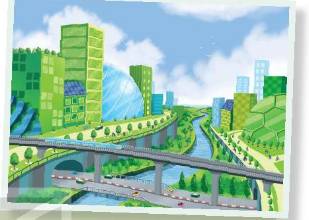
1.
Future cities are likely to be more technologically advanced and densely populated than they are today.
(Các thành phố trong tương lai có thể sẽ có công nghệ tiên tiến hơn và đông dân cư hơn so với hiện nay.)
They may also be more sustainable, with green spaces and renewable energy sources.
(Chúng cũng có thể bền vững hơn, với không gian xanh và các nguồn năng lượng có thể tái tạo.)
There may be a greater focus on public transportation and walkability, rather than car-centric design.
(Có thể có sự tập trung nhiều hơn vào giao thông công cộng và khả năng đi bộ hơn là thiết kế tập trung vào ô tô.)
2.
Yes, I think future cities will be smarter and more sustainable.
(Vâng, tôi nghĩ các thành phố trong tương lai sẽ thông minh hơn và bền vững hơn.)
Technology will play a key role in optimizing resource usage, reducing waste, and improving efficiency.
(Công nghệ sẽ đóng một vai trò quan trọng trong việc tối ưu hóa việc sử dụng tài nguyên, giảm lãng phí và nâng cao hiệu quả.)
There is also a growing awareness of the need to reduce our impact on the environment, and sustainability will be a key consideration in urban planning and development.
(Ngoài ra còn có nhận thức ngày càng tăng về nhu cầu giảm tác động của chúng ta đối với môi trường và tính bền vững sẽ là yếu tố chính được xem xét trong quy hoạch và phát triển đô thị.)
Roof gardens bring many advantages to city life. First, they help improve air quality by absorbing carbon dioxide and releasing oxygen, making the environment healthier. In addition, they create habitats for birds, insects, and other wildlife in crowded urban areas. Moreover, roof gardens allow people to interact and connect with nature, helping them relax and reduce stress. Overall, roof gardens make cities greener, cleaner, and more enjoyable places to live.
Pros and Cons of Self-Study
Independent learning is becoming increasingly popular and often involves self-study. Self-study allows learners to study at their own pace and on their own schedule, without the need for a teacher or mentor. However, like everything else in life, self-study has both its advantages and disadvantages.
Firstly, self-study gives learners the freedom to decide what to study and how. It also promotes responsibility by allowing learners to set their own goals and make plans to achieve them. Secondly, self-study can make learners more confident in their abilities to complete tasks independently. Finally, self-study can be a cost-effective alternative to traditional education, as learners can save money on tuition and other expenses.
On the other hand, learners may struggle to learn things on their own and may need more time to understand concepts without the guidance of a teacher. Additionally, learners may not develop certain life skills, such as good communication and relationship skills. Finally, learners may not learn practical skills if they focus too much on learning academic skills.
In conclusion, self-study has both pros and cons. Learners should understand both and find a balance between the two. As education is changing all the time, it is important for learners to get used to the challenges of self-study and take advantage of the benefits it offers.
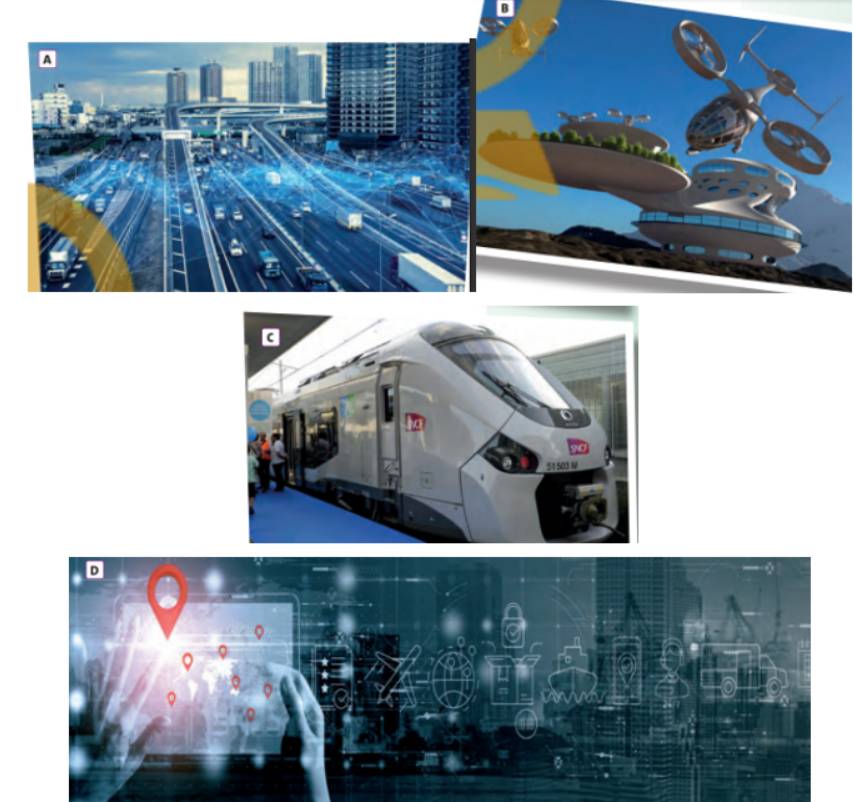
- Sky cities will be built with solar-run buildings.
(Các thành phố trên bầu trời sẽ được xây dựng bằng các tòa nhà chạy bằng năng lượng mặt trời.)
- Internet will control every human activity. => Picture D
(Internet sẽ điều khiển mọi hoạt động của con người.)
- People will work in mobile offices. => Picture B
(Mọi người sẽ làm việc trong các văn phòng di động.)
- Underground trips will become safer and faster than ever. => Picture C
(Những chuyến đi dưới lòng đất sẽ trở nên an toàn và nhanh chóng hơn bao giờ hết.)
- I think the idea of future cities “Underground trips will become safer and faster than ever” is mentioned in the text.
(Tôi nghĩ rằng ý tưởng về các thành phố trong tương lai “Các chuyến đi dưới lòng đất sẽ trở nên an toàn hơn và nhanh hơn bao giờ hết” được đề cập trong văn bản.)
Welcome to our school's Green Fair!
We are excited to invite you to this year's Green Fair, where we aim to promote environmental awareness and sustainability. Our goal is to inspire students, teachers, and community members to adopt eco-friendly practices that reduce their carbon footprint and protect our planet.
At the fair, you can expect to find a variety of fun and engaging activities, such as:
Educational workshops and presentations on topics like climate change, recycling, and sustainable living.
A plant sale, where you can purchase a variety of plants and learn about their environmental benefits.
A clothing swap, where you can exchange gently used clothing with others, reducing waste and promoting a circular economy.
A food court featuring local and organic food options, as well as a cooking demonstration on how to prepare healthy and sustainable meals.
A recycling drive, where you can bring in your old electronics, batteries, and other materials to be recycled responsibly.
We hope that this fair will not only be a fun and informative event, but also a catalyst for change. By implementing the eco-friendly practices and habits you learn here, you can make a positive impact on our planet and future generations.
We look forward to seeing you there!
giúp mình với các b ơi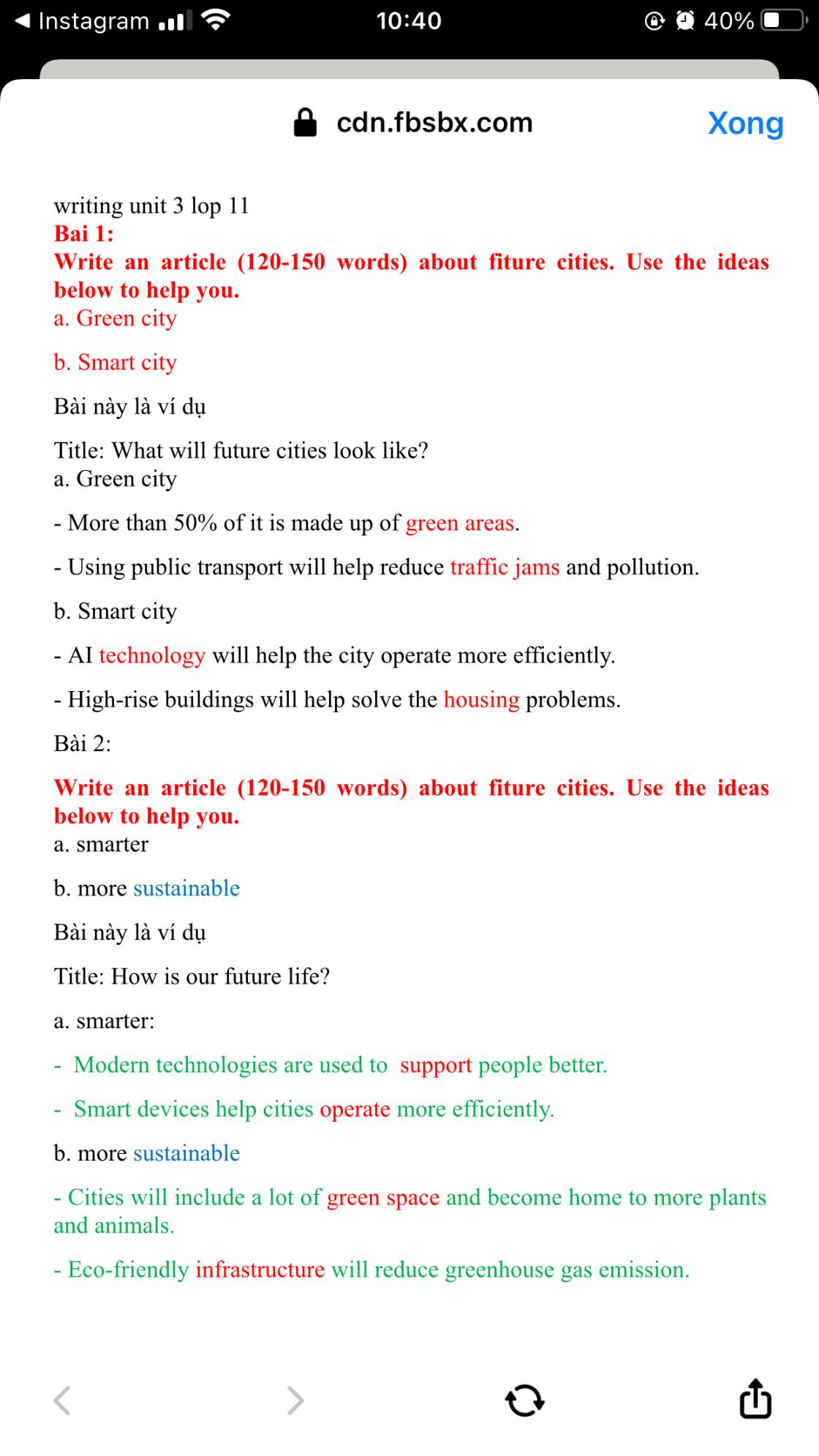
Title: What will future cities look like?
Future cities will be greener and smarter to improve people’s lives. In green cities, more than 50% of the area will be covered with trees, parks, and gardens. These green spaces will make the air cleaner and help people relax. In addition, using public transport such as buses and trains will reduce traffic jams and pollution.
Future cities will also be smart cities. With the help of AI technology, cities will operate more efficiently, from traffic control to energy use. High-rise buildings will provide more housing space and solve population problems. As a result, people will enjoy a more comfortable and convenient life. Overall, future cities will be better places to live.
Title: How is our future life?
In the future, our life will become smarter and more sustainable. First, modern technologies will support people in many ways. Smart devices will help control traffic, save energy, and improve public services, making cities run more efficiently.
Moreover, future cities will be more sustainable. They will have more green spaces, such as parks and forests, which will be home to many plants and animals. Eco-friendly buildings and transport systems will reduce greenhouse gas emissions and protect the environment.
In conclusion, future life will be both smarter and greener, bringing many benefits to people and the planet.