K
Khách

Hãy nhập câu hỏi của bạn vào đây, nếu là tài khoản VIP, bạn sẽ được ưu tiên trả lời.

a. Read the interview about a racing car driver. What is the interview mainly about?

(Đọc cuộc phỏng vấn về một tay đua xe hơi. Cuộc phỏng vấn chủ yếu nói về điều gì?)

1. winning a race (chiến thắng một cuộc đua)

2. the dangers of racing (sự nguy hiểm của đua xe)

Interview with Laura Akers, winner of the Maple Falls GT 

• “Congratulations on winning your first race! How are you feeling?”

“I'm feeling delighted, because I've dreamed about this since I was a little girl. I'm also exhausted because it was a tiring race!”

• “Was it dangerous driving in bad weather?”

“Well, it wasn't easy! I was going very slowly around the first corner because it was very wet.”

• “Are you proud to be the first female winner?”

“Yes, I feel very proud. I've worked hard to get here, and I'm grateful for my family's passionate support. We're having a big party tonight!”

Dan Travers’s report 

• I congratulated her on winning her first race and asked how she was feeling.

She said she was feeling delighted, because she had dreamed about this since she was a little girl. She said she was also exhausted, because it had been a tiring race.

• I asked if it had been dangerous driving in bad weather.

She said it hadn't been easy, and she had been going very slowly around the first corner because it had been very wet.

• I asked if she was proud to have been the first female winner.

She said she felt very proud. She said she had worked hard to get there, and she was grateful for her family's passionate support. She said they were having a big party that night.


1
11 tháng 9 2023

Đáp án: 1. winning a race (chiến thắng một cuộc đua)

2. Complete the dialogue with the correct affirmative or negative past simple form of the verbs below.(Hoàn thành đoạn hội thoại với thể khẳng định hoặc thể phủ định đúng của thì quá khứ đơn cho các động từ bên dưới.)be   get   learn   leave   love   spend   watchKirstie: Hi, Laurie. How are you? Tell me about your summer holiday!Laurie:  Well, for the first three weeks, I was at a summer camp in Cornwall.Kirstie: Really? That sounds like...
Đọc tiếp

2. Complete the dialogue with the correct affirmative or negative past simple form of the verbs below.

(Hoàn thành đoạn hội thoại với thể khẳng định hoặc thể phủ định đúng của thì quá khứ đơn cho các động từ bên dưới.)

be   get   learn   leave   love   spend   watch

Kirstie: Hi, Laurie. How are you? Tell me about your summer holiday!

Laurie:  Well, for the first three weeks, I was at a summer camp in Cornwall.

Kirstie: Really? That sounds like fun!

Laurie: Yes, it was. I (1) _____ a new sport - bodyboarding.

Kirstie: Wow! That sounds great!

Laurie: Yes. I (2) _____ it. It was really exciting - and a bit frightening too!

Kirstie: I bet! What else did you get up to over the summer?

Laurie: Well, the second half of the holiday (3) _____ so good. I (4) _____ a stomach bug and (5) _____ nearly a week on the sofa.

Kirstie: Oh dear! How awful!

Laurie: I (6) _____ the house for days. I just (7) _____ DVDs. I was so bored!

1
7 tháng 2 2023

1.learnt

2.loved

3.wasn't

4.got

5.spent

6.didn't

7.watched

3. Read the text again. Match the questions below with paragraphs A-E of the text. (Đọc bài khóa một lần nữa. Nối các câu hỏi bên dưới với các đoạn văn (A – E).)In which paragraph does the writer tell us …1. when doctors realised Ashlyn had a medical problem?2. what causes her condition?3. what happened when she burned her hands?4. why some people die from this condition?5. how school life for Ashlyn was unusual?A life without painA. All children hurt...
Đọc tiếp

3. Read the text again. Match the questions below with paragraphs A-E of the text. 

(Đọc bài khóa một lần nữa. Nối các câu hỏi bên dưới với các đoạn văn (A – E).)

In which paragraph does the writer tell us …

1. when doctors realised Ashlyn had a medical problem?

2. what causes her condition?

3. what happened when she burned her hands?

4. why some people die from this condition?

5. how school life for Ashlyn was unusual?

A life without pain

A. All children hurt themselves from time to time. But when thirteen-year-old Ashlyn Blocker gets injured, she doesn't realise it. Once, when she burned herself, she only knew about it when she looked at her skin. 

B. There was always something different about Ashlyn. As a baby, she didn't cry. When she was eight months old, her parents noticed there was some blood in her eye, so they took her to see a doctor. The doctor found a serious cut in her eye and was shocked. Why didn't the baby cry? Tests showed that Ashlyn had a very unusual medical condition: she couldn't feel any pain. 

C. This condition is very rare: many people who have it die of it. Pain is a natural warning that you're ill or injured. People who can't feel pain lust don't realise they're in danger. 

D. The first few years of Ashlyn's life were very difficult. She often tripped and injured herself. Once, she broke her ankle but she didn't stop running. During school breaks, one teacher watched Ashlyn all the time in the playground and they had to search for cuts. bruises or other injuries.

E. When she was five, Ashlyn's story appeared in newspapers and on TV. Scientists studied her condition and found she has a genetic disorder that means pain signals do not reach her brain. Unfortunately, at the moment, there is no hope of a cure. And, as Ashlyn knows, a life without pain is both difficult and dangerous.

3
7 tháng 2 2023

1B

2E

3A

4C

5D

11 tháng 9 2023

In which paragraph does the writer tell us … (Trong đoạn văn nào mà tác giả nói về…)

1. B

when doctors realised Ashlyn had a medical problem? (khi các bác sỹ nhận ra Ashlyn có vấn đề bệnh lý?)

Thông tin: Tests showed that Ashlyn had a very unusual medical condition: she couldn't feel any pain. 

(Các bài kiểm tra đã cho thấy Ashlyn có một tình trạng bệnh lý: cô ấy không thể cảm nhận bất kỳ sự đau đớn nào.)

2. E

what causes her condition? (điều gì gây ra căn bệnh của cô ấy?)

Thông tin: Scientists studied her condition and found she has a genetic disorder that means pain signals do not reach her brain. (Các nhà khoa học nghiên cứu tình trạng của cô ấy và phát hiện ra cô ấy có một loại bệnh di truyền mà những tín hiệu đau đớn không đến được não của cô ấy.)

3. A

what happened when she burned her hands? (điều gì đã xảy ra khi cô ấy làm bỏng tay?)

Thông tin: Once, when she burned herself, she only knew about it when she looked at her skin. (Trong một lần cô ấy làm bỏng chính mình, cô chỉ biết khi cô nhìn vào da của mình.)

4. C

why some people die from this condition? (tại sao có người chết vì tình trạng này?)

Thông tin: People who can't feel pain lust don't realise they're in danger. (Những người không thể nhận ra cơn đau chỉ không nhận ra họ đang gặp nguy hiểm.)

5. D

how school life for Ashlyn was unusual? (cuộc sống trên trường của Ashlyn bất thường như thế nào?)

Thông tin: During school breaks, one teacher watched Ashlyn all the time in the playground and they had to search for cuts. bruises or other injuries. (Những lúc giải lao ở trường, một giáo viên quan sát Ashlyn mọi lúc ở sân chơi và họ phải tìm kiếm những vết cắt, vết bầm hoặc những vết thương khác.)

7 tháng 2 2023

Because the film wasn’t great and she couldn’t see the screen very well because the man in front of her was really tall and he didn’t stop talking to his girlfriend,she also lost her mobile.

11 tháng 9 2023

Tạm dịch:

Sam: Chào Anna! Tối qua cậu có đi chơi không?

Anna: À có, mình đã đến rạp chiếu phim.

Sam: Thật không? Cậu đi với ai thế?

Anna: Chị của mình?

Sam: Cậu đã xem phim gì vậy?

Anna: Phim mới của Jennifer Lawrence.

Sam: Cậu có tận hưởng nó không?

Anna: Không, cũng không hay lắm. Và mình cũng không thể thấy màn hình rõ lắm. Người đàn ông ngồi đằng trước rất cao và anh ta không ngừng nói chuyện với bạn gái!

Sam: Mình cũng ghét điều đó!

Anna: Và đó không phải là tất cả. Mình mất điện thoại rồi! Mình nghĩ mình đánh rớt nó ở rạp.

10 tháng 9 2023

A: What is the name of the programme?

(Tên của chương trình là gì)

B: (1) It is Education for Disadvantaged Young People.

(Đó là Giáo dục cho Thanh thiếu niên có hoàn cảnh khó khăn.)

A: What does the program focus on?

(Chương trình tập trung vào cái gì?)

B: (2) It focuses on helping disadvantaged teenagers continue their education.

(Nó tập trung vào việc giúp đỡ những thanh thiếu niên có hoàn cảnh khó khăn tiếp tục đi học.)

A: What are the activities of this programme?

(Các hoạt động của chương trình này là gì?)

B: (3) It offers young people job training and career advice. It also teaches them essential skills for the job market.

(Nó cung cấp đào tạo việc làm và lời khuyên nghề nghiệp cho những người trẻ tuổi. Nó cũng dạy họ những kỹ năng cần thiết cho thị trường việc làm.)
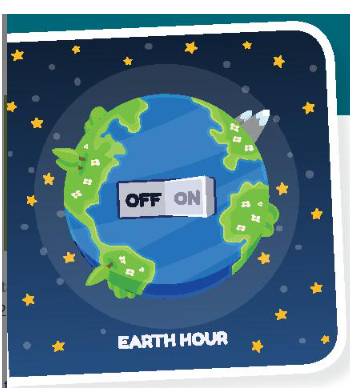
1. Read the text and complete each blank of the fact file about Earth Hour with ONE word.(Đọc văn bản và hoàn thành từng ô trống của tệp thông tin thực tế về Giờ Trái đất bằng MỘT từ.)EARTH HOUREarth Hour is a global event organised by the World Wide Fund for Nature (WWF). Held every year, it encourages people and businesses to turn off their lights and other unnecessary electrical devices for one hour from 8:30 p.m. to 9:30 p.m. on the last Saturday of...
Đọc tiếp

1. Read the text and complete each blank of the fact file about Earth Hour with ONE word.

(Đọc văn bản và hoàn thành từng ô trống của tệp thông tin thực tế về Giờ Trái đất bằng MỘT từ.)

EARTH HOUR

Earth Hour is a global event organised by the World Wide Fund for Nature (WWF). Held every year, it encourages people and businesses to turn off their lights and other unnecessary electrical devices for one hour from 8:30 p.m. to 9:30 p.m. on the last Saturday of March. Earth Hour was started as a lights-out event in Sydney, Australia, in 2007. Since then, it has grown to become an international movement for the environment, happening in more than 7,000 cities and towns across 187 countries and territories.

Earth Hour has created a positive environmental impact. It shows the public support for protecting the environment and saving the planet. It also draws attention to climate change and global energy issues, and promotes green activities worldwide.

Viet Nam joined the event in 2009 and has been an active and keen supporter since then. Besides switching off lights, people can take part in a number of activities to raise awareness of environmental problems and call for action for climate, people and nature.


EARTH HOUR

Organsied by

World Wide Fund for Nature

Held from

8:30 p.m. to 9:30 p.m. on the last (1) ________ of March

Started in

Sydney, Australia, in 2007

Aims

- to show the public (2) ________ for protecting the environment and saving the planet

- to draw attention to (3) ________ change and global energy issues

- to promote green (4) ________ worldwide

First held in Viet Nam in

(5) ________ with a variety of activities nationwide

1
6 tháng 2 2023

1. Saturday

2. support

3. climate

4. activities

5. 2009

2. Read the text about WWF and complete the table.(Đọc văn bản về WWF và hoàn thành bảng.)The World Wide Fund for Nature (WWF), originally called the World Wildlife Fund, is a non-governmental organisation. It was set up in 1961, and today it is the world's largest environmental organisation. It aims to stop the process of destroying the planet's natural environment and to build a future in which humans respect nature. Much of the work of WWF focuses on the survival of endangered...
Đọc tiếp

2. Read the text about WWF and complete the table.

(Đọc văn bản về WWF và hoàn thành bảng.)

The World Wide Fund for Nature (WWF), originally called the World Wildlife Fund, is a non-governmental organisation. It was set up in 1961, and today it is the world's largest environmental organisation. It aims to stop the process of destroying the planet's natural environment and to build a future in which humans respect nature. Much of the work of WWF focuses on the survival of endangered animals and the protection of their natural habitats. These animals include the Indian elephant, the gorilla, the giant tortoise, and the giant panda. Currently, WWF has 5 million supporters worldwide. It works in more than 100 countries and supports around 1,300 environmental projects.


World Wide Fund for Nature (WWF)

Kind of organisation

(1)_______

Set up in

(2)_______

Aims

- (3)_______

- to build a future in which humans respect nature

Focus of their work

(4)_______

Number of projects supported

(5)_______

1
6 tháng 2 2023

1. non-governmental organisation

2. 1961

3. to stop the process of destroying the planet's natural environment and to build a future in which humans respect nature

4. the survival of endangered animals and the protection of their natural habitats

5. 1,300 

3. Work in groups. Choose an environmental problem in 1 and make a presentation on the solutions to it. Use the expressions below to help you.(Làm việc nhóm. Chọn một vấn đề môi trường trong bài 1 và trình bày các giải pháp cho vấn đề đó. Sử dụng các cụm từ dưới đây để giúp bạn.)Useful expressionsWelcoming the audience and introducing the topic(Chào khán giả và giới thiệu chủ đề)Hi everyone.(Chào mọi người.)Good morning/...
Đọc tiếp

3. Work in groups. Choose an environmental problem in 1 and make a presentation on the solutions to it. Use the expressions below to help you.

(Làm việc nhóm. Chọn một vấn đề môi trường trong bài 1 và trình bày các giải pháp cho vấn đề đó. Sử dụng các cụm từ dưới đây để giúp bạn.)

Useful expressions

Welcoming the audience and introducing the topic

(Chào khán giả và giới thiệu chủ đề)

Hi everyone.

(Chào mọi người.)

Good morning/ afternoon.

(Chào buổi sáng / buổi chiều.)

I’m here today to talk about/ discuss …

(Hôm nay tôi ở đây để nói về / thảo luận…)

I’d like to talk about …

(Tôi muốn nói về…)

Today, I’d like to share with you …

(Hôm nay, tôi muốn chia sẻ với bạn…)

Introducing the first point/ idea

(Giới thiệu quan điểm/ ý tưởng đầu tiên)

Firstly, the problem can be solved by …

(Thứ nhất, vấn đề có thể được giải quyết bằng…)

The first solution is to …

(Giải pháp đầu tiên là…)

Introducing the second point/ idea

(Giới thiệu quan điểm / ý tưởng thứ hai)

My next point is …

(Điểm tiếp theo của tôi là…)

Another solution is to …

(Một giải pháp khác là…)

Finishing the presentation and thanking the audience

(Kết thúc bài thuyết trình và cảm ơn khán giả)

That concludes our presentation.

(Điều đó kết thúc bài thuyết trình của chúng tôi.)

That’s the end of our presentation today.

(Đó là phần cuối của bài thuyết trình của chúng ta ngày hôm nay.)

Thank you for listening.

(Cám ơn vì đã lắng nghe.)

Thank you for your attention.

(Cảm ơn vì sự quan tâm của bạn.)

1
10 tháng 9 2023

Good morning. Today, I’d like to share with you about the solutions to one of the most significant problems in our city - deforestation. Firstly, the problem can be solved by recycling paper, plastics, and wood products. My next point is introducing strict laws to prevent the cutting of natural forests. Another solution is to educate our friends, family, and community by sharing the deforestation facts, and its causes and effects. That’s the end of our presentation today. Thank you for your attention.

Tạm dịch:

Buổi sáng tốt lành. Hôm nay, tôi muốn chia sẻ với các bạn về giải pháp cho một trong những vấn đề nổi bật nhất ở thành phố của chúng ta - nạn phá rừng. Thứ nhất, vấn đề có thể được giải quyết bằng cách tái chế giấy, nhựa và các sản phẩm từ gỗ. Giải pháp tiếp theo của tôi là đưa ra luật nghiêm khắc để ngăn chặn việc chặt phá rừng tự nhiên. Một giải pháp khác là giáo dục bạn bè, gia đình và cộng đồng của chúng ta bằng cách chia sẻ sự thật về nạn phá rừng, nguyên nhân và hậu quả của nó. Bài thuyết trình hôm nay đến đây là hết. Cảm ơn các bạn vì đã chú ý lắng nghe.

11 tháng 9 2023

 1. did not (didn't)

 2. did

 3. was/ were

 4. could/ couldn't

11 tháng 9 2023

a. We form the negative form of the past simple with (1) did not and the infinitive without to. (Chúng ta hình thành thể phủ định của thì quá khứ đơn với “did not” và động từ nguyên mẫu không to.)

I didn’t go out last night.

b. We form the interrogative form of the past simple with (2) did and the infinitive without to. (Chúng ta hình thành thể nghi vấn của thì quá khứ đơn với “did” và động từ nguyên mẫu không to.)

Did Harry text you? Yes, he did. I No, he didn't.

c. We do not use did/ didn't with the verbs (3) was/ were or (4) could/ couldn’t. (Chúng ta không sử dụng “did/ didn’t” với các động từ “was/were hoặc could/couldn’t.)

Was Joe late for school? Yes, he was.

Could you read when you were three? No, I couldn't.

2. Read the text and circle the correct meanings of the highlighted words.(Đọc văn bản và khoanh tròn nghĩa đúng của các từ được đánh dấu.)Since UNICEF set up an office in 1975 in Viet Nam, it has run projects in various fields to provide the highest possible support for children in our country. The organisation particularly aims to create opportunities for all children in Viet Nam to attend school, learn and succeed. The following programmes help achieve the UNICEF's...
Đọc tiếp

2. Read the text and circle the correct meanings of the highlighted words.

(Đọc văn bản và khoanh tròn nghĩa đúng của các từ được đánh dấu.)

Since UNICEF set up an office in 1975 in Viet Nam, it has run projects in various fields to provide the highest possible support for children in our country. The organisation particularly aims to create opportunities for all children in Viet Nam to attend school, learn and succeed. The following programmes help achieve the UNICEF's education aims for Viet Nam.

Education for Disadvantaged Young People

UNICEF helps disadvantaged teenagers continue their education by offering them job training and career advice. They are also taught essential skills for the job market.

Providing Education Opportunities for Children with Disabilities

This programme gives children with disabilities a chance to get access to and benefit from a quality education. It also helps promote equal participation in society and a culture in which people respect each other.

Improving Learning Achievements

This is another practical programme supported by UNICEF. The aim is to better prepare children for the challenges in the future. UNICEF helps Viet Nam in joining regional educational programmes to improve children's learning achievements. When they leave school, they should have the necessary skills and knowledge to work in a fast-changing world.

1. create

a. make something happen 

b. increase something

c. refuse something

2. essential

a. usual

b. necessary

c. successful

3. respect

a. have a good opinion of somebody

b. look down on somebody

c. get on well with somebody

4. practical

a. connected with organisations

b. connected with ideas

c. connected with real situations

2
14 tháng 8 2023

1. a

2. b

3. a

4. c

10 tháng 9 2023

1. a

2. b

3. a

4. c

1. create (v): tạo ra

a. make something happen

(làm cho một cái gì đó xảy ra)

b. increase something

(tăng cái gì đó)

c. refuse something

(từ chối điều gì đó)

2. essential (adj): cần thiết

a. usual

(thường)

b. necessary

(cần thiết)

c. successful

(thành công)

3. respect (v): tôn trọng

a. have a good opinion of somebody

(có quan điểm tốt về ai đó)

b. look down on somebody

(khinh thường ai đó)

c. get on well with somebody

(có mối quan hệ tốt với người nào đó)

4. practical (adj): thực tiễn

a. connected with organisations

(kết nối với các tổ chức)

b. connected with ideas

(kết nối với các ý tưởng)

c. connected with real situations

(kết nối với các tình huống thực tế)