a. Listen and repeat. (Nghe và lặp lại.)

K
Khách

Hãy nhập câu hỏi của bạn vào đây, nếu là tài khoản VIP, bạn sẽ được ưu tiên trả lời.
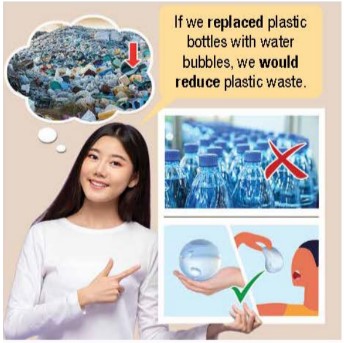
a. Listen and repeat. (Nghe và lặp lại.)

If we replaced plastic bottles with water bubbles, we would reduce plastic waste. (Nếu chúng ta thay thế chai nhựa bằng bong bóng nước, chúng ta sẽ giảm thiểu rác thải nhựa.)

Meaning and Use (Ý nghĩa và Cách sử dụng)

We can use Second Conditional to talk about things that are not true now, and we don't think will be true in the future. We sometimes use Second Conditional to talk about our hope or dreams. (Chúng ta có thể sử dụng Câu điều kiện loại hai để nói về những điều không đúng hiện tại và chúng ta không nghĩ sẽ đúng trong tương lai. Đôi khi chúng ta sử dụng Câu điều kiện loại hai để nói về hy vọng hoặc ước mơ của mình.)

If I were rich, I would travel around the world. (Nếu tôi giàu có, tôi sẽ đi du lịch khắp thế giới.)


Form (Cấu trúc)

If we all ate less meat, the world would use less water and energy. (Nếu tất cả chúng ta ăn ít thịt hơn, thế giới sẽ sử dụng ít nước và năng lượng hơn.)

If I were a billionaire, I'd donate money to environmental charities. (Nếu tôi là một tỷ phú, tôi sẽ quyên góp tiền cho các tổ chức từ thiện về môi trường.)

We wouldn't need fossil fuels if we all switched to renewable energy. (Chúng ta sẽ không cần nhiên liệu hóa thạch nếu tất cả chúng ta chuyển sang năng lượng tái tạo.)

What would happen if plastic could be composted? (Điều gì sẽ xảy ra nếu nhựa có thể được ủ?)


Note (Lưu ý)

We often use were (not was) in the if-clause. (Chúng ta thường sử dụng were (not was) trong mệnh đề if.)


0
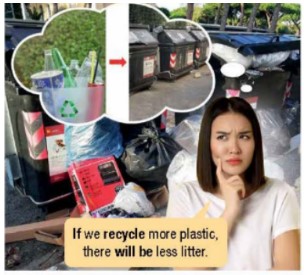
a. Listen and repeat. (Nghe và lặp lại.)If we recycle more plastic, there will be less litter. (Nếu chúng ta tái chế nhiều nhựa hơn, sẽ có ít rác hơn.) First Conditional (Câu điều kiện loại 1)Meaning and Use (Ý nghĩa và Cách sử dụng)We can use First Conditional to talk about things we can change (“If I do this thing…”), and the future result of that change (“...that thing will happen”).(Chúng ta có thể sử dụng Điều kiện loại 1...
Đọc tiếp

a. Listen and repeat. (Nghe và lặp lại.)

If we recycle more plastic, there will be less litter. (Nếu chúng ta tái chế nhiều nhựa hơn, sẽ có ít rác hơn.)


First Conditional (Câu điều kiện loại 1)

Meaning and Use (Ý nghĩa và Cách sử dụng)

We can use First Conditional to talk about things we can change (“If I do this thing…”), and the future result of that change (“...that thing will happen”).

(Chúng ta có thể sử dụng Điều kiện loại 1 để nói về những thứ chúng ta có thể thay đổi (“Nếu tôi làm điều này…”) và kết quả trong tương lai của sự thay đổi đó (“… điều đó sẽ xảy ra”).

If I study hard, I will do well on my test. (Nếu tôi học tập chăm chỉ, tôi sẽ làm tốt bài kiểm tra của mình.)

Form

If we recycle more plastic, there will be less litter. (Nếu chúng ta tái chế nhiều nhựa hơn, sẽ có ít rác hơn.)

There won't be as much trash if we ban single-use plastic. (Sẽ không có nhiều rác nếu chúng ta cấm đồ nhựa dùng một lần.)

If we don't protect the environment, what will happen? (Nếu chúng ta không bảo vệ môi trường, điều gì sẽ xảy ra?)

Will we reduce air pollution if we ban cars? (Chúng ta sẽ giảm ô nhiễm không khí nếu chúng ta cấm ô tô?)

(Yes, we will. (Có, chúng tôi sẽ.) /No, we won't. (Không, chúng tôi sẽ không.))


0
10 tháng 9 2023

Blended learning is a way of studying a subject, which combines learning over the Internet and face-to-face learning, and brings several benefits to us. First, blended learning helps us have more control over our own learning. Learning materials are available at all times online. Students who are absent from school won’t miss lessons. Second, we can develop better communication and teamwork skills with blended learning. There are a lot of interesting learning activities giving us more flexibility to customize own learning experiences. This enables us to have more time for pairwork and group work. In short, it is undeniable that blended learning has crucial advantages including students’ control over their learning and soft skills development.

2. Work in pairs. Discuss which of the things in 1 we should or should not do to become ecotourists. Use the expressions below to help you.(Làm việc theo cặp. Thảo luận về những điều trong bài 1 chúng ta nên làm hoặc không nên làm để trở thành nhà du lịch sinh thái. Sử dụng các cụm dưới đây để giúp bạn.)Useful expressions:... should (not) / ought (not) to / do sth.Example: We should not litter on the beach or the street.(Ví dụ: Chúng ta...
Đọc tiếp

2. Work in pairs. Discuss which of the things in 1 we should or should not do to become ecotourists. Use the expressions below to help you.

(Làm việc theo cặp. Thảo luận về những điều trong bài 1 chúng ta nên làm hoặc không nên làm để trở thành nhà du lịch sinh thái. Sử dụng các cụm dưới đây để giúp bạn.)

Useful expressions:

... should (not) / ought (not) to / do sth.

Example: We should not litter on the beach or the street.

(Ví dụ: Chúng ta không nên xả rác trên bãi biển hoặc đường phố.)

One of the things ... can / should (not) do / is (to) do sth.

Example: One of the things we should not do is to litter on the beach or the street.

(Ví dụ: Một trong những điều chúng ta không nên làm là xả rác trên bãi biển hoặc đường phố.)

I suggest that ... (should / should not) do sth.

Example: I suggest that we should not litter on the beach or the street.

(Ví dụ: Tôi đề nghị rằng chúng ta không nên xả rác trên bãi biển hoặc đường phố.)

It will (be better / good ...) / do / avoid doing sth.

Example: It will be better for the environment if we avoid littering on the beach or the street.

(Ví dụ: Sẽ tốt hơn cho môi trường nếu chúng ta tránh xả rác trên bãi biển hoặc đường phố.)

1
11 tháng 9 2023

We ought not to hunt wild animals.

(Chúng ta không nên săn bắt động vật hoang dã.)

One of the things we should do is to avoid crowded places.

(Một trong những điều chúng ta nên làm là tránh những nơi đông người.)

I suggest that we should not waste water and electricity.

(Tôi đề nghị rằng chúng ta không nên lãng phí nước và điện.)

It will be better following walking paths and trails.

(Sẽ tốt hơn khi đi theo những con đường đi bộ và đường mòn.)

2. Read the Learn this! box. Then find all the examples of the past continuous in the text in exercise 1.(Đọc hộp Learn this! Sau đó tìm tất cả các ví dụ về thì quá khứ tiếp diễn trong đoạn trích trong bài 1.)LEARN THIS! Past continuous (Thì quá khứ tiếp diễn)a. We often use the past continuous to set the scene.(Chúng ta thường dùng thì quá khứ tiếp diễn để dựng bối cảnh.)It was snowing. Two men were walking towards the...
Đọc tiếp

2. Read the Learn this! box. Then find all the examples of the past continuous in the text in exercise 1.

(Đọc hộp Learn this! Sau đó tìm tất cả các ví dụ về thì quá khứ tiếp diễn trong đoạn trích trong bài 1.)

LEARN THIS! Past continuous (Thì quá khứ tiếp diễn)

a. We often use the past continuous to set the scene.

(Chúng ta thường dùng thì quá khứ tiếp diễn để dựng bối cảnh.)

It was snowing. Two men were walking towards the house. (Tuyết đang rơi, có hai người đàn ông đang tiến đến ngôi nhà.)

b. We use the past continuous to talk about an action that was in progress at a particular time. (Chúng ta sử dụng thì quá khứ tiếp diễn để nói về một hành động đang xảy ra tại một thời điểm nhất định trong quá khứ.)

At midnight, I was doing my homework. (Vào nửa đêm, tôi đang làm bài tập.)

c. When we use the past continuous with two or more actions, we do not need to repeat the subject (I, we, etc.) or was/were if the subject is the same. (Khi chúng ta dùng thì quá khứ tiếp diễn với hai hay nhiều hành động, chúng ta không cần lặp lại chủ ngữ hoặc động từ tobe nếu cùng một chủ ngữ.)

We were sitting on the sofa and eating pizza. (Chúng tôi đang ngồi trên ghế sofa và ăn pizza.)

1
11 tháng 9 2023

were hurrying, were sitting, was talking, wasn’t looking, was singing, (was) playing, were shouting, (were) waving, (were) carrying, (were) running, was standing, was he wearing, was looking

1. Read the text. Match the highlighted words with their meanings.(Đọc văn bản. Nối các từ được làm nổi bật với nghĩa của chúng.)The more people travel, the bigger impact they may have on the environment. How can we reduce it while travelling? Here are some advice.Reduce your carbon footprint while travelling. Since flying produces more carbon footprint than any other means of transport, you should only fly when the trip is long. During the trip, you should walk, cycle...
Đọc tiếp

1. Read the text. Match the highlighted words with their meanings.

(Đọc văn bản. Nối các từ được làm nổi bật với nghĩa của chúng.)

The more people travel, the bigger impact they may have on the environment. How can we reduce it while travelling? Here are some advice.

Reduce your carbon footprint while travelling. Since flying produces more carbon footprint than any other means of transport, you should only fly when the trip is long. During the trip, you should walk, cycle or use public transport as much as you can. This not only helps to keep the environment clean, but also allows you to enjoy the beauty of nature and interact with local people. 

Choose eco-friendly activities that benefit animals and the ecosystem. Avoid activities that allow you to touch or ride animals because they disturb their natural patterns and attract many people. Instead, visit wildlife parks or organic farms. These will help you understand and respect the nature more and stop doing things that harm the environment.

Words

Meanings

1. interact 

a. to be good for someone or something 

2. benefit 

b. to talk or do things with other people 

3. disturb 

c. to interrupt what people are doing and make them angry 

3
6 tháng 2 2023

1B

2A

3C

6 tháng 2 2023

1. Read the text. Match the highlighted words with their meanings.

(Đọc văn bản. Nối các từ được làm nổi bật với nghĩa của chúng.)

The more people travel, the bigger impact they may have on the environment. How can we reduce it while travelling? Here are some advice.

Reduce your carbon footprint while travelling. Since flying produces more carbon footprint than any other means of transport, you should only fly when the trip is long. During the trip, you should walk, cycle or use public transport as much as you can. This not only helps to keep the environment clean, but also allows you to enjoy the beauty of nature and interact with local people. 

Choose eco-friendly activities that benefit animals and the ecosystem. Avoid activities that allow you to touch or ride animals because they disturb their natural patterns and attract many people. Instead, visit wildlife parks or organic farms. These will help you understand and respect the nature more and stop doing things that harm the environment.
 

Answer:

1. interact ->b: to talk or do things with other people.
2. benefit ->a: to be good for someone or something.

3. disturb ->c: to interrupt what people are doing and make them angry.

6 tháng 2 2023

1.N

2.R

3.N

4.R

19 tháng 2 2023

1. N

2. R

3. N

4. R

14 tháng 8 2023

1. D

2. A

3. C

4. B

3. Work in groups. Choose an environmental problem in 1 and make a presentation on the solutions to it. Use the expressions below to help you.(Làm việc nhóm. Chọn một vấn đề môi trường trong bài 1 và trình bày các giải pháp cho vấn đề đó. Sử dụng các cụm từ dưới đây để giúp bạn.)Useful expressionsWelcoming the audience and introducing the topic(Chào khán giả và giới thiệu chủ đề)Hi everyone.(Chào mọi người.)Good morning/...
Đọc tiếp

3. Work in groups. Choose an environmental problem in 1 and make a presentation on the solutions to it. Use the expressions below to help you.

(Làm việc nhóm. Chọn một vấn đề môi trường trong bài 1 và trình bày các giải pháp cho vấn đề đó. Sử dụng các cụm từ dưới đây để giúp bạn.)

Useful expressions

Welcoming the audience and introducing the topic

(Chào khán giả và giới thiệu chủ đề)

Hi everyone.

(Chào mọi người.)

Good morning/ afternoon.

(Chào buổi sáng / buổi chiều.)

I’m here today to talk about/ discuss …

(Hôm nay tôi ở đây để nói về / thảo luận…)

I’d like to talk about …

(Tôi muốn nói về…)

Today, I’d like to share with you …

(Hôm nay, tôi muốn chia sẻ với bạn…)

Introducing the first point/ idea

(Giới thiệu quan điểm/ ý tưởng đầu tiên)

Firstly, the problem can be solved by …

(Thứ nhất, vấn đề có thể được giải quyết bằng…)

The first solution is to …

(Giải pháp đầu tiên là…)

Introducing the second point/ idea

(Giới thiệu quan điểm / ý tưởng thứ hai)

My next point is …

(Điểm tiếp theo của tôi là…)

Another solution is to …

(Một giải pháp khác là…)

Finishing the presentation and thanking the audience

(Kết thúc bài thuyết trình và cảm ơn khán giả)

That concludes our presentation.

(Điều đó kết thúc bài thuyết trình của chúng tôi.)

That’s the end of our presentation today.

(Đó là phần cuối của bài thuyết trình của chúng ta ngày hôm nay.)

Thank you for listening.

(Cám ơn vì đã lắng nghe.)

Thank you for your attention.

(Cảm ơn vì sự quan tâm của bạn.)

1
10 tháng 9 2023

Good morning. Today, I’d like to share with you about the solutions to one of the most significant problems in our city - deforestation. Firstly, the problem can be solved by recycling paper, plastics, and wood products. My next point is introducing strict laws to prevent the cutting of natural forests. Another solution is to educate our friends, family, and community by sharing the deforestation facts, and its causes and effects. That’s the end of our presentation today. Thank you for your attention.

Tạm dịch:

Buổi sáng tốt lành. Hôm nay, tôi muốn chia sẻ với các bạn về giải pháp cho một trong những vấn đề nổi bật nhất ở thành phố của chúng ta - nạn phá rừng. Thứ nhất, vấn đề có thể được giải quyết bằng cách tái chế giấy, nhựa và các sản phẩm từ gỗ. Giải pháp tiếp theo của tôi là đưa ra luật nghiêm khắc để ngăn chặn việc chặt phá rừng tự nhiên. Một giải pháp khác là giáo dục bạn bè, gia đình và cộng đồng của chúng ta bằng cách chia sẻ sự thật về nạn phá rừng, nguyên nhân và hậu quả của nó. Bài thuyết trình hôm nay đến đây là hết. Cảm ơn các bạn vì đã chú ý lắng nghe.

1. Listen and read.(Nghe và đọc.) Ms Hoa: Listen, everyone! This year, we’re going on a fieldtrip to Phong Nha Cave, a tourist attraction in Quang Binh Province.Class: Hooray!Nam: I hope I can find some small pieces of stalactites. If I add some to my rock collection, it will be the best at school.Mai: I’ll buy a lot of snacks to share. We’ll have fun!Ms Hoa: We will have fun, but in a different way. This time, the fieldtrip is going to be eco-friendly.Nam: Ms Hoa, what’s an...
Đọc tiếp

1. Listen and read.

(Nghe và đọc.)

Ms Hoa: Listen, everyone! This year, we’re going on a fieldtrip to Phong Nha Cave, a tourist attraction in Quang Binh Province.

Class: Hooray!

Nam: I hope I can find some small pieces of stalactites. If I add some to my rock collection, it will be the best at school.

Mai: I’ll buy a lot of snacks to share. We’ll have fun!

Ms Hoa: We will have fun, but in a different way. This time, the fieldtrip is going to be eco-friendly.

Nam: Ms Hoa, what’s an eco-friendly fieldtrip?

Ms Hoa: Going on an eco-friendly fieldtrip means we’ll enjoy, explore and learn about the place, but in a way that will not damage it. So, Nam, I’m afraid you can’t take any stalactites because it takes hundreds or sometimes thousands of years for them to form.

Nam: Wow! I didn’t know that. I won’t even touch them, I promise.

Mai: But can we bring snacks?

Ms Hoa: Yes, but if I were you, I wouldn’t bring too many snacks. We don’t want to leave litter behind and damage the environment.

Mai: I agree. I’ll also try to bring snacks with less packaging.

Ms Hoa: That’s a good idea. Let’s hope our fieldtrip will be a fun educational experience for everyone.

1
10 tháng 9 2023

Tạm dịch:

Ms Hoa: Mọi người nghe này! Năm nay, chúng ta sẽ đi thực tế ở Động Phong Nha, một điểm thu hút khách du lịch ở tỉnh Quảng Bình.

Cả lớp: Hoan hô!

Nam: Em hy vọng en có thể tìm thấy một số mảnh nhỏ của thạch nhũ. Nếu em thêm một số vào bộ sưu tập đá của mình, nó sẽ là bộ sưu tập tuyệt nhất ở trường.

Mai: Em sẽ mua rất nhiều đồ ăn vặt để chia sẻ. Chúng ta sẽ vui vẻ!

Ms Hoa: Chúng ta sẽ vui vẻ, nhưng theo một cách khác. Lần này, chuyến đi thực địa sẽ thân thiện với môi trường.

Nam: Cô Hoa ơi, chuyến đi dã ngoại thân thiện với môi trường là gì ạ?

Ms Hoa: Có một chuyến dã ngoại thân thiện với môi trường có nghĩa là chúng ta sẽ tận hưởng, khám phá và tìm hiểu về địa điểm, nhưng theo cách không làm hư hại nó. Vì vậy, Nam, cô e rằng em không thể lấy được bất kỳ miếng thạch nhũ nào vì chúng phải mất hàng trăm hoặc đôi khi hàng nghìn năm để hình thành.

Nam: Chà! Em không biết điều đó. Em thậm chí sẽ không chạm vào chúng, em hứa.

Mai: Nhưng chúng ta có thể mang theo đồ ăn vặt không ạ?

Ms Hoa: Được, nhưng nếu cô là em, cô sẽ không mang quá nhiều đồ ăn vặt. Chúng ta không muốn bỏ lại rác và hủy hoại môi trường.

Mai: Em đồng ý. Em cũng sẽ cố gắng mang theo đồ ăn vặt với ít bao bì hơn.

Ms Hoa: Đó là một ý kiến hay. Chúng ta hãy hy vọng chuyến đi thực địa của chúng ta sẽ là một trải nghiệm giáo dục thú vị cho tất cả mọi người.