
Hãy nhập câu hỏi của bạn vào đây, nếu là tài khoản VIP, bạn sẽ được ưu tiên trả lời.
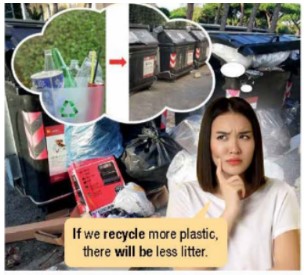

We ought not to hunt wild animals.
(Chúng ta không nên săn bắt động vật hoang dã.)
One of the things we should do is to avoid crowded places.
(Một trong những điều chúng ta nên làm là tránh những nơi đông người.)
I suggest that we should not waste water and electricity.
(Tôi đề nghị rằng chúng ta không nên lãng phí nước và điện.)
It will be better following walking paths and trails.
(Sẽ tốt hơn khi đi theo những con đường đi bộ và đường mòn.)
1.were-would live
2.work-will be
3.allow-will have
4.had-would go
Put the verbs in brackets in the correct forms.
(Chia dạng đúng các động từ trong ngoặc.)
1. If I (be) __were____ you, I (live) ___would live___ with a host family so that I can learn more about the local culture.
2. If we (work) __work____ together, we (be) __will be____ able to reduce the negative impact of tourism on the environment.
3. If we (allow) __allow____ more people to crowd the city centre, we (have) __will have____ to deal with environmental pollution in the future.
4. If we (have) __had____ enough money, we (go) ___would go___ on an ecotour to Finland. Instead, were staying in Viet Nam in the summer.
A. If they ban swimming with fish, the Great Barrier Reef will be better protected. Tourists should not be allowed to dive very close to the coral reefs.
(Nếu họ cấm bơi cùng cá, thì Rào chắn bằng san hô tuyệt vời sẽ được bảo vệ tốt hơn. Khách du lịch không được phép lặn quá gần các rạn san hô.)
B. Tourists should always follow the walking paths and trails on the Sapa Trekking Tour. The local people with whom the tourists stay should only use local ingredients. If they only use local ingredients, their carbon footprint will be lower.
(Du khách nên luôn đi theo các con đường đi bộ và đường mòn trong Tour đi bộ xuyên rừng Sapa. Người dân địa phương mà khách du lịch ở cùng chỉ nên sử dụng các nguyên liệu địa phương. Nếu họ chỉ sử dụng các nguyên liệu địa phương, lượng khí thải carbon của họ sẽ thấp hơn.)
D. The boats on the Whale-watching Tour should not get too close to the whales or make too much noise. If the boats are environmentally-friendly, they will not harm the whales or their habitats. This is because environmentally-friendly boats use less fuel and oil, make small waves and are quiet.
(Các thuyền trong Chuyến tham quan ngắm cá voi không được đến quá gần cá voi hoặc gây quá nhiều tiếng ồn. Nếu những chiếc thuyền thân thiện với môi trường, chúng sẽ không gây hại cho cá voi hoặc môi trường sống của chúng. Điều này là do tàu thuyền thân thiện với môi trường sử dụng ít nhiên liệu và dầu hơn, tạo ra sóng nhỏ và yên tĩnh.)
1: who
2: which/that
3: which
4: whose
5: that/which
6: who
were hurrying, were sitting, was talking, wasn’t looking, was singing, (was) playing, were shouting, (were) waving, (were) carrying, (were) running, was standing, was he wearing, was looking