
Hãy nhập câu hỏi của bạn vào đây, nếu là tài khoản VIP, bạn sẽ được ưu tiên trả lời.

1. The student in the photo a is learning online through her laptop while the students in photo b are learning face-to-face.
(Học sinh trong ảnh a đang học trực tuyến qua máy tính xách tay của cô ấy trong khi các học sinh trong ảnh b đang học trực tiếp.)
2. I’m familiar with both ways of learning.
(Tôi quen thuộc với cả hai cách học.)
Kindergarten teaching jobs are traditionally done by women than men as women are often kind, gentle and caring. Besides, they usually have good communication skills.
(Công việc dạy học mầm non theo truyền thống là nữ giới làm hơn là nam giới vì phụ nữ thường tốt bụng, dịu dàng và chu đáo. Bên cạnh đó, họ thường có kỹ năng giao tiếp tốt.)
1. I finally finished my science project. (Cuối cùng mình đã hoàn thành dự án khoa học.)
What a cool thing to do! (Thật ngầu khi làm điều đó!)
2. I learnt to play a new song on the guitar. (Mình đã học chơi một bài hát mới trên cây đàn ghi-ta.)
That's amazing! (Thật kinh ngạc!)
3. I broke a bone in my foot. (Mình đã gãy một cái chân ở xương.)
How awful! (Thật tệ làm sao!)
4. I dropped my dad's laptop. (Mình đã làm vỡ máy tính xách tay của bố.)
(Ôi không! Thật đáng xấu hổ!)
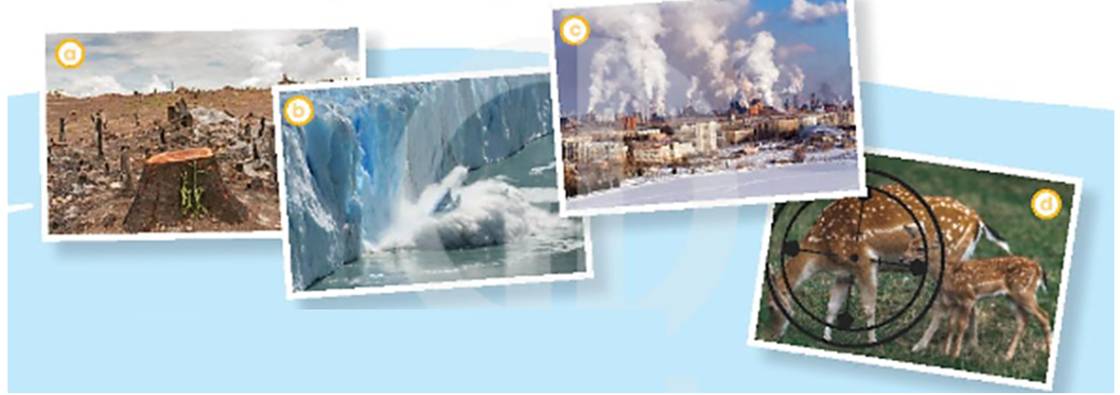
Picture A: deforestation
(Tranh A: chặt phá rừng)
Picture B: global warming
(Tranh B: nóng lên toàn cầu)
Picture C: air pollution
(Tranh C: ô nhiễm không khí)
Picture D: extinction of endangered animals
(Tranh D: động vật có nguy cơ tuyệt chủng bị tuyệt chủng)
UNICEF Programme | UNDP Project | |
What / name? | Vaccines for Children (Vắc xin cho Trẻ em.) | Poverty Reduction (Giảm nghèo) |
What / focus on? | protecting children with life-saving vaccines (bảo vệ trẻ em bằng vắc-xin cứu mạng) | reducing poverty and developing economy in disadvantaged areas (xóa đói giảm nghèo và phát triển kinh tế ở những vùng khó khăn) |
What / activities? | - educating people about the benefits of vaccines (giáo dục bảo vệ trẻ em bằng vắc-xin cứu mạng) - vaccinating as many children as possible (tiêm chủng cho càng nhiều trẻ em càng tốt) | - providing technical support (cung cấp hỗ trợ kỹ thuật) - helping develop solutions to local issues (giúp phát triển các giải pháp cho các vấn đề địa phương) |
A: What is the name of the UNDP Project?
(Tên của dự án UNDP là gì)
B: It’s Poverty Reduction.
(Đó là Giảm nghèo.)
A: What does the project focus on?
(Dự án tập trung vào cái gì?)
B: It focuses on reducing poverty and developing economy in disadvantaged areas.
(Nó tập trung vào việc xóa đói giảm nghèo và phát triển kinh tế ở những vùng khó khăn.)
A: What are the activities of this project?
(Các hoạt động của dự án này là gì?)
B: It provides technical support and helps develop solutions to local issues. What about UNICEF Programme? What is the name of the programme?
(Nó cung cấp hỗ trợ kỹ thuật và giúp phát triển các giải pháp cho các vấn đề địa phương. Chương trình UNICEF thì sao? Tên của chương trình là gì?)
A: It’s Vaccines for Children.
(Đó là Vắc xin cho Trẻ em.)
B: What does the program focus on?
(Chương trình tập trung vào cái gì?)
A: It focuses on protecting children with life-saving vaccines.
(Nó tập trung vào việc bảo vệ trẻ em bằng vắc-xin cứu mạng.)
B: What are the activities of this programme?
(Các hoạt động của chương trình này là gì?)
A: It educates protecting children with life-saving vaccines and vaccinates as many children as possible.
(Nó giáo dục bảo vệ trẻ em bằng vắc-xin cứu mạng và tiêm chủng cho càng nhiều trẻ em càng tốt.)
A: In my opinion, the advantages of online learning outweigh the disadvantages. One of the most significant benefits is that we have more control over our own learning. Learning materials are available at all times online.
(Theo tôi, những ưu điểm của học trực tuyến vượt xa những nhược điểm. Một trong những lợi ích đáng kể nhất là chúng ta có nhiều quyền kiểm soát hơn đối với việc học của chính mình. Tài liệu học tập luôn có sẵn trực tuyến.)
B: I don't think so. Online learning has more disadvantages than advantages. Studying online has a lot of distractions. For example, we may chat with friends online or use social media apps and websites while learning.
(Tôi không nghĩ vậy. Học trực tuyến có nhiều nhược điểm hơn là ưu điểm. Học trực tuyến có rất nhiều thứ khiến bạn mất tập trung. Ví dụ, chúng ta có thể trò chuyện với bạn bè trực tuyến hoặc sử dụng các ứng dụng và trang web mạng xã hội trong khi học.)

- Buying and visiting the float market
- Having some traditional food/meals
- Buying some arts and crafts in a weaving village
Refer
There are several things that we should do to reduce the negative impact of travelling on the environment. First of all, we should reduce our carbon footprint during the trip. We should only fly when the trip is long and choose environmentally-friendly means of transport such as cycling or public transport. The next thing is that wherever we go, we should always protect our environment. By keeping it clean and safe, we can reduce the negative impact of travelling on the environment. In addition, we had better choose activities that are good for local people and the environment. These will not only help us understand but also respect the nature more and stop doing things that harm the environment and local area as well
A. be on your feet, work outdoors, work nine-to-five
B. be on your feet, wear a uniform, work outdoors, work with children