K
Khách

Hãy nhập câu hỏi của bạn vào đây, nếu là tài khoản VIP, bạn sẽ được ưu tiên trả lời.

11 tháng 9 2023

Emma is more worried. (Emma lo lắng nhiều hơn.)

2. Read the text and choose the best tittle for it.(Đọc văn bản và chọn tiêu đề hay nhất.)a. Environmental problems: What are they?b. Environmental protection: How important is it?c. Environmental solutions: How practical are they?The environment we live in is facing many serious problems. We need to be aware of these problems so that we can find ways to protect nature.A. Global warming is the rise in the average temperature of the earth's atmosphere. It is one of the biggest...
Đọc tiếp

2. Read the text and choose the best tittle for it.

(Đọc văn bản và chọn tiêu đề hay nhất.)

a. Environmental problems: What are they?

b. Environmental protection: How important is it?

c. Environmental solutions: How practical are they?

The environment we live in is facing many serious problems. We need to be aware of these problems so that we can find ways to protect nature.

A. Global warming is the rise in the average temperature of the earth's atmosphere. It is one of the biggest issues facing humans today. It can have serious consequences such as rising sea levels, polar ice melting, and extreme weather events like floods or heatwaves.

B. Another environmental problem is the cutting and clearing of natural forests. The loss of forests can have a negative impact on the environment. It can damage the natural habitats of many animals and put wildlife in danger. It can also destroy the natural soil and lead to climate change.

C. Air pollution is also a serious problem. It is mainly caused by waste gases that come out of vehicles, machines, or factories. When these harmful gases combine with the water in the air, they come down as rain or snow, which can damage all forms of life. In addition, this problem leads to global warming and climate change. It is also a major cause of respiratory diseases or even lung cancer.

D. Around the world, the number of endangered animals is rising. Many of them disappear because of pollution and climate change. In addition, humans illegally hunt and kill animals, and catch too many fish at once. This is upsetting the natural balance of ecosystems, which can be harmful to all living and non-living things.

2
10 tháng 9 2023

Đoạn A nói về vấn đề nóng lên toàn cầu, đoạn B nói về nạn chặn cây phá rừng tự nhiên, đoạn C nói về ô nhiễm không khí, đoạn D nói về sự tuyệt chủng loài. Đây đều là các vấn đề về môi trường => chọn a.

10 tháng 9 2023

Tạm dịch:

a. Các vấn đề về môi trường: Chúng là gì?

b. Bảo vệ môi trường: Nó quan trọng như thế nào?

c. Các giải pháp môi trường: Chúng thực tế như thế nào?

Môi trường chúng ta sống đang phải đối mặt với nhiều vấn đề nghiêm trọng. Chúng ta cần nhận thức rõ những vấn đề này để có thể tìm cách bảo vệ thiên nhiên.

A. Sự nóng lên toàn cầu là sự gia tăng nhiệt độ trung bình của khí quyển trái đất. Đó là một trong những vấn đề lớn nhất mà con người phải đối mặt ngày nay. Nó có thể gây ra những hậu quả nghiêm trọng như mực nước biển dâng cao, băng tan ở hai cực và các hiện tượng thời tiết khắc nghiệt như lũ lụt hoặc sóng nhiệt.

B. Một vấn đề môi trường khác là chặt phá rừng tự nhiên. Việc mất rừng có thể có tác động tiêu cực đến môi trường. Nó có thể làm hư hại môi trường sống tự nhiên của nhiều loài động vật và khiến động vật hoang dã gặp nguy hiểm. Nó cũng có thể phá hủy đất tự nhiên và dẫn đến biến đổi khí hậu.

C. Ô nhiễm không khí cũng là một vấn đề nghiêm trọng. Nguyên nhân chủ yếu là do khí thải từ xe cộ, máy móc hoặc nhà máy. Khi những khí độc hại này kết hợp với nước trong không khí, chúng sẽ tạo thành mưa hoặc tuyết, có thể gây hại cho mọi dạng sống. Ngoài ra, vấn đề này còn dẫn đến hiện tượng nóng lên toàn cầu và biến đổi khí hậu. Nó cũng là nguyên nhân chính gây ra các bệnh về đường hô hấp hay thậm chí là ung thư phổi.

D. Trên khắp thế giới, số lượng các loài động vật có nguy cơ tuyệt chủng đang tăng lên. Nhiều con trong số chúng biến mất vì ô nhiễm và biến đổi khí hậu. Ngoài ra, còn vì con người săn bắt và giết động vật một cách bất hợp pháp và đánh bắt quá nhiều cá cùng một lúc. Điều này đang làm đảo lộn sự cân bằng tự nhiên của các hệ sinh thái, có thể gây hại cho tất cả các sinh vật sống và không sống.

1. Read the following passage and circle True (T), False (F) or Doesn’t say (DS).(Đọc bài khóa bên dưới và khoanh tròn Đúng (T), Sai (F) hoặc Không nhắc đến (DS).)Be happy!There have been lots of surveys about teenagers and happiness and they all come to different conclusions. Some surveys say that most young people are happiest when they spend time with their family. Others say it's when they're with friends. Some teenagers think that getting good marks at school and...
Đọc tiếp

1. Read the following passage and circle True (T), False (F) or Doesn’t say (DS).

(Đọc bài khóa bên dưới và khoanh tròn Đúng (T), Sai (F) hoặc Không nhắc đến (DS).)

Be happy!

There have been lots of surveys about teenagers and happiness and they all come to different conclusions. Some surveys say that most young people are happiest when they spend time with their family. Others say it's when they're with friends. Some teenagers think that getting good marks at school and passing exams make them happy, while others feel that it's having a boyfriend or girlfriend. The problem is that there isn't just one thing that makes everyone happy, and what made you happy last week might not make you happy next week! However, there are some things that can help improve your mood when you are feeling unhappy. Experts believe that exercise can make you a happier person because it releases chemicals in your brain that are related to a feeling of pleasure. There's another surprising idea to help make you happier. Although you might think that eating chocolate is bad for you, it seems, according to some experts, to be good to eat chocolate when you're feeling sad. Of course it isn't healthy to eat too much, but chocolate releases chemicals in the same way that exercise does - and for some people it's easier and quicker than working out in the gym! It's also important to remember that you can’t be happy all the time. You can be happy for brief moments and you should value these times. And when you feel sad, go for a run or eat some chocolate - you'll soon cheer up!

1. The surveys show that teenagers and parents have different ideas about happiness. T F DS 

2. The things that make us happy never change. T F DS 

3. The surveys show that teenagers who do exercise are happier. T F DS 

4. When we feel depressed we shouldn't eat chocolate. T F DS 

5. Exercise and eating chocolate can produce similar results. T F DS 

6. It’s important to value even short moments of happiness. T F DS

2
7 tháng 2 2023

1DS

2F

3T

4F

5T

6F

11 tháng 9 2023

1. DS

2. F

The things that make us happy never change.

(Điều khiến chúng ta hạnh phúc không bao giờ thay đổi.)

Thông tin: …and what made you happy last week might not make you happy next week!

(và những gì khiến bạn hạnh phúc vào tuần trước có thể sẽ không khiến bạn vui vào tuần tiếp theo!)

3. T

The surveys show that teenagers who do exercise are happier.

(Các khảo sát cho thấy trẻ vị thành niên nào tập thể dục thì hạnh phúc hơn.)

Thông tin: Experts believe that exercise can make you a happier person because it releases chemicals in your brain that are related to a feeling of pleasure.

(Các chuyện gia tin rằng việc tập thể dục có thể khiến bạn trở nên vui vẻ hơn vì nó tiết ra các chất hóa học mà đem lại cảm giác sảng khoái trong não của bạn.)

4. F

When we feel depressed we shouldn't eat chocolate.

(Khi ta cảm thấy buồn bã ta không nên ăn sô cô la.)

Thông tin: … it seems, according to some experts, to be good to eat chocolate when you're feeling sad.

(…dường như, theo các chuyện gia, thì ăn sô cô la sẽ tốt khi bạn đang buồn.)

5. T

Exercise and eating chocolate can produce similar results.

(Tập thể dục và ăn sô cô la có thể cho ra kết quả như nhau.)

Thông tin: And when you feel sad, go for a run or eat some chocolate - you'll soon cheer up!

(Và khi bạn buồn, đi chạy bộ hoặc ăn một ít sô cô la – bạn sẽ sớm vui trở lại thôi!)

6. F

It’s important to value even short moments of happiness.

(Trân trọng những khoảnh khắc hạnh phúc dù ngắn ngủi là một điều quan trọng)

Thông tin: You can be happy for brief moments and you should value these times.

(Bạn có thể hạnh phúc trong những khoảng thời gian ngắn và bạn nên trân trọng những lúc như thế.)

1. Read the text. Match the highlighted words with their meanings.(Đọc văn bản. Nối các từ được làm nổi bật với nghĩa của chúng.)The more people travel, the bigger impact they may have on the environment. How can we reduce it while travelling? Here are some advice.Reduce your carbon footprint while travelling. Since flying produces more carbon footprint than any other means of transport, you should only fly when the trip is long. During the trip, you should walk, cycle...
Đọc tiếp

1. Read the text. Match the highlighted words with their meanings.

(Đọc văn bản. Nối các từ được làm nổi bật với nghĩa của chúng.)

The more people travel, the bigger impact they may have on the environment. How can we reduce it while travelling? Here are some advice.

Reduce your carbon footprint while travelling. Since flying produces more carbon footprint than any other means of transport, you should only fly when the trip is long. During the trip, you should walk, cycle or use public transport as much as you can. This not only helps to keep the environment clean, but also allows you to enjoy the beauty of nature and interact with local people. 

Choose eco-friendly activities that benefit animals and the ecosystem. Avoid activities that allow you to touch or ride animals because they disturb their natural patterns and attract many people. Instead, visit wildlife parks or organic farms. These will help you understand and respect the nature more and stop doing things that harm the environment.

Words

Meanings

1. interact 

a. to be good for someone or something 

2. benefit 

b. to talk or do things with other people 

3. disturb 

c. to interrupt what people are doing and make them angry 

3
6 tháng 2 2023

1B

2A

3C

6 tháng 2 2023

1. Read the text. Match the highlighted words with their meanings.

(Đọc văn bản. Nối các từ được làm nổi bật với nghĩa của chúng.)

The more people travel, the bigger impact they may have on the environment. How can we reduce it while travelling? Here are some advice.

Reduce your carbon footprint while travelling. Since flying produces more carbon footprint than any other means of transport, you should only fly when the trip is long. During the trip, you should walk, cycle or use public transport as much as you can. This not only helps to keep the environment clean, but also allows you to enjoy the beauty of nature and interact with local people. 

Choose eco-friendly activities that benefit animals and the ecosystem. Avoid activities that allow you to touch or ride animals because they disturb their natural patterns and attract many people. Instead, visit wildlife parks or organic farms. These will help you understand and respect the nature more and stop doing things that harm the environment.
 

Answer:

1. interact ->b: to talk or do things with other people.
2. benefit ->a: to be good for someone or something.

3. disturb ->c: to interrupt what people are doing and make them angry.
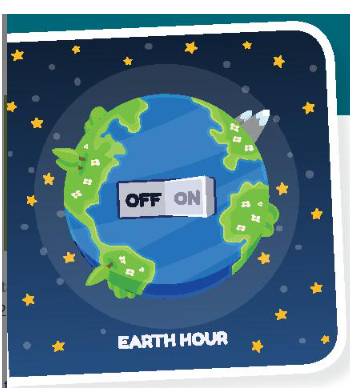
1. Read the text and complete each blank of the fact file about Earth Hour with ONE word.(Đọc văn bản và hoàn thành từng ô trống của tệp thông tin thực tế về Giờ Trái đất bằng MỘT từ.)EARTH HOUREarth Hour is a global event organised by the World Wide Fund for Nature (WWF). Held every year, it encourages people and businesses to turn off their lights and other unnecessary electrical devices for one hour from 8:30 p.m. to 9:30 p.m. on the last Saturday of...
Đọc tiếp

1. Read the text and complete each blank of the fact file about Earth Hour with ONE word.

(Đọc văn bản và hoàn thành từng ô trống của tệp thông tin thực tế về Giờ Trái đất bằng MỘT từ.)

EARTH HOUR

Earth Hour is a global event organised by the World Wide Fund for Nature (WWF). Held every year, it encourages people and businesses to turn off their lights and other unnecessary electrical devices for one hour from 8:30 p.m. to 9:30 p.m. on the last Saturday of March. Earth Hour was started as a lights-out event in Sydney, Australia, in 2007. Since then, it has grown to become an international movement for the environment, happening in more than 7,000 cities and towns across 187 countries and territories.

Earth Hour has created a positive environmental impact. It shows the public support for protecting the environment and saving the planet. It also draws attention to climate change and global energy issues, and promotes green activities worldwide.

Viet Nam joined the event in 2009 and has been an active and keen supporter since then. Besides switching off lights, people can take part in a number of activities to raise awareness of environmental problems and call for action for climate, people and nature.


EARTH HOUR

Organsied by

World Wide Fund for Nature

Held from

8:30 p.m. to 9:30 p.m. on the last (1) ________ of March

Started in

Sydney, Australia, in 2007

Aims

- to show the public (2) ________ for protecting the environment and saving the planet

- to draw attention to (3) ________ change and global energy issues

- to promote green (4) ________ worldwide

First held in Viet Nam in

(5) ________ with a variety of activities nationwide

1
6 tháng 2 2023

1. Saturday

2. support

3. climate

4. activities

5. 2009

6 tháng 2 2023

1.were-would live

2.work-will be

3.allow-will have

4.had-would go

6 tháng 2 2023

Put the verbs in brackets in the correct forms.

(Chia dạng đúng các động từ trong ngoặc.)

1. If I (be) __were____ you, I (live) ___would live___ with a host family so that I can learn more about the local culture.

2. If we (work) __work____ together, we (be) __will be____ able to reduce the negative impact of tourism on the environment.

3. If we (allow) __allow____ more people to crowd the city centre, we (have) __will have____ to deal with environmental pollution in the future.

4. If we (have) __had____ enough money, we (go) ___would go___ on an ecotour to Finland. Instead, were staying in Viet Nam in the summer. 

2. Read the text. Are these sentences about the people who took part in the survey true or false? Write T or F.(Đọc văn bản. Những câu này về những người đã tham gia khảo sát là đúng hay sai? Viết T (đúng) hoặc F (sai).)a. Most have a positive view of the British overall. _____b. More than half have a better opinion of the British now that they live in the country. _____How foreigners see the BritishWhat is a typical British person like? People who come to Britain...
Đọc tiếp

2. Read the text. Are these sentences about the people who took part in the survey true or false? Write T or F.

(Đọc văn bản. Những câu này về những người đã tham gia khảo sát là đúng hay sai? Viết T (đúng) hoặc F (sai).)

a. Most have a positive view of the British overall. _____

b. More than half have a better opinion of the British now that they live in the country. _____

How foreigners see the British

What is a typical British person like? People who come to Britain from other countries probably have a few expectations: British people are polite, rather reserved, and enjoy drinking tea and standing in queues! But how accurate is this stereotype? In an online survey of 1402 foreign nationals living in the UK, just over half said that the British matched their expectations.

The survey also asked which aspects of the British character the foreign nationals liked and disliked. British people's good manners were popular with 49% and 40% liked the ability to queue. Many agreed that the British are reserved and for 32% this was a good quality but for 19% it was negative. Other negative aspects were the British sense of humour (31%) and British culture in general (28%). However, 77% said they liked British people in general and 61% said that their opinion of the British got better as a result of living in the UK. 

A spokesman for the researchers said: People probably come to Britain with a stereotype of what to expect. It’s good to see that, for the majority, the reality is better than the stereotype.'

2
7 tháng 2 2023

a. Most have a positive view of the British overall. _T____

b. More than half have a better opinion of the British now that they live in the country. __T___

11 tháng 9 2023

1. T

Most have a positive view of the British overall.

(Nhìn chung thì đa số mọi người có cái nhìn tích cực về người Anh?)

Thông tin: However, 77% said they liked British people in general…

(Tuy nhiên, 77% số người cho rằng về cơ bản họ thích người Anh…)

2. T

More than half have a better opinion of the British now that they live in the country.

(Hơn một nửa số người đã có những suy nghĩ tốt hơn về người anh khi giờ họ sống ở đây.)

Thông tin: 61% said that their opinion of the British got better as a result of living in the UK.

(61% người nói rằng suy nghĩ của họ về người Anh đã tốt hơn nhờ việc sống ở Anh.)

1. Listen and read.(Nghe và đọc.) Ms Hoa: Listen, everyone! This year, we’re going on a fieldtrip to Phong Nha Cave, a tourist attraction in Quang Binh Province.Class: Hooray!Nam: I hope I can find some small pieces of stalactites. If I add some to my rock collection, it will be the best at school.Mai: I’ll buy a lot of snacks to share. We’ll have fun!Ms Hoa: We will have fun, but in a different way. This time, the fieldtrip is going to be eco-friendly.Nam: Ms Hoa, what’s an...
Đọc tiếp

1. Listen and read.

(Nghe và đọc.)

Ms Hoa: Listen, everyone! This year, we’re going on a fieldtrip to Phong Nha Cave, a tourist attraction in Quang Binh Province.

Class: Hooray!

Nam: I hope I can find some small pieces of stalactites. If I add some to my rock collection, it will be the best at school.

Mai: I’ll buy a lot of snacks to share. We’ll have fun!

Ms Hoa: We will have fun, but in a different way. This time, the fieldtrip is going to be eco-friendly.

Nam: Ms Hoa, what’s an eco-friendly fieldtrip?

Ms Hoa: Going on an eco-friendly fieldtrip means we’ll enjoy, explore and learn about the place, but in a way that will not damage it. So, Nam, I’m afraid you can’t take any stalactites because it takes hundreds or sometimes thousands of years for them to form.

Nam: Wow! I didn’t know that. I won’t even touch them, I promise.

Mai: But can we bring snacks?

Ms Hoa: Yes, but if I were you, I wouldn’t bring too many snacks. We don’t want to leave litter behind and damage the environment.

Mai: I agree. I’ll also try to bring snacks with less packaging.

Ms Hoa: That’s a good idea. Let’s hope our fieldtrip will be a fun educational experience for everyone.

1
10 tháng 9 2023

Tạm dịch:

Ms Hoa: Mọi người nghe này! Năm nay, chúng ta sẽ đi thực tế ở Động Phong Nha, một điểm thu hút khách du lịch ở tỉnh Quảng Bình.

Cả lớp: Hoan hô!

Nam: Em hy vọng en có thể tìm thấy một số mảnh nhỏ của thạch nhũ. Nếu em thêm một số vào bộ sưu tập đá của mình, nó sẽ là bộ sưu tập tuyệt nhất ở trường.

Mai: Em sẽ mua rất nhiều đồ ăn vặt để chia sẻ. Chúng ta sẽ vui vẻ!

Ms Hoa: Chúng ta sẽ vui vẻ, nhưng theo một cách khác. Lần này, chuyến đi thực địa sẽ thân thiện với môi trường.

Nam: Cô Hoa ơi, chuyến đi dã ngoại thân thiện với môi trường là gì ạ?

Ms Hoa: Có một chuyến dã ngoại thân thiện với môi trường có nghĩa là chúng ta sẽ tận hưởng, khám phá và tìm hiểu về địa điểm, nhưng theo cách không làm hư hại nó. Vì vậy, Nam, cô e rằng em không thể lấy được bất kỳ miếng thạch nhũ nào vì chúng phải mất hàng trăm hoặc đôi khi hàng nghìn năm để hình thành.

Nam: Chà! Em không biết điều đó. Em thậm chí sẽ không chạm vào chúng, em hứa.

Mai: Nhưng chúng ta có thể mang theo đồ ăn vặt không ạ?

Ms Hoa: Được, nhưng nếu cô là em, cô sẽ không mang quá nhiều đồ ăn vặt. Chúng ta không muốn bỏ lại rác và hủy hoại môi trường.

Mai: Em đồng ý. Em cũng sẽ cố gắng mang theo đồ ăn vặt với ít bao bì hơn.

Ms Hoa: Đó là một ý kiến hay. Chúng ta hãy hy vọng chuyến đi thực địa của chúng ta sẽ là một trải nghiệm giáo dục thú vị cho tất cả mọi người.

Every morning I get up at six. The first thing I do is to wash the dishes my family dirtier the day before. Then I cook breakfast. We eat at about seven fifteen. Usually we have bread with butter, sometimes we have rice, or boiled sweet potatoes. It takes me about ten minutes to walk to school, and school begins with an assembly period at seven forty-five. There are fifteen hundred children in our school and so we meet in three separate assemblies: the infant department, the middle department,...
Đọc tiếp

Every morning I get up at six. The first thing I do is to wash the dishes my family dirtier the day before. Then I cook breakfast. We eat at about seven fifteen. Usually we have bread with butter, sometimes we have rice, or boiled sweet potatoes.
It takes me about ten minutes to walk to school, and school begins with an assembly period at seven forty-five. There are fifteen hundred children in our school and so we meet in three separate assemblies: the infant department, the middle department, and the senior department. We always listen attentively to the head mistress then different classes call the roll for the attendance.
We have seven periods from eight to one. We study Mathematics, (Geography, History, Music, Art- and Crafts, and English. I like English best and next to that, Mathematics, At ten we have a chance to eat an orange and some peanuts. At noon, we do not rest. At one we clean up our classroom and close the school.
I go home for lunch, but this time, my sister Patricia gets the meal. We often eat yams with soup and some other dishes. After lunch, I usually sleep for half an hour. In the afternoon, I often play netball. I sometimes skip, run, and Jump with the other girls.
At about six or six thirty we have dinner. Either my sister or I cook it. The meal is simpler than the mid-day meal. We eat fruit or rice, and sometimes we have bread and tea. Then in the evening, I do my homework and go to bed at about ten.

a. what is the first thing the girl does when she gets up?

b. do the members of her family eat bread with butter and rice more often for breakfast? how do you know?

c. why are there separate assemblies at school?

d.twelve o'clock can be called mid-day. what other word does the girl use to mean the same thing?

e. what is her second best subject at school?

f. why is dinner described as simpler than lunch?

2
1 tháng 7 2019

Every morning I get up at six. The first thing I do is to wash the dishes my family dirtier the day before. Then I cook breakfast. We eat at about seven fifteen. Usually we have bread with butter, sometimes we have rice, or boiled sweet potatoes.
It takes me about ten minutes to walk to school, and school begins with an assembly period at seven forty-five. There are fifteen hundred children in our school and so we meet in three separate assemblies: the infant department, the middle department, and the senior department. We always listen attentively to the head mistress then different classes call the roll for the attendance.
We have seven periods from eight to one. We study Mathematics, (Geography, History, Music, Art- and Crafts, and English. I like English best and next to that, Mathematics, At ten we have a chance to eat an orange and some peanuts. At noon, we do not rest. At one we clean up our classroom and close the school.
I go home for lunch, but this time, my sister Patricia gets the meal. We often eat yams with soup and some other dishes. After lunch, I usually sleep for half an hour. In the afternoon, I often play netball. I sometimes skip, run, and Jump with the other girls.
At about six or six thirty we have dinner. Either my sister or I cook it. The meal is simpler than the mid-day meal. We eat fruit or rice, and sometimes we have bread and tea. Then in the evening, I do my homework and go to bed at about ten.

a. what is the first thing the girl does when she gets up?

=>The first thing she does is to wash the dishes her family dirtier the day before

b. do the members of her family eat bread with butter and rice more often for breakfast? how do you know?

=>NO,THEY DON'T.Usually THEY have bread with butter, sometimes THEY have rice, or boiled sweet potatoes.

c. why are there separate assemblies at school?

=>BECAUSE There are fifteen hundred children in THEIR school

d.twelve o'clock can be called mid-day. what other word does the girl use to mean the same thing?

=>AT NOON

e. what is her second best subject at school?

=>her second best subject at school is MATHMATICS

f. why is dinner described as simpler than lunch?

=>BECAUSE Either HER sister or SHE cookS it.

a. The first thing the girl does is to wash the dishes her family dirtier the day before.

b. No, they don't. Usually they have bread with butter, sometimes they have rice, or boiled sweet potatoes.

c. Because there are fifteen hundred children in their school.

d. Other word the girl uses to mean the same thing is at noon.

e. Her second best subject at school is mathmas

f. Because they eat fruit or rice, and sometimes they have bread and tea.

30 tháng 7 2018

put the verb in brackets into the concert form will be gong to

there (be).......is going to be........already ngi storm in a few hours

look out!she(faint_)...is going to paint..

i (practice)......am going to practice.....thepiano for two hours this evening

we are olost i (stop)..am going to stop..and ask the way

i(be)..am going to be..a teacher of enghlish when i grow up

look at tht helicopter coming down .it (land)....is going to land......

Hurry up!the bus (start)......is going to start......

threr is eleanor.i(go).....am going to go.....and talk to her

he is driving too fast .he(have)..is going to have....an acxcident

'we are run out of milk'oh ,have we?'i(go)am going to go.and get some

it's raining .we(have to)...are going to have to...take an umbrella

look at that car!it(hit)is going to hit.that tree

he (spend)....is going to spend....his vacation in haiwaii