
Hãy nhập câu hỏi của bạn vào đây, nếu là tài khoản VIP, bạn sẽ được ưu tiên trả lời.

1. non-governmental organisation
2. 1961
3. to stop the process of destroying the planet's natural environment and to build a future in which humans respect nature
4. the survival of endangered animals and the protection of their natural habitats
5. 1,300
UNICEF Programme | UNDP Project | |
What / name? | Vaccines for Children (Vắc xin cho Trẻ em.) | Poverty Reduction (Giảm nghèo) |
What / focus on? | protecting children with life-saving vaccines (bảo vệ trẻ em bằng vắc-xin cứu mạng) | reducing poverty and developing economy in disadvantaged areas (xóa đói giảm nghèo và phát triển kinh tế ở những vùng khó khăn) |
What / activities? | - educating people about the benefits of vaccines (giáo dục bảo vệ trẻ em bằng vắc-xin cứu mạng) - vaccinating as many children as possible (tiêm chủng cho càng nhiều trẻ em càng tốt) | - providing technical support (cung cấp hỗ trợ kỹ thuật) - helping develop solutions to local issues (giúp phát triển các giải pháp cho các vấn đề địa phương) |
A: What is the name of the UNDP Project?
(Tên của dự án UNDP là gì)
B: It’s Poverty Reduction.
(Đó là Giảm nghèo.)
A: What does the project focus on?
(Dự án tập trung vào cái gì?)
B: It focuses on reducing poverty and developing economy in disadvantaged areas.
(Nó tập trung vào việc xóa đói giảm nghèo và phát triển kinh tế ở những vùng khó khăn.)
A: What are the activities of this project?
(Các hoạt động của dự án này là gì?)
B: It provides technical support and helps develop solutions to local issues. What about UNICEF Programme? What is the name of the programme?
(Nó cung cấp hỗ trợ kỹ thuật và giúp phát triển các giải pháp cho các vấn đề địa phương. Chương trình UNICEF thì sao? Tên của chương trình là gì?)
A: It’s Vaccines for Children.
(Đó là Vắc xin cho Trẻ em.)
B: What does the program focus on?
(Chương trình tập trung vào cái gì?)
A: It focuses on protecting children with life-saving vaccines.
(Nó tập trung vào việc bảo vệ trẻ em bằng vắc-xin cứu mạng.)
B: What are the activities of this programme?
(Các hoạt động của chương trình này là gì?)
A: It educates protecting children with life-saving vaccines and vaccinates as many children as possible.
(Nó giáo dục bảo vệ trẻ em bằng vắc-xin cứu mạng và tiêm chủng cho càng nhiều trẻ em càng tốt.)
This person … | Kim | Laura |
1. thinks that online learningisn't as good as face-to-face learning. | v | |
2. gains the same knowledge in both ways of learning. | v | |
3. has more direct conversations and discussions. | v | |
4. uses emails to contact classmates. | v | |
5. can pay more attention in class. | v | |
6. needs to have access to high-speed Internet. | v |
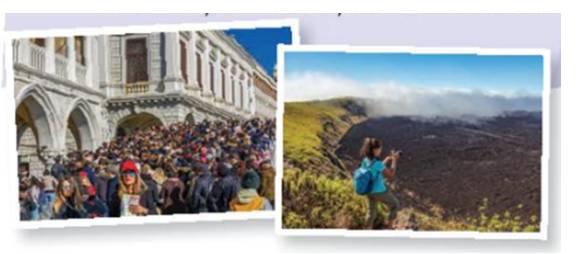

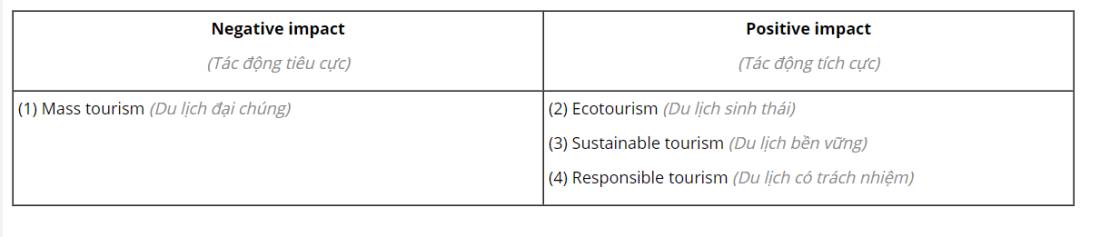
Tác động đến môi trường của du lịch
Mặc dù du lịch thường được gọi là 'ngành công nghiệp không khói', hoặc một ngành công nghiệp thân thiện với môi trường, nó thực sự có thể gây hại cho thiên nhiên. Tuy nhiên, các loại hình du lịch khác nhau có thể có những tác động khác nhau đến môi trường.
• Du lịch đại chúng là loại hình du lịch bao gồm hàng chục nghìn người tập trung ở cùng một địa điểm vào cùng một thời điểm trong năm. Nó thường có nhiều tác động tiêu cực đến khu vực địa phương, chẳng hạn như xả rác từ khách du lịch và ô nhiễm giao thông.
• Du lịch sinh thái cung cấp cho khách du lịch cơ hội khám phá thiên nhiên, đồng thời giúp bảo vệ môi trường và giáo dục du khách về các vấn đề môi trường tại địa phương. Nó cũng thúc đẩy sự tôn trọng của khách du lịch đối với cộng đồng địa phương.
• Du lịch bền vững không chỉ liên quan đến việc bảo vệ môi trường và tôn trọng văn hóa mà còn phải nỗ lực giữ lợi nhuận cho địa phương. Nó thường đề cập đến các hành động của ngành du lịch nói chung.
• Du lịch có trách nhiệm khuyến khích khách du lịch nhiều hơn là khách vãng lai. Khách du lịch có trách nhiệm không chỉ nhận thức được vai trò của mình mà còn phải tham gia vào việc bảo vệ môi trường, văn hóa và nâng cao lợi nhuận cho người dân địa phương. Du lịch có trách nhiệm thường liên quan đến các hành động cụ thể của cá nhân, doanh nghiệp và cộng đồng.
Dos : explore the place , learn about the place
Don'ts : damage the environment , leave litter behind
1. It helps students have more control over their own learning. (Nó giúp học sinh kiểm soát tốt hơn việc học của mình.) | ✓ |
2. It is easier to get access to lesson materials. (Tiếp cận tài liệu bài học dễ dàng hơn.) | ✓ |
3. It may not prepare students well for tests. (Nó có thể không chuẩn bị tốt cho học sinh cho các bài kiểm tra.) | |
4. Students can develop better communication and teamwork skills. (Học sinh có thể phát triển các kỹ năng giao tiếp và làm việc nhóm tốt hơn.) | ✓ |
5. It is not suitable for students who have no Internet connection or computers. (Nó không phù hợp cho học sinh không có kết nối Internet hoặc máy tính.) | ✓ |
1. Mass tourism
2. Responsible tourism
3. Sustainable tourism