
Hãy nhập câu hỏi của bạn vào đây, nếu là tài khoản VIP, bạn sẽ được ưu tiên trả lời.

1. jetpack
2. amphibious bus
3. tunnel bus
4. flying car / motorbike
5. self-driving car
A: Object 1. You use it to see in the dark.
(Món đồ 1. Bạn sử dụng nó để nhìn trong bóng tối.)
B: A torch!
(Đèn pin!)
A: Yes, we can use it to signal for help at night.
(Vâng, chúng ta có thể sử dụng nó để báo hiệu sự giúp đỡ vào ban đêm.)
A: Object 2. You use it to light a fire.
(Món đồ 2. Bạn sử dụng nó để đốt lửa.)
B: A lighter!
(Cái bật lửa!)
A: Object 3. You use it to cut something.
(Món đồ 3. Bạn sử dụng nó để cắt một thứ gì đó.)
B: A knife!
(Con dao!)
A: Correct! It can help us clear a path and get through the dense forest safely and without issues.
A: Object 4. You use it to keep you warm at night.
(Món đồ 4. Bạn sử dụng nó đểgiữ ấm cho bạn vào ban đêm.)
B: A sleeping bag!
(Túi ngủ!)
A: Object 5. You use it to contain water.
(Món đồ 5. Bạn sử dụng nó đểchứa nước.)
B: A water bottle!
(Chai nước!)
1. track | 2. applications | 3. speed | 4. receiver |
The USA invented the Global Positioning System (GPS)in the 1970s. At first, it was a military project,
but now anyone can use the system to find out exactly their locations, and track their movements.
For GPS to work, your receiver (or smartphone)must be in contact with four or more satellites inspace.
Then it uses the data to calculate the exact time andposition on Earth.
However, it is not enough for survival situations (escaping the jungles or deserts) because you must know
your direction (which way you are moving) and your speed (how fast you are moving). GPS provides this
information, by tracking yourposition over time.
For modern explorers, a smartphone and GPS are as important as a compass, torch and map. With the right
applications, your smartphone will help you survive.
Tạm dịch:
Hoa Kỳ đã phát minh ra Hệ thống Định vị Toàn cầu (GPS) vào những năm 1970. Lúc đầu, nó là một dự án
quân sự, nhưng bây giờ bất kỳ ai cũng có thể sử dụng hệ thống để tìm ra chính xác vị trí của họ và theo dõi
chuyển động của họ.
Để GPS hoạt động, máy thu (hoặc điện thoại thông minh) của bạn phải liên hệ với bốn hoặc nhiều vệ tinh
trong không gian.
Sau đó, nó sử dụng dữ liệu để tính toán thời gian và vị trí chính xác trên Trái đất.
Tuy nhiên, điều đó là chưa đủ cho các tình huống sinh tồn (thoát khỏi rừng rậm hoặc sa mạc) vì bạn phải
biết hướng của mình (bạn đang di chuyển theo cách nào) và tốc độ của bạn (bạn đang di chuyển nhanh như
thế nào). GPS cung cấp thông tin này, bằng cách theo dõi vị trí của bạn theo thời gian.
Đối với những nhà thám hiểm hiện đại, điện thoại thông minh và GPS cũng quan trọng như la bàn, đèn pin
và bản đồ. Với các ứng dụng phù hợp, điện thoại thông minh của bạn sẽ giúp bạn tồn tại.
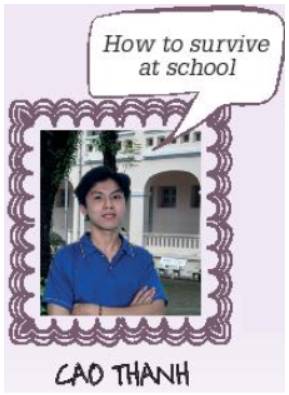
- The information inthis blog is for all the students.
(Thông tin trong blog này là dành cho tất cả các học sinh.)
- The advice Thanh givesabout school workis “don’t get behind with your work. You should pay attention in class and do your homework.”
(Lời khuyên mà Thanh đưa ra về việc học ở trường là “đừng chậm trễ với việc học của bạn. Bạn nên chú ý trong lớp và làm bài tập của bạn.”)
Tạm dịch bài đọc:
Chào cả lớp. Hôm nay tôi muốn nói với các bạn về hai nguồn năng lượng. Chúng là những nguồn không thể tái tạo và những nguồn có thể tái tạo.
Các nguồn không thể tái tạo là than đá, dầu mỏ và khí đốt tự nhiên. Chúng ta có thể sử dụng những nguồn này để sản xuất năng lượng. Chúng rẻ và dễ sử dụng. Mọi người sử dụng chúng rất nhiều. Nhưng chúng rất hạn chế và sẽ hết sớm.
Các nguồn tái tạo đến từ mặt trời, gió hoặc nước. Khi năng lượng đến từ mặt trời, chúng ta gọi nó là năng lượng mặt trời. Năng lượng gió đến từ gió, và năng lượng thủy điện đến từ nước. Nguồn tái tạo có sẵn, sạch sẽ và an toàn để sử dụng. Nhưng chúng đắt tiền để sản xuất.
Trong tương lai, chúng ta sẽ dựa nhiều hơn vào các nguồn năng lượng tái tạo. Chúng tốt hơn cho môi trường và chúng sẽ không cạn kiệt.
1. Nguồn không tái tạo được rẻ và _________.
A. có sẵn
B. dễ sử dụng
C. đắt
2. ________nhận được từ mặt trời, gió hoặc nước.
A. Nguồn tái tạo
B. Tất cả các nguồn năng lượng
C. Các nguồn không thể tái tạo
3. Khi năng lượng đến từ nước, chúng ta gọi nó là_________.
A. năng lượng gió
B. năng lượng mặt trời
C. năng lượng thủy
4. Các nguồn năng lượng tái tạo tốt hơn cho ____.
A. môi trường
B. xe của chúng tôi
C. năng lượng thủy
1. B
Non – renewable sources are cheap and easy to use.
(Năng lượng không thể tái tạo thì rẻ và dễ sử dụng.)
Thông tin: Non-renewable sources are coal, oil and natural gas. ... They are cheap and easy to use.
(Các nguồn không thể tái tạo là than đá, dầu mỏ và khí đốt tự nhiên. ... Chúng rẻ và dễ sử dụng.)
2. ARenewable sources come from the sun, wind or water.
(Các nguồn năng lượng có thể tái tạo đến từ mặt trời, gió và nước.)
Thông tin: Renewable sources come from the sun, wind or water.
(Các nguồn tái tạo đến từ mặt trời, gió hoặc nước.)
3. C
When energy comes from water, we call it hydro energy.
(Khi năng lượng đến từ nước, chúng ta gọi nó là năng lượng thủy điện.)
Thông tin: Wind energy comes from the wind, and hydro energy comes from water.
(Năng lượng gió đến từ gió, và năng lượng thủy điện đến từ nước.)
4. A
Renewable energy sources are better for the environment.
(Các nguồn năng lượng có thể tái tạo thì tốt hơn cho môi trường.)
Thông tin: In the future we will rely more on renewable energy sources. They are better for the environment and they will not run out.
(Trong tương lai, chúng tôi sẽ dựa nhiều hơn vào các nguồn năng lượng tái tạo. Chúng tốt hơn cho môi trường và chúng sẽ không cạn kiệt.)
1.e | 2.a | 3.f |
4.b | 5.d | 6.c |
1 The USA developed GPS for soldiers to use in war.
(Hoa Kỳ đã phát triển GPS cho binh lính sử dụng trong chiến tranh.)
2 Millions of people can now use GPS.
(Hàng triệu người hiện có thể sử dụng GPS.)
3 The system needs to be in contact with satellites in space.
(Hệ thống cần liên hệ với các vệ tinh trong không gian.)
4 You must know which way you are moving to survive.
(Bạn phải biết mình đang di chuyển theo đường nào để tồn tại.)
5 To track your movement, you should find your position at different points in time.
(Để theo dõi chuyển động của bạn, bạn nên tìm vị trí của mình tại các thời điểm khác nhau.)
6 Smartphones now have lots of ways to help people survive.
(Điện thoại thông minh hiện có rất nhiều cách để giúp mọi người tồn tại.)
Đáp án: C
This text is about traffic rules.
(Văn bản nói về luật giao thông.)
Giải thích: The text mentions some rules for pedestrians, cyclists and passengers when participating in traffic.
(Văn bản đề cập đến một số quy định đối với người đi bộ, đi xe đạp và hành khách khi tham gia giao thông.)
1.If I go to the jungle, I’ll take my sleeping bag.
(Nếu tôi đi vào rừng, tôi sẽ mang theo túi ngủ của mình.)
2.If I take my sleeping bag, I’ll fold my tent and put into it.
(Nếu tôi lấy túi ngủ của mình, tôi sẽ gấp lều của mình và cất vào bên trong nó.)
3.If I fold my tent and put into it., I’ll tight them with a rope.
(Nếu tôi gấp lều của mình và cất vào bên trong nó, tôi sẽ buộc chặt chúng bằng một sợi dây.)
4.If I tight them with a rope, it won’t been dropped somewhere.
(Nếu tôi buộc chặt chúng bằng một sợi dây, nó sẽ không bị rơi ở đâu đó.)
5.If it isn’t dropped somewhere, I’ll have a place to sleep.
(Nếu nó không bị rơi ở đâu đó, tôi sẽ có một nơi để ngủ.)
6.If I have a place to sleep, I won’t be cold at night.
(Nếu tôi có một chỗ để ngủ, tôi sẽ không bị lạnh vào ban đêm.)
7.If I’m not cold at night, I’ll be fine enough for the trip.
(Nếu tôi không lạnh vào ban đêm, tôi sẽ ổn cho chuyến đi.)
8.If I’m fine enough for the trip, I’ll complete the survival challenge well.
(Nếu tôi đủ khỏe cho chuyến đi, tôi sẽ hoàn thành tốt thử thách sinh tồn.)
1.If I go to the desert, I’ll take my backpack.
(Nếu tôi đến sa mạc, tôi sẽ mang theo ba lô.)
2.If I take my backpack, I’ll pack a sleeping bag.
(Nếu tôi mang theo ba lô của mình, tôi sẽ gói theo một túi ngủ.)
3.If I pack a sleeping bag, I’ll also pack a tent.
(Nếu tôi gói theo túi ngủ, tôi cũng sẽ gói theo lều.)
4.If I pack a tent, I’ll have a shelter.
(Nếu tôi gói theo một cái lều, tôi sẽ có một nơi trú ẩn.)
5.If I have a shelter, I won’t be cold at night.
(Nếu tôi có một nơi trú ẩn, tôi sẽ không bị lạnh vào ban đêm.)
1. Jet pack
2. amphibious bus
3. water
4. Flying motorbike - flying car
5. self-driving car