
Hãy nhập câu hỏi của bạn vào đây, nếu là tài khoản VIP, bạn sẽ được ưu tiên trả lời.

The film is Iron Man 3. The actor is Robert Downey Jr. (Đây là phim Người Sắt 3. Diễn viên thủ vai là Robert Downey Jr.)
1. The student in the photo a is learning online through her laptop while the students in photo b are learning face-to-face.
(Học sinh trong ảnh a đang học trực tuyến qua máy tính xách tay của cô ấy trong khi các học sinh trong ảnh b đang học trực tiếp.)
2. I’m familiar with both ways of learning.
(Tôi quen thuộc với cả hai cách học.)

A. Katniss Everdeen, stared by Jennifer Lawrence, is in the Hunger Games films.
(Katniss Everdeen, thủ vai bởi Jennifer Lawrence, xuất hiện trong loạt phim Đấu trường sinh tử.)
B. Newt Scamander, stared by Eddie Redmayne, is in the Fantastic Beasts: The Crimes of Grindelwald.
(Newt Scamander, thủ vai bởi Eddie Redmayne, xuất hiện trong phim Sinh vật huyền bí: Tội ác của Grindelwald.)
C. James Bond, stared by Daniel Crag, is in the James Bond films.
(James Bond, thủ vai bởi Daniel Crag, xuất hiện trong loạt phim về James Bond.)
D. Black Widow, stared by Scarlett Johansson, is in the Avengers films.
(Góa phụ đen, thủ vai bởi Scarlett Johansson, xuất hiện trong loạt phim Avengers.)
E. Maleficent, played by Angelina Jolie, is in the Maleficent films.
(Maleficent, thủ vai bởi Angelina Jolie, xuất hiện trong loạt phim Tiên hắc ám.)
1. Did you watch TV? What did you watch? (Bạn có xem TV không? Bạn đã xem gì?)
2. Did you go out on Friday or Saturday evening? Where did you go? (Bạn có ra ngoài vào tối thứ Sáu hay thứ Bảy không? Bạn đã đi đâu?)
3. Did you see anyone on Saturday or Sunday? Who did you see? (Bạn có thấy ai vào thứ Bảy hay Chủ nhật không? Bạn đã thấy ai?)
4. Did you do any homework? When did you do it? (Bạn có làm bài tập chưa? Bạn đã làm nó khi nào?)
5. Did you play computer games? Which games did you play? (Bạn có chơi trò chơi trên máy tính không? Bạn chơi trò gì?)
6. Did you do any sport? What sport did you do? (Bạn có chơi thể thao không? Bạn chơi môn thể thao nào?)

1. learned/learnt | 2. loved | 3. wasn't | 4. got |
5. spent | 6. didn't leave | 7. watched |
|
Kirstie: Hi, Laurie. How are you? Tell me about your summer holiday!
Laurie: Well, for the first three weeks, I was at a summer camp in Cornwall.
Kirstie: Really? That sounds like fun!
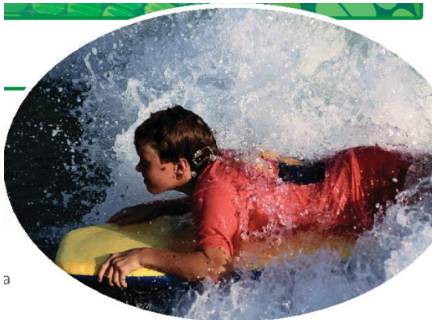
Laurie: Yes, it was. I (1) learnt a new sport - bodyboarding.
Kirstie: Wow! That sounds great!
Laurie: Yes. I (2) loved it. It was really exciting - and a bit frightening too!
Kirstie: I bet! What else did you get up to over the summer?
Laurie: Well, the second half of the holiday (3) wasn’t so good. I (4) got a stomach bug and (5) spent nearly a week on the sofa.
Kirstie: Oh dear! How awful!
Laurie: I (6) didn’t leave the house for days. I just (7) watched DVDs. I was so bored!
Tạm dịch:
Kirstie: Chào, Laurie. Cậu thế nào rồi? Kể cho mình về kì nghỉ hè của cậu đi!
Laurie: Chà, trong ba tuần đầu tiên, mình đã đi một trại hè ở Cornwall.
Kirstie: Thật không? Nghe thật vui đó chứ
Laurie: À đúng rồi. Mình đã học một môn thể thao mới – lướt sóng.
Kirstie: Ồ! Nghe thật tuyệt!
Laurie: Đúng rồi. Mình yêu nó lắm. Nó rất là thú vị - pha lẫn chút sợ hãi nữa!
Kirstie: Chắc chắn rồi! Cậu còn làm gì khác cho đến khi hết mùa hè không?
Laurie: Ờm, nửa còn lại của mùa hè cũng không tốt cho lắm. Mình bị viêm dạ dày ruột và phải dành gần một tuần trên ghế sofa.
Kirstie: Ôi trời! Thật tệ làm sao.
Laurie: Mình đã không ra khỏi nhà trong nhiều ngày. Mình chỉ xem DVD. Mình đã rất chán.
Giải thích:
(1) I learnt a new sport - bodyboarding. (Mình đã học một môn thể thao mới – lướt sóng.)
Chúng ta sử dụng thì quá khứ đơn để nói về những việc xảy ra và kết thúc trong quá khứ, do learn là động từ bất quy tắc (learn – learnt – learnt) nên ta có công thức: S + learnt + …
(2) I loved it. (Mình yêu nó lắm.)
Tương tự với cách dùng ở câu trên, nhưng do love là động từ có quy tắc nên ta thêm ‘d’ vào sau động từ: S + loved + …
(3) Well, the second half of the holiday wasn’t so good.
Câu này có cách dùng tương tự câu trên, và do đây là câu phủ định nên ta phải thêm not vào động từ → wasn’t
(4) I got a stomach bug… (Mình bị viêm dạ dày ruột…)
Tương tự với cách dùng ở câu trên, do get là động từ bất quy tắc (get – got - got) nên ta có công thức: S + got + …
(5) and spent nearly a week on the sofa. (và phải dành gần một tuần trên ghế sofa.)
Tương tự với cách dùng ở câu trên, do spend là động từ bất quy tắc (spend – spent -spent) nên ta có công thức: S + spent + …
(6) I didn’t leave the house for days. (Mình đã không ra khỏi nhà trong nhiều ngày.)
Câu này có cách dùng tương tự câu trên, và do đây là câu phủ định nên ta có công thức: S + did not + Vo
(7) I just watched DVDs. (Mình chỉ xem DVD.)
Tương tự với cách dùng ở câu trên, nhưng do watch là động từ có quy tắc nên ta thêm ‘ed’ vào sau động từ: S + watched + …

1. A. worried (lo lắng), B. happy (vui vẻ), excited (hào hứng).
2. Photo A: The man is worried because the people are standing too close to each other and they are not wearing masks.
(Ảnh A: Người đàn ông lo lắng vì mọi người đứng quá gần nhau và họ không đeo khẩu trang.)
Photo B: The girls are happy because it is their graduation day.
(Ảnh B: Các cô gái rất vui vì đây là ngày tốt nghiệp của họ.)
Photo C: The girl's schoolwork is difficult and boring.
(Ảnh C: Bài tập ở trường của cô gái thật khó khăn và nhàm chán.)
Refer
There are several things that we should do to reduce the negative impact of travelling on the environment. First of all, we should reduce our carbon footprint during the trip. We should only fly when the trip is long and choose environmentally-friendly means of transport such as cycling or public transport. The next thing is that wherever we go, we should always protect our environment. By keeping it clean and safe, we can reduce the negative impact of travelling on the environment. In addition, we had better choose activities that are good for local people and the environment. These will not only help us understand but also respect the nature more and stop doing things that harm the environment and local area as well
1. Read the text. Match the highlighted words with their meanings.
(Đọc văn bản. Nối các từ được làm nổi bật với nghĩa của chúng.)
The more people travel, the bigger impact they may have on the environment. How can we reduce it while travelling? Here are some advice.
Reduce your carbon footprint while travelling. Since flying produces more carbon footprint than any other means of transport, you should only fly when the trip is long. During the trip, you should walk, cycle or use public transport as much as you can. This not only helps to keep the environment clean, but also allows you to enjoy the beauty of nature and interact with local people.
Choose eco-friendly activities that benefit animals and the ecosystem. Avoid activities that allow you to touch or ride animals because they disturb their natural patterns and attract many people. Instead, visit wildlife parks or organic farms. These will help you understand and respect the nature more and stop doing things that harm the environment.
Answer:
1. interact ->b: to talk or do things with other people.
2. benefit ->a: to be good for someone or something.
3. disturb ->c: to interrupt what people are doing and make them angry.
A: Kính Vạn Hoa
B: Thor/Advengers – actor Chris Hemswoth
C: Gru và những đứa trẻ mồ côi
D: Đường lên đỉnh Olympia