K
Khách

Hãy nhập câu hỏi của bạn vào đây, nếu là tài khoản VIP, bạn sẽ được ưu tiên trả lời.

ANSWER KEY & EXPLANATIONPart 1: Multiple ChoiceB (accused of: bị buộc tội)A (experienced in / capable of: có kinh nghiệm về / có khả năng làm gì)C (congratulate sb on sth: chúc mừng ai về điều gì)B (short of / decide on: thiếu hụt / chốt, quyết định chọn)B (similar to / familiar with: tương tự với / quen thuộc với)A (suffer from / prevent sb from: chịu đựng / ngăn cản ai khỏi)C (sentence sb to: kết án ai bao nhiêu năm tù)B (rely...
Đọc tiếp

ANSWER KEY & EXPLANATION

Part 1: Multiple Choice

  1. B (accused of: bị buộc tội)
  2. A (experienced in / capable of: có kinh nghiệm về / có khả năng làm gì)
  3. C (congratulate sb on sth: chúc mừng ai về điều gì)
  4. B (short of / decide on: thiếu hụt / chốt, quyết định chọn)
  5. B (similar to / familiar with: tương tự với / quen thuộc với)
  6. A (suffer from / prevent sb from: chịu đựng / ngăn cản ai khỏi)
  7. C (sentence sb to: kết án ai bao nhiêu năm tù)
  8. B (rely on: phụ thuộc vào, dựa dẫm vào)
  9. B (solution to / increase in: giải pháp cho / sự gia tăng về)
  10. B (translate into / send to: dịch sang / gửi cho)
  11. A (addicted to: nghiện cái gì)
  12. C (embarrassed about: xấu hổ về)
  13. B (result in / damage to: dẫn đến / thiệt hại cho)
  14. C (influence on / amazed by/at: có ảnh hưởng lên / kinh ngạc bởi)
  15. C (confuse sth with sth: nhầm lẫn cái này với cái kia)

Part 2: Guided Cloze Text Passage 1: 

16. B (apply for a position: ứng tuyển vị trí) 

17. A (nervous about: lo lắng về) 

18. C (ask about: hỏi về) 19. C (responsible for: chịu trách nhiệm cho) 

20. D (good at: giỏi việc gì) 

21. A (cope with: đối phó, đương đầu với) 

22. C (suitable for: phù hợp với)

Passage 2: 

23. B (arrested for: bị bắt vì tội gì) 

24. A (charged with: bị cáo buộc tội gì - lưu ý: accuse OF, nhưng charge WITH

25. A (afford to + V: đủ khả năng chi trả để làm gì) 

26. C (pay for: trả tiền cho) 

27. B (forgive sb for: tha thứ cho ai vì điều gì) 

28. B (punish sb for: phạt ai vì điều gì)

Passage 3: 

29. C (suffer from: chịu đựng bệnh tật/tình trạng) 

30. B (allergic to: dị ứng với) 

31. A (familiar with: quen thuộc với) 

32. D (combine with: kết hợp với) 

33. B (aware of: nhận thức được) 

34. A (prevent from: ngăn chặn khỏi)

Học bớt cho phần ik😭😭

2
27 tháng 5

ủa s đen thui v


  • accused of
  • aware of
  • short of


  • similar to
  • addicted to
  • solution to
  • sentence sb to
  • allergic to
  • translate into (đặc biệt)


  • familiar with
  • cope with
  • charged with
  • combine with
  • confuse A with B


  • apply for
  • responsible for
  • suitable for
  • arrested for
  • pay for
  • forgive sb for
  • punish sb for


  • congratulate on
  • rely on
  • decide on
  • influence on


  • suffer from
  • prevent sb from


  • nervous about
  • ask about
  • embarrassed about


  • good at
  • experienced in
  • capable of
  • result in
  • damage to
  • increase in
  • amazed by/at
  • afford to + V
11 tháng 10 2023

1. How fast can the fastest person run? – Around 44 kilometres an hour.

(Người chạy nhanh nhất có thể chạy nhanh như thế nào?- Khoảng 44km/h.)

2. How many countries are there in the world? – 195 (recognised by the United Nations.)

(Có bao nhiêu quốc gia trên thế giới?- 195 (được công nhận bởi Liên hợp quốc.))

3. How tall is an adult giraffe? – Between 5 and 6 metres.

(Con hươu cao cổ trưởng thành cao bao nhiêu? – Từ 5 đến 6 mét.)

4. How long is an adult crocodile? – Around 4 metres.

(Cá sấu trưởng thành dài bao nhiêu? – Khoảng 4m.)

5. How far is the North Pole from the South Pole? - 20,014 kilometres.

(Cực Bắc cách cực Nam bao xa? – 20.014 km.)

19 tháng 10 2017

Viết rõ ra đi bn :"vv

19 tháng 8 2023

Tham khảo

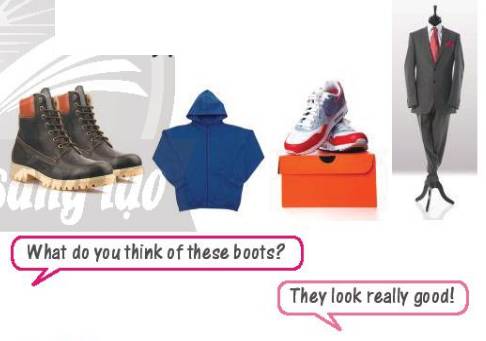
A: Why don’t you try this indigo jacket on?

B: It’s not really my style.

A: What do you think of these sneakers?

B: They look really good. They’re expensive, though.

A: Why don’t you try this suit?

B: It’s a bit tight!

11 tháng 9 2023

Tham khảo :
A: My object’s a smart bike lock. We invented it to provide better security and convenience for cyclists. It uses advanced technology to protect bikes from theft and make locking and unlocking easier.

B: That sounds cool. Is it easy to use?

A: Yes, it is very user-friendly and convenient to use.

Q: How does it work?

A: It works by using Bluetooth connectivity to unlock the bike lock through a mobile app. The smart lock also has built-in sensors that can detect when someone is tampering with the bike and send an alert to the user's smartphone.

Q: That sounds a bit hi-tech. How's that possible?

A: The smart bike lock uses cutting-edge technology such as Bluetooth, GPS, and motion sensors to provide enhanced security and convenience for cyclists.

Q: Can we use it for any type of bike?

A: Yes, the smart bike lock is compatible with most types of bikes and can be easily attached to the frame of the bike. It is ideal for anyone who wants to protect their bike from theft and have a more convenient way of locking and unlocking their bike.
 

20 tháng 8 2023

Tham khảo

A: My object’s a smart bike lock. We invented it to provide better security and convenience for cyclists. It uses advanced technology to protect bikes from theft and make locking and unlocking easier.

B: That sounds cool. Is it easy to use?

A: Yes, it is very user-friendly and convenient to use.

Q: How does it work?

A: It works by using Bluetooth connectivity to unlock the bike lock through a mobile app. The smart lock also has built-in sensors that can detect when someone is tampering with the bike and send an alert to the user's smartphone.

Q: That sounds a bit hi-tech. How's that possible?

A: The smart bike lock uses cutting-edge technology such as Bluetooth, GPS, and motion sensors to provide enhanced security and convenience for cyclists.

Q: Can we use it for any type of bike?

A: Yes, the smart bike lock is compatible with most types of bikes and can be easily attached to the frame of the bike. It is ideal for anyone who wants to protect their bike from theft and have a more convenient way of locking and unlocking their bike.

2 tháng 7 2019

Đáp án B.

“don’t need to do something” tương đương “need not do something” -> “don’t need to ring” = “need not ring”

Dịch nghĩa: Bạn không cần phải bấm chuông đâu. Tôi có chìa khóa.

13 tháng 9 2017

Đáp án D

Câu đã có “not” => loại none

One thay thế cho danh từ “key” 

Câu này dịch như sau: Tôi đã thử mọi chìa khóa nhưng không chiếc nào vừa

16 tháng 11 2019

Đáp án D

Kiến thức: Thì trong tiếng anh

Giải thích:

Cấu trúc "This is the first/second/last… time + S + have/has + PP"– đa y là lần đầu tie n/thứ hai/cuối cùng…làm gì. Đây cũng là một dấu hiệu thường gặp trong thì hiện tại hoàn thành.

Tạm dịch: Đây là lần thứ hai cậu làm mất chìa khoá nhà rồi.

7 tháng 10 2018

Đáp án D

Kiến thức về thì trong tiếng anh

Cấu trúc “This is the first/second/last... time + S + have/has + VPP” – đây là lần đầu tiên/thứ hai/cuối củng...làm gì. Đây cũng là một dấu hiệu thường gặp trong thì hiện tại hoàn thành.

Tạm dịch: Đây là lần thứ hai cậu làm mất chìa khoá nhà rồi.

11 tháng 10 2023

A: What do you always do in the morning?

B: I always get up and brush my teeth.

A: Who do you go out with at 7 a.m?

B: I go out with my family.

A: What time do you go to bed?

B: I always go to bed before 10 p.m?

A: What TV programmes does your dad watch in the evening?

B: He usually watches news at 7 p.m.

A: When do you do your homework?

B: I often do my homework after dinner.

A: How often does your mum relax?

B: She always relax every night.

A: Where do you go in sumer vacation?

B: I and my family normally visit my grandparents.

11 tháng 10 2023

Tạm dịch:

A: Bạn luôn làm gì vào buổi sáng?

B: Tôi luôn thức dậy và đánh răng.

A: Bạn đi chơi với ai lúc 7 giờ sáng?

B: Tôi đi chơi với gia đình.

A: Mấy giờ bạn đi ngủ?

B: Tôi luôn đi ngủ trước 10 giờ tối?

A: Những chương trình truyền hình nào mà bố bạn xem vào buổi tối?

B: Bố thường xem tin tức lúc 7 giờ tối.

A: Khi nào bạn làm bài tập về nhà?

B: Tôi thường làm bài tập về nhà sau bữa tối.

A: Mẹ bạn thư giãn bao lâu một lần?

B: Mẹ luôn thư giãn mỗi đêm.

A: Bạn đi đâu trong kỳ nghỉ hè?

B: Tôi và gia đình tôi thường đến thăm ông bà của tôi.

Exercise 4. Match a-f with 1-3 in the Key Phrases. There is more than one correct answer.(Nối a-f với 1-3 trong Key Phrases. Có nhiều hơn 1 câu trả lời đúng.)a. you're always on the computerb. watch TVc. it's late and you've got school tomorrowd. go to a friend's housee. use the computerf. you need to help with the housework nowKEY PHRASESRequesting permission1. Is it OK if I/ we……………… ?2. Can I/ we/ you……………….?Giving permissionYes, of course you...
Đọc tiếp

Exercise 4. Match a-f with 1-3 in the Key Phrases. There is more than one correct answer.

(Nối a-f với 1-3 trong Key Phrases. Có nhiều hơn 1 câu trả lời đúng.)

a. you're always on the computer

b. watch TV

c. it's late and you've got school tomorrow

d. go to a friend's house

e. use the computer

f. you need to help with the housework now

KEY PHRASES

Requesting permission

1. Is it OK if I/ we……………… ?

2. Can I/ we/ you……………….?

Giving permission

Yes, of course you can.

Refusing permission

No, I’m afraid you can’t.

3. I’m sorry, but…………….. .                                                                                                                                                                                                                                                                                                                       


2
18 tháng 2 2023

a - 3
b - 1 ; 2
c - 3
d - 1 ; 2
e - 1 ; 2
f - 3

12 tháng 10 2023

KEY PHRASES

Requesting permission (Hỏi xin phép)

1. Is it OK if I/ we watch TV/  go to a friend's house/ use the computer?

( Tôi / chúng tôi có thể xem TV / đến nhà một người bạn / sử dụng máy tính được không?)

2. Can I/ we/ you watch TV/  go to a friend's house/ use the computer?

( Tôi / chúng tôi / bạn có thể xem TV / đến nhà một người bạn / sử dụng máy tính không?)

Giving permission (Cho phép)

Yes, of course you can.

(Ừm, dĩ nhiên bạn có thể.)

Refusing permission (Từ chối sự xin phép)

No, I’m afraid you can’t.

(Không, tôi e rằng bạn không thể.)

3. I’m sorry, but you're always on the computer/ it's late and you've got school tomorrow/ you need to help with the housework now.   

( Tôi rất tiếc, nhưng bạn luôn sử dụng máy tính / đã muộn và ngày mai bạn phải đi học / bạn cần giúp việc nhà ngay bây giờ.)