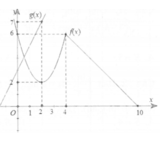
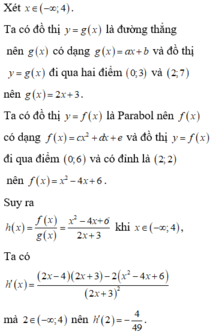
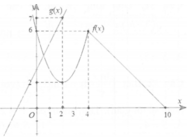
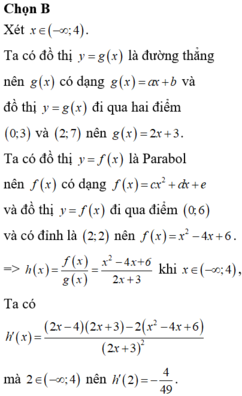
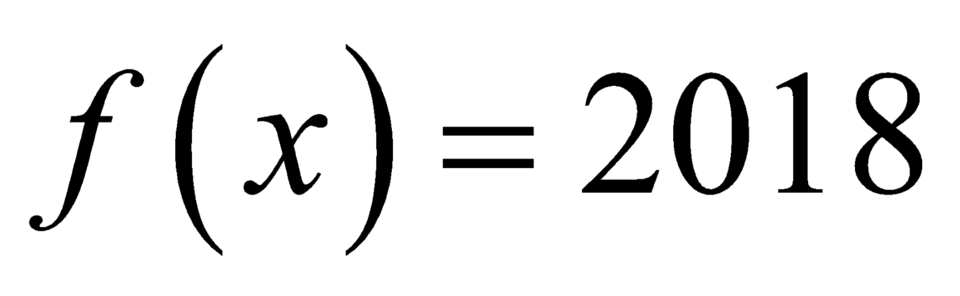
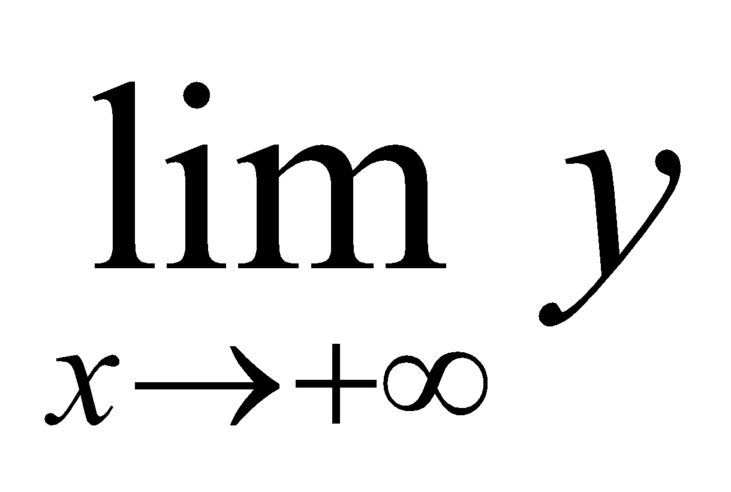
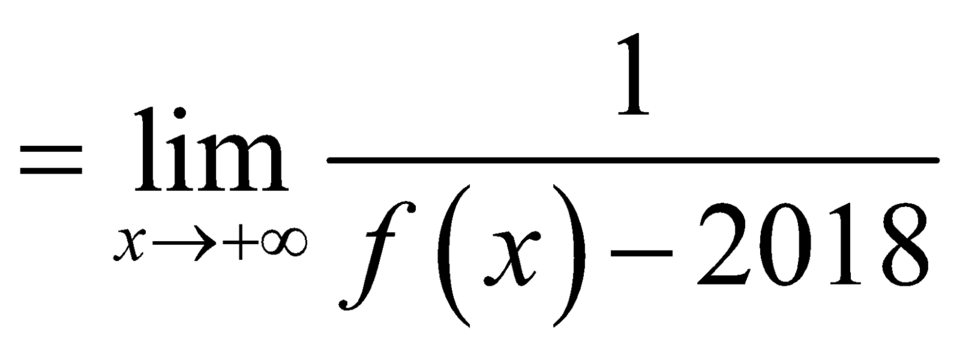
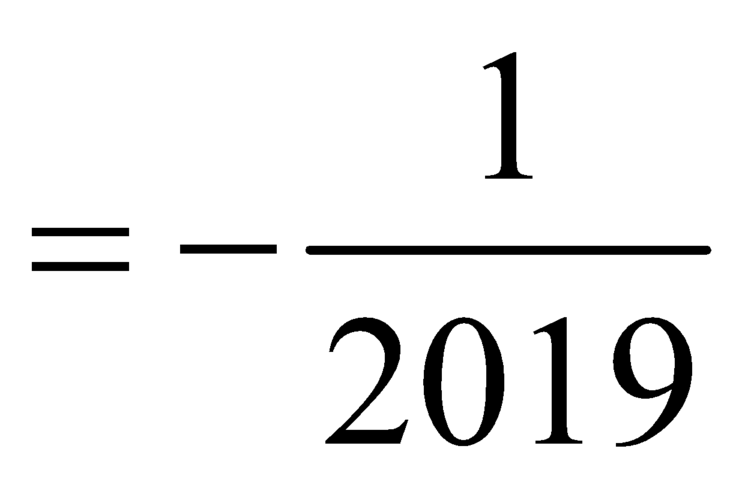
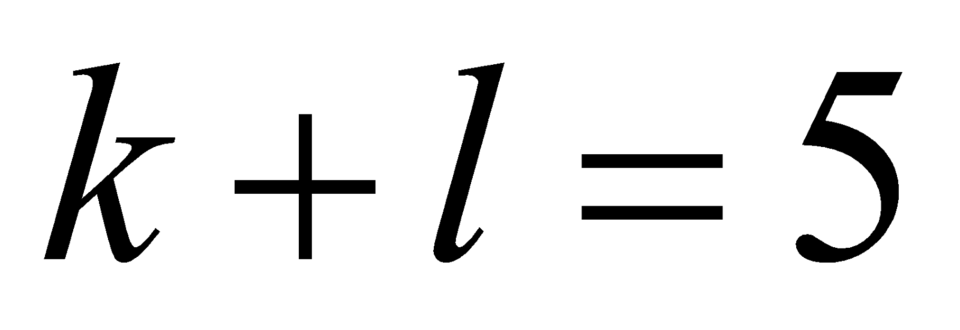
Tính đạo hàm của hàm số tại .

Hãy nhập câu hỏi của bạn vào đây, nếu là tài khoản VIP, bạn sẽ được ưu tiên trả lời.
Bài 1:
a: \(f^{\prime}\left(x\right)=\left(x+1\right)\left(1-x^2\right)\left(2x-1\right)^3\)
\(=\left(1-x\right)\left(x+1\right)^2\cdot\left(2x-1\right)^3\)
Đặt f'(x)=0
=>\(\left[\begin{array}{l}1-x=0\\ x+1=0\\ 2x-1=0\end{array}\right.\Rightarrow\left[\begin{array}{l}x=1\\ x=-1\\ x=\frac12\end{array}\right.\)
Bảng xét dấu:
=>Hàm số đồng biến trên khoảng (1/2;1); nghịch biến trên các khoảng (-∞;-1);(-1;1/2);(1;+∞)
b; Đặt f'(x)=0
=>\(\left(x+2\right)\left(x-3\right)^2\cdot\left(x-4\right)^3=0\)
=>\(\left[\begin{array}{l}x+2=0\\ x-3=0\\ x-4=0\end{array}\right.\Rightarrow\left[\begin{array}{l}x=-2\\ x=3\\ x=4\end{array}\right.\)
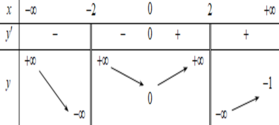
Bảng xét dấu:
=>Hàm số đồng biến trên các khoảng (-∞;-2);(4;+∞)
Hàm số nghịch biến trên các khoảng (-2;3); (3;4)
a: \(f'\left(x0\right)=\lim\limits_{x\rightarrow x0}\dfrac{f\left(x\right)-f\left(x0\right)}{x-x0}=\lim\limits_{x\rightarrow x0}\dfrac{x^2+1-x_0^2-1}{x-x_0}\)
\(=\lim\limits_{x\rightarrow x0}\dfrac{\left(x-x0\right)\left(x+x0\right)}{x-x0}=\lim\limits_{x\rightarrow x0}x+x0=x0+x0=2x0\)
b: \(f'\left(x0\right)=\lim\limits_{x\rightarrow x0}\dfrac{f\left(x\right)-f\left(x0\right)}{x-x0}\)
\(=\lim\limits_{x\rightarrow x0}\dfrac{kx+c-k\cdot x0-c}{x-x0}=\lim\limits_{x\rightarrow x0}\dfrac{k\left(x-x0\right)}{x-x0}\)
=\(\lim\limits_{x\rightarrow x0}k=k\)
Đáp án C
Vì phương trình
có ba nghiệm phân biệt nên đồ thị hàm số
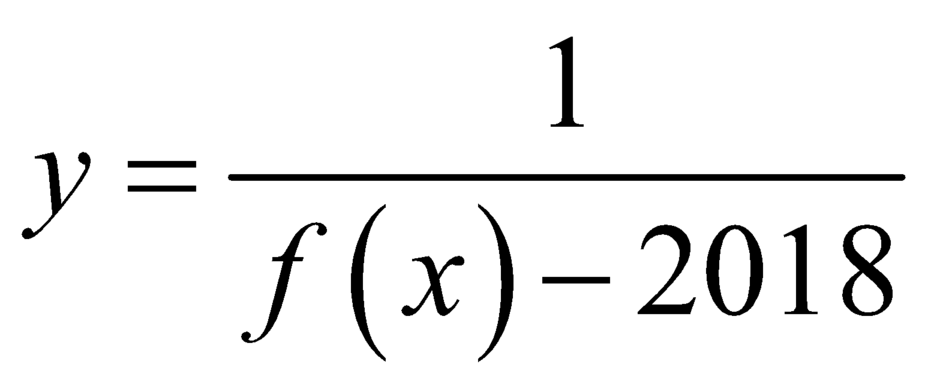
có ba đường tiệm cận đứng.
Mặt khác, ta có:
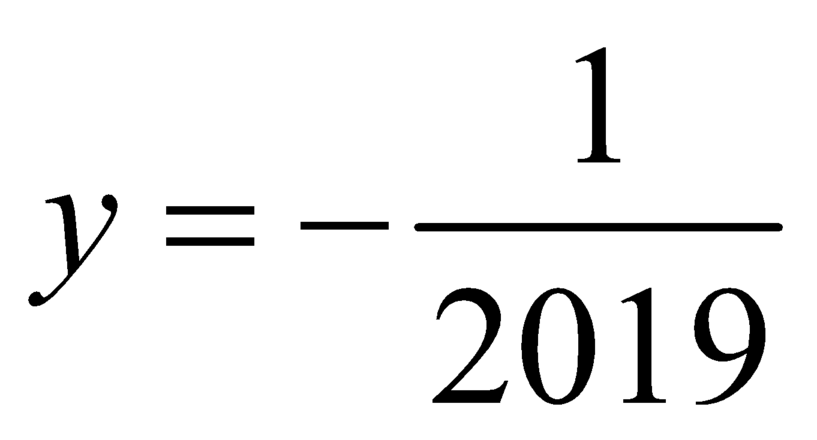
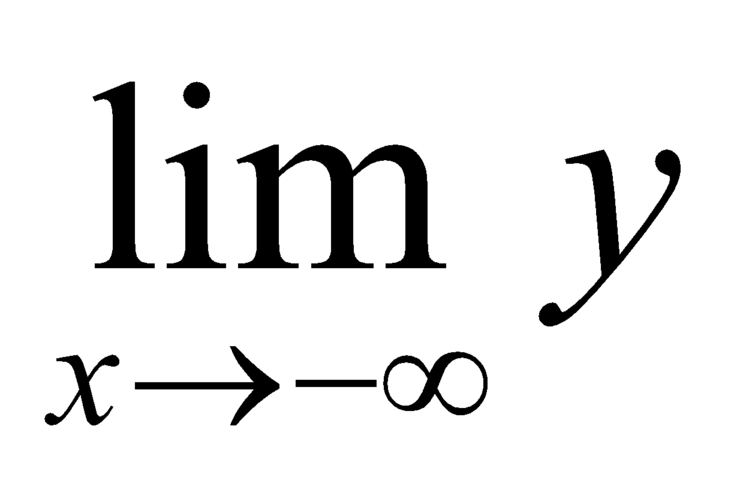
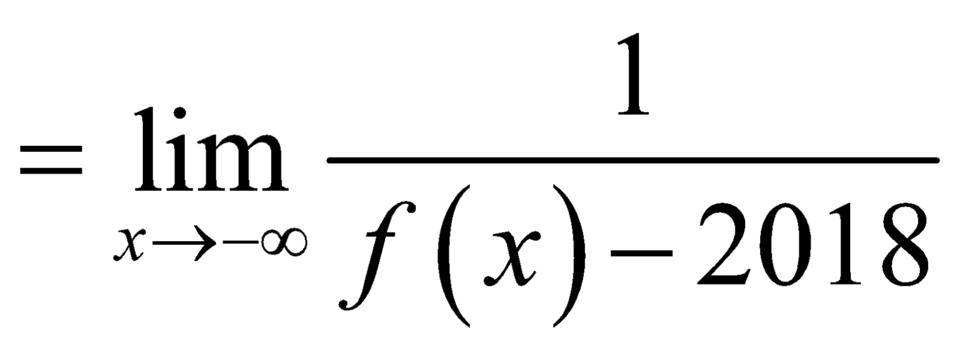
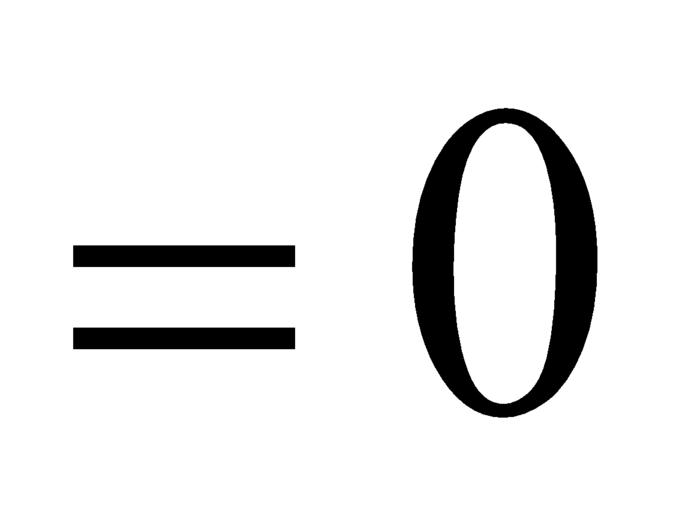
![]()

nên đường thẳng
là đường tiệm cận ngang của đồ thị hàm số
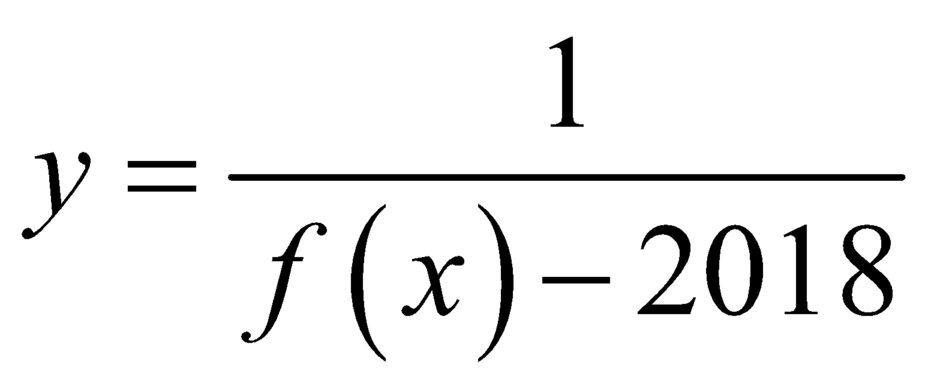
.
Và ![]()

nên đường thẳng y=0 là đường tiệm cận ngang của đồ thị hàm số
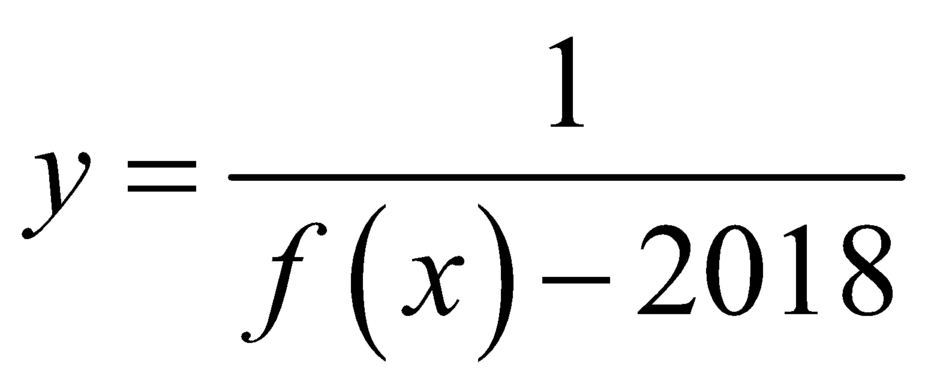
.
Vậy
.
1. \(y'=3x^2\sqrt{x}+\dfrac{x^3-5}{2\sqrt{x}}=\dfrac{7x^3-5}{2\sqrt{x}}\)
2. \(y'=3x^5+\dfrac{3}{x^2}+\dfrac{1}{\sqrt{x}}\)
3. \(y'=2-\dfrac{2}{\left(x-2\right)^2}\)
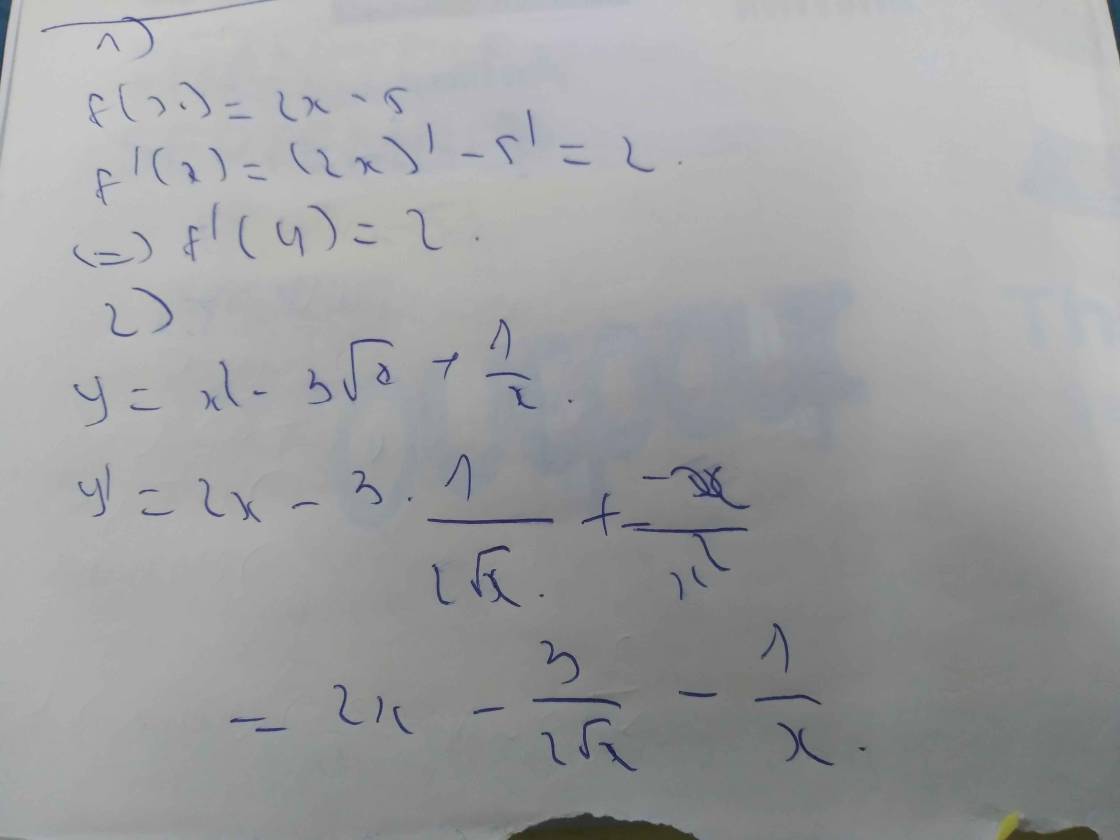
1) \(f\left(x\right)=2x-5\)
\(f'\left(x\right)=2\)
\(\Rightarrow f'\left(4\right)=2\)
2) \(y=x^2-3\sqrt[]{x}+\dfrac{1}{x}\)
\(\Rightarrow y'=2x-\dfrac{3}{2\sqrt[]{x}}-\dfrac{1}{x^2}\)
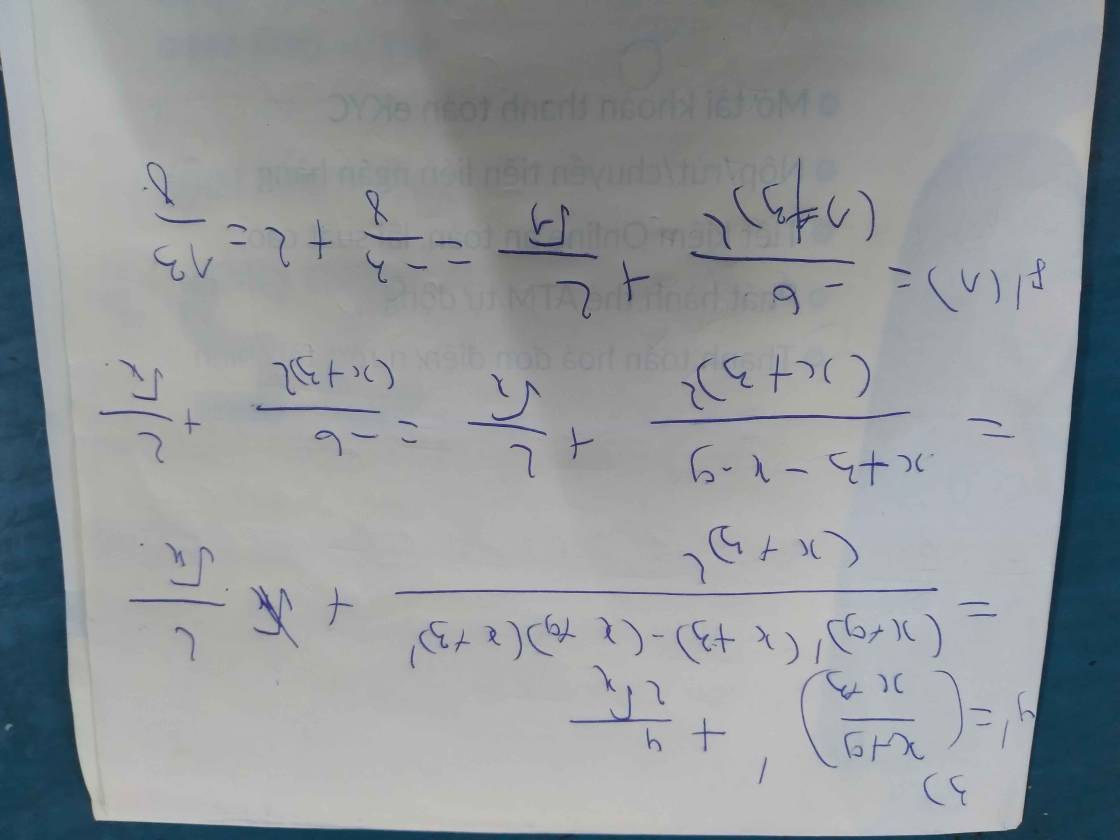
3) \(f\left(x\right)=\dfrac{x+9}{x+3}+4\sqrt[]{x}\)
\(\Rightarrow f'\left(x\right)=\dfrac{1.\left(x+3\right)-1.\left(x+9\right)}{\left(x-3\right)^2}+\dfrac{4}{2\sqrt[]{x}}\)
\(\Rightarrow f'\left(x\right)=\dfrac{x+3-x-9}{\left(x-3\right)^2}+\dfrac{2}{\sqrt[]{x}}\)
\(\Rightarrow f'\left(x\right)=\dfrac{12}{\left(x-3\right)^2}+\dfrac{2}{\sqrt[]{x}}\)
\(\Rightarrow f'\left(x\right)=2\left[\dfrac{6}{\left(x-3\right)^2}+\dfrac{1}{\sqrt[]{x}}\right]\)
\(\Rightarrow f'\left(1\right)=2\left[\dfrac{6}{\left(1-3\right)^2}+\dfrac{1}{\sqrt[]{1}}\right]=2\left(\dfrac{3}{2}+1\right)=2.\dfrac{5}{2}=5\)


Đáp án D