
Hãy nhập câu hỏi của bạn vào đây, nếu là tài khoản VIP, bạn sẽ được ưu tiên trả lời.

Question 1. Member nations/ have / reason / attend / summits / discuss /shared goals.
Member nations have a reason to attend summits to discuss shared goals
Question 2. His respiratory health /gradually / become / better / since / he quit / smoke.
His respiratory health has gradually become better since he quitted smoking
Question 3. It / forbidden / litter / public places / Vietnam / keep the environment / clean.
It is forbidden to litter in public places in Vietnam to keep the environment clean
Question 4. During / holiday season, / the city / look / festive / joyful, / decorate / with / lights and decorations.
During the holiday season, the city looks festive and joyful, decorated with lights and decorations
Question 5. My mom / charge / resolve / family argument / find / solution.
My mom takes charge to resolve family arguments and find solutions
1.Member nations have a reason for attending summits to discuss shared goals.
2.His respiratory health has gradually become better since he quit smoking.
3. It is forbidden to litter in public places in Vietnam to keep the environment clean.
4.During the holiday season, the city looks festive and joyful, decorated with lights and decorations.
5.My mom was in charge of resolving the family argument and finding a solution.
1. Currently I’m renting a flat on Phao Dai Lang Street. It’s not so far from my workplace, only about 2 kilometers.
2. I think most Vietnamese people want to stay at home to relax and recover from their busy schedules at work and school. I also notice that some families in the city often go on a picnic during these days.
3. Well, I’m currently living in an apartment in a condo near the heart of Hanoi, so as you can imagine, there is no space for a garden there. However, I do have a lovely garden in my parents’ house where I grow all kinds of flowers and plants.
4. Not really. I don’t think what I’m learning is practical and there is always a lot of homework and deadlines. But my friends at school are really nice. They are the main reason that I go to class.
5. Yes, I am. But I used to be a very hot-tempered kid who always got annoyed if someone kept me waiting even for 10 minutes.
1 A balanced lifestyle can lead to improved health if it is adopted consistently.
2 Harry apologized to his mom for not having returned home on time.
3 It is obligatory for us to attend the mandatory training session.
4 It has been two months since he last experienced a family quarrel.
5 Susan's failure to understand the math problems made her feel frustrated.
Question 1. A balanced lifestyle can lead to improved health if we adopt it consistently. (adopted)
=> A balanced lifestyle can lead to improved health if it is adopted consistently
Question 2. “I’m sorry for not returning home on time, Mom”, Harry said. (apologized)
Harry apologized to his mom for not returning home on time
Question 3. We are obligated to attend the mandatory training session. (to)
It is obligatory for us to attend the mandatory training session
Question 4. He hasn’t experienced a family quarrel for two months. (last)
The last time he experienced a family quarrel was two months ago
Question 5. Susan failed to understand the math problems. That made her feel frustrated. (failure)
Susan's failure to understand the math problems made her feel frustrated.
I once visited a city where the air was not very clean. The sky was not blue, but instead, it looked a bit gray. There was a lot of dust and tiny particles in the air, making it difficult to see far away.
I could feel the pollution in the air, and it made me cough a little. The smell was not fresh like in a park, but more like something not very pleasant. People were wearing masks to protect themselves from breathing in the dirty air.
It was a bit sad because I like places with clean air, and I could tell that the pollution was not good for the environment. I hope that in the future, we can find ways to make the air cleaner for everyone to enjoy.
In my opinion, the concern that teenagers spend too much time on social media is valid. While social media can be a useful tool for communication and staying connected with friends, it can also be addictive and take up too much time that could be spent on other activities.
One solution to this problem is for parents to set limits on their children's screen time and encourage them to engage in other activities such as sports, hobbies, and spending time with family and friends. Additionally, schools could educate students about responsible social media use and the negative effects of spending too much time on it.
Another solution is for social media companies to implement features that encourage users to take breaks and limit their time on the platform. For example, Instagram recently introduced a feature that shows users how much time they spend on the app each day and allows them to set a time limit.
Overall, while social media can be a valuable tool for communication and connection, it is important for teenagers to balance their time spent on it with other activities and for parents and schools to play an active role in encouraging responsible use.
Tạm dịch:
Theo tôi, lo ngại rằng thanh thiếu niên dành quá nhiều thời gian cho mạng xã hội là có cơ sở. Mặc dù mạng xã hội có thể là một công cụ hữu ích để giao tiếp và duy trì kết nối với bạn bè, nhưng nó cũng có thể gây nghiện và chiếm quá nhiều thời gian có thể dành cho các hoạt động khác.
Một giải pháp cho vấn đề này là cha mẹ đặt ra giới hạn về thời gian sử dụng thiết bị của con cái họ và khuyến khích chúng tham gia vào các hoạt động khác như thể thao, sở thích và dành thời gian cho gia đình và bạn bè. Ngoài ra, các trường học có thể giáo dục học sinh về việc sử dụng phương tiện truyền thông xã hội có trách nhiệm và những tác động tiêu cực của việc dành quá nhiều thời gian cho nó.
Một giải pháp khác dành cho các công ty truyền thông xã hội là triển khai các tính năng khuyến khích người dùng nghỉ giải lao và giới hạn thời gian của họ trên nền tảng. Ví dụ: Instagram gần đây đã giới thiệu một tính năng cho người dùng biết họ dành bao nhiêu thời gian cho ứng dụng mỗi ngày và cho phép họ đặt giới hạn thời gian.
Nhìn chung, mặc dù mạng xã hội có thể là một công cụ có giá trị để giao tiếp và kết nối, nhưng điều quan trọng đối với thanh thiếu niên là cân bằng thời gian dành cho mạng xã hội với các hoạt động khác, đồng thời để phụ huynh và nhà trường đóng vai trò tích cực trong việc khuyến khích sử dụng có trách nhiệm.
Social media has become an integral part of teenagers' lives, and many people argue that they spend too much time on these platforms. I believe this concern is valid. Excessive social media use can lead to negative effects such as reduced attention spans, decreased face-to-face interactions, and an increased risk of mental health issues like anxiety and depression. Teenagers may also become overly focused on creating a perfect online image, which can lead to feelings of inadequacy and low self-esteem.
To address this issue, both parents and educators should encourage a more balanced approach to social media use. Setting reasonable limits on screen time and promoting offline activities like sports, reading, and hobbies can help. Schools could also incorporate digital literacy programs that teach students about the impact of social media and the importance of maintaining a healthy balance. Ultimately, it’s important to guide teenagers towards using social media responsibly, ensuring it complements their lives rather than dominates them.
Viết một bài văn về nguyên nhân và ảnh hưởng của sự nóng lên toàn cầu và các giải pháp khả thi.
Phần mở đầu: (Giới thiệu chủ đề & nội dung chính của bài văn)
- một trong những vấn đề lớn nhất mà con người phải đối mặt ngày nay
- chủ yếu do con người gây ra
- tác động thảm khốc nhất đối với con người
- con người phải thực hiện các hành động để giảm thiểu rủi ro
- bài luận sẽ thảo luận về nguyên nhân và ảnh hưởng, và các giải pháp khả thi
Phần thân
1. Nguyên nhân của sự nóng lên toàn cầu
- Khí thải carbon dioxide từ việc đốt nhiên liệu hóa thạch trong các kế hoạch điện và xe có động cơ
- phá rừng để lấy đất trồng trọt, gỗ và giấy
- tăng cường sử dụng phân bón hóa học trên đất trồng trọt
2. Ảnh hưởng của sự nóng lên toàn cầu
- bệnh tật liên quan đến nhiệt và tử vong, và lây lan các bệnh truyền nhiễm
- Sự tan chảy của các chỏm băng ở hai cực và sự dâng cao của mực nước biển → Người dân mất nhà cửa
- các kiểu thời tiết khắc nghiệt như bão nghiêm trọng, sóng nhiệt, lũ lụt và hạn hán → Thiếu nước và lương thực
- sự tuyệt chủng trên diện rộng của các loài
3. Một số giải pháp khả thi
- giảm sử dụng năng lượng
- trồng cây hoặc thực vật
- sử dụng các phương tiện giao thông xanh
Sự kết luận
- Tóm tắt những điểm chính
- Phát biểu ý kiến của bạn
Gợi ý trả lời
Xem thêm về văn bản nguồn nàyNhập văn bản nguồn để có thông tin dịch thuật bổ sung
Gửi phản hồi
Bảng điều khiển bên
.png)
we should visit our grandparents once a week. My parents want us to help a close relationship with our grandparents by visiting them regularly and making sure that they are not lonely.
every member of the family has to keep his or her room tidy. My sister and I have to make our beds every morning, and clean the floor and windows twice a week.
my sister and I must be home before 10 p.m. My parents are very strict and believe that setting a curfew will help us to become responsible, and stay safe and healthy.
học tốt nha!
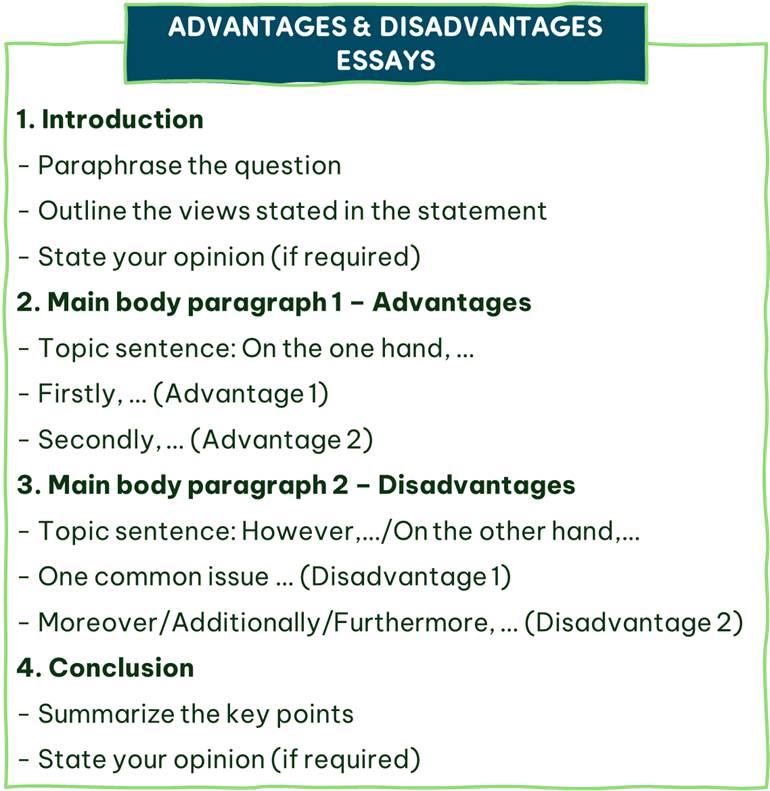
Living in a smart city brings many benefits and disadvantages. In this article, I will present some pros and cons of living in a smart city.
The first advantage of living in a smart city is convenience. Information and communications technology is integrated into urban systems, helping to provide public services more effectively. For example, through mobile applications, people can easily search for information about transportation, destinations, and entertainment activities. Furthermore, the smart traffic system helps reduce congestion and save travel time.
Another advantage of smart cities is energy saving and environmental protection. Advanced technologies are applied to manage and use resources effectively. For example, automatic lighting and temperature regulation in buildings help save energy. In addition, the use of smart public transport and self-driving cars helps reduce polluting emissions.
However, living in a smart city also has disadvantages. One of them is the issue of information security. With the widespread use of information technology, the risk of personal information insecurity and privacy violations increases. This requires strong security measures to ensure the safety of people's personal data.
Another drawback of smart cities is their dependence on technology. If technology systems fail or are attacked, public services could be disrupted. This poses challenges for maintaining stability and ensuring security of smart cities.
In short, living in a smart city brings many benefits such as convenience and energy savings. However, it is also necessary to pay attention to information security issues and dependence on technology. To make the most of the advantages and minimize the disadvantages, smart investment and management from city managers is needed.
a
The Scroll and the Soul: Causes and Effects of Teen Social Media Addiction
The ubiquitous presence of smartphones has woven social media into the fabric of teenage life. While offering connection and information, excessive engagement can lead to addiction, a growing concern with significant causes and detrimental effects. This essay will explore why teenagers become hooked on social media and the resulting consequences on their well-being.
One primary cause is the inherent design of social media platforms. Developers employ algorithms that constantly refresh content, offering a stream of notifications, likes, and comments. This creates a reward system, triggering dopamine release and fostering a compulsive need to check for updates. The fear of missing out (FOMO), fueled by curated online portrayals of others' seemingly perfect lives, further compels teens to stay connected, lest they feel excluded. Peer pressure and the desire for online validation also play a crucial role, driving teenagers to seek acceptance and status through likes and followers.
The effects of this addiction are multifaceted. Academically, excessive screen time often leads to decreased concentration, lower grades, and procrastination. Socially, reliance on virtual interactions can hinder the development of crucial face-to-face communication skills and weaken real-life relationships. Furthermore, the constant exposure to idealized images can fuel body image issues, anxiety, and depression as teenagers compare their own realities to the often-filtered online world. Sleep deprivation, stemming from late-night scrolling, exacerbates these negative impacts, affecting both physical and mental health.
In conclusion, the addictive nature of social media among teenagers is driven by manipulative platform design and the powerful desire for social acceptance. This dependence, in turn, cultivates academic struggles, social isolation, and a decline in mental well-being, highlighting the urgent need for awareness and strategies to foster healthier online habits.
Today, many teenagers are engrossed in social media, often spending excessive hours online, which leads to addiction. This essay explores the causes and effects of teen social media addiction.
One primary cause is the intentional design of social media platforms. Apps use algorithms and notifications to keep users engaged, encouraging teens to check their devices constantly. For example, features like endless scrolling and likes trigger dopamine responses, making usage compulsive. Another cause is the pressure to gain social validation. Teens often seek popularity through likes and followers, driving them to stay active online to maintain their digital image.
The effects of this addiction are significant. Firstly, it can lower self-esteem. Teens compare themselves to curated online personas, feeling inadequate or unhappy. Secondly, excessive use strains real-life relationships. Spending more time online reduces face-to-face interactions, weakening friendships and family bonds.
In conclusion, social media addiction stems from addictive app designs and the pursuit of validation. It leads to diminished self-confidence and strained relationships, highlighting the need for balanced usage.
Các bạn có thể tham khảo bài này nhé