Write the information in brackets as a relative clause (defining or non-defining) in an appropriate place in the sentence.
1. Julia's father has just come back from a skiing holiday. (he is over 80) → e.g. Julia's father, who is over 80, has just come back from a skiing holiday.
2. The problems faced by the company are being resolved. (I'll look at these in detail in a moment.)
3. She was greatly influenced by her father. (she adored him)
4. Parents are being asked to take part in the...
Đọc tiếp
Write the information in brackets as a relative clause (defining or non-defining) in an appropriate place in the sentence.
1. Julia's father has just come back from a skiing holiday. (he is over 80) → e.g. Julia's father, who is over 80, has just come back from a skiing holiday.
2. The problems faced by the company are being resolved. (I'll look at these in detail in a moment.)
3. She was greatly influenced by her father. (she adored him)
4. Parents are being asked to take part in the survey. (their children are between four or six)
5. He isn't looking forward to the time. (he will have to leave at that time)
6. The Roman coins are now on display in the National Museum. (a local farmer came across them in a field)
7. He pointed to the stairs. (they led down to the cellar)
8. These drugs have been withdrawn from sale. (they are used to treat stomach ulcers)
9. The singer had to cancel her concert. (she was recovering from flu)
10. We went to the Riverside Restaurant. (I once had lunch with Henry there)
11. My aunt is now a manager of a department store. (her first job was filling shelves in a supermarket).
12. John Graham's latest film is his first for more than five years. (the film is set in the north of Australia)
13. The newspaper is owned by the Mears group. (its chairperson is Sir James Bex)
14. The Master's course is no longer taught. (I took this course in 1990)
15. The minister talked about the plans for tax reform. (he will reveal them next month)




Đường tròn c: Đường tròn qua B_1 với tâm O Đoạn thẳng f: Đoạn thẳng [A, B] Đoạn thẳng g: Đoạn thẳng [A, C] Đoạn thẳng h: Đoạn thẳng [B, C] Đoạn thẳng l: Đoạn thẳng [P, C] Đoạn thẳng m: Đoạn thẳng [M, A] Đoạn thẳng n: Đoạn thẳng [B, N] O = (1.97, 2.92) O = (1.97, 2.92) O = (1.97, 2.92) Điểm A: Điểm trên c Điểm A: Điểm trên c Điểm A: Điểm trên c Điểm B: Điểm trên c Điểm B: Điểm trên c Điểm B: Điểm trên c Điểm C: Điểm trên c Điểm C: Điểm trên c Điểm C: Điểm trên c Điểm P: Giao điểm của c, j Điểm P: Giao điểm của c, j Điểm P: Giao điểm của c, j Điểm M: Giao điểm của c, k Điểm M: Giao điểm của c, k Điểm M: Giao điểm của c, k Điểm N: Giao điểm của c, i Điểm N: Giao điểm của c, i Điểm N: Giao điểm của c, i Điểm F: Giao điểm của j, f Điểm F: Giao điểm của j, f Điểm F: Giao điểm của j, f Điểm E: Giao điểm của i, g Điểm E: Giao điểm của i, g Điểm E: Giao điểm của i, g Điểm D: Giao điểm của k, h Điểm D: Giao điểm của k, h Điểm D: Giao điểm của k, h Điểm H: Giao điểm của l, m Điểm H: Giao điểm của l, m Điểm H: Giao điểm của l, m
a. Tứ giác CEHD có \(\widehat{HEC}=\widehat{HDC}=90^o\Rightarrow\) nó là tứ giác nội tiếp.
b. Tứ giác BFEC có \(\widehat{BEC}=\widehat{BFC}=90^o\Rightarrow\)nó là tứ giác nội tiếp. Vậy 4 điểm B, C, E, F cùng thuộc một đường tròn.
c. Ta thấy \(\Delta HAE\sim\Delta CAD\left(g-g\right)\Rightarrow\frac{AH}{AC}=\frac{AE}{AD}\Rightarrow AE.AC=AH.AD\)
Ta thấy \(\Delta CBE\sim\Delta CAD\left(g-g\right)\Rightarrow\frac{BC}{AC}=\frac{BE}{AD}\Rightarrow AD.BC=BE.AC\)
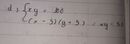
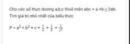
d. Ta thấy ngay \(\widehat{PCB}=\widehat{BAM}\) (Cùng phụ với góc ABC)
Mà \(\widehat{BAM}=\widehat{BCM}\) (Góc nội tiếp cùng chắn cung BM)
Vậy nên \(\widehat{PCB}=\widehat{BCM}\) hay CM là phân giác góc \(\widehat{PCB}\)
Lại có \(CM⊥HD\) nên HCM là tam giác cân. Vậy CB là trung trực của HM hay H, M đối xứng nhau qua BC.
e. Ta thấy BFHD là tứ giác nội tiếp nên \(\widehat{FDH}=\widehat{FBH}\) (Góc nội tiếp cùng chẵn cung FH)
DHEC cùng là tứ giác nội tiếp nên \(\widehat{HDE}=\widehat{HCE}\) (Góc nội tiếp cùng chẵn cung HE)
Mà \(\widehat{FBH}=\widehat{HCE}\) ( Cùng phụ với góc \(\widehat{BAC}\) )
nên \(\widehat{FDH}=\widehat{HDE}\) hay DH là phân giác góc FDE.
Tương tự FH, EH cũng là phân giác góc DFE và DEF.
Vậy tâm đường tròn nội tiếp tam giác DEF chính là H.
\(x = {-b \pm \sqrt{b^2-4ac} \over 2a}\)