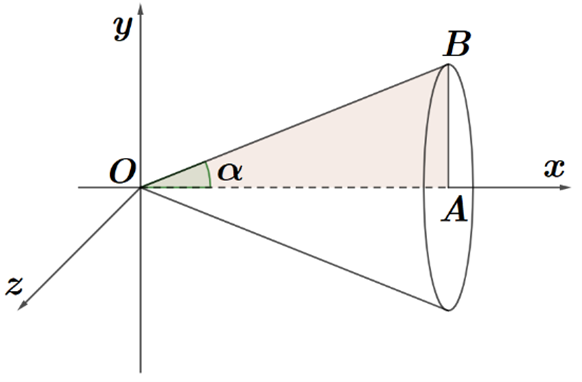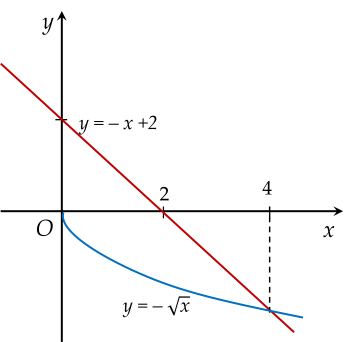
Dạng 2. Ứng dụng hình học của tích phân để tính thể tích vật thể

Câu 1
1đ

Nếu hàm số F(x)F(x) là một nguyên hàm của hàm số f(x)f(x) trên K,K, với mỗi hằng số C.C. Xét các mệnh đề:

(i) G(x)=F(x)+CG(x)=F(x)+C cũng là một nguyên hàm của f(x)f(x) trên K.K.

(ii) G(x)=C.F(x)G(x)=C.F(x) cũng là một nguyên hàm của f(x)f(x) trên K.K.

(iii) G(x)=F(x)−CG(x)=F(x)-C cũng là một nguyên hàm của f(x)f(x) trên K.K.

Khẳng định nào dưới đây đúng?

(i) và (ii) đúng.
(i), (ii) và (iii) đều đúng.
(i) và (iii) đúng.
Chỉ (ii) đúng.
Câu 2
1đ

Khẳng định nào sau đây đúng?

(∫f(x)dx)′=−F′(x)\Big(\displaystyle \int f(x)\mathrm{d}x \Big)'=-F'(x).
(∫f(x)dx)′=f(x)\Big(\displaystyle \int f(x)\mathrm{d}x \Big)'=f(x).
(∫f(x)dx)′=−f(x)\Big(\displaystyle \int f(x)\mathrm{d}x \Big)'=-f(x).
(∫f(x)dx)′=F′(x)\Big(\displaystyle \int f(x)\mathrm{d}x \Big)'=F'(x).
Câu 3
1đ

Cho số thực CC, hàm số y=f(x)y=f(x) liên tục trên R\mathbb{R} có đạo hàm y=f′(x)y = f'(x). Khẳng định nào sau đây đúng?

∫f′(x)dx=f(x)+C.\displaystyle \int f'(x) \mathrm{d}x=f(x)+C.
∫f(x)dx=f′(x).\displaystyle \int f(x) \mathrm{d}x=f'(x).
∫f′(x)dx=f(x).\displaystyle \int f'(x) \mathrm{d}x=f(x).
∫f(x)dx=f′(x)+C.\displaystyle \int f(x) \mathrm{d}x=f'(x)+C.
Câu 4
1đ

Kí hiệu KK là một khoảng hoặc nửa khoảng hoặc một đoạn của R\mathbb{R}. Mệnh đề nào sau đây sai?

Nếu trên KK, các hàm số G(x)G(x) và F(x)F(x) là nguyên hàm của f(x)f(x) thì tồn tại hằng số CC sao cho F(x)=G(x)+CF(x)=G(x)+C.
Nếu F(x)F(x) là một nguyên hàm của f(x)f(x) trên KK thì f(x)+Cf(x)+C (CC là hằng số) cũng là một nguyên hàm của f(x)f(x) trên KK.
Mọi hàm số f(x)f(x) liên tục trên KK đều có nguyên hàm trên KK.
Nếu f(x)=g(x)f(x)=g(x) trên KK thì ∫f(x)dx=∫g(x)dx\displaystyle \int f(x) \mathrm{d}x=\displaystyle \int g(x)\mathrm{d}x.
Câu 5
1đ

Hàm số F(x)F(x) là một nguyên hàm của hàm số f(x)f(x) trên khoảng (a;b)\left(a;b \right) nếu

F′(x)=−f(x), ∀x∈(a;b)F'(x)=-f(x), \, \forall x\in \left(a;b \right).
F′(x)=F(x), ∀x∈(a;b)F'(x)=F(x), \, \forall x\in \left(a;b \right).
F′(x)=f(x), ∀x∈(a;b)F'(x)=f(x), \, \forall x\in \left(a;b \right).
F′(x)=−F(x), ∀x∈(a;b)F'(x)=-F(x), \, \forall x\in \left(a;b \right).
Câu 6
1đ

Cho hàm số f(x)f(x) và g(x)g(x) cùng liên tục trên R\mathbb{R}. Khẳng định nào sau đây đúng?

∫kf(x)dx=k∫f(x)dx, ∀k∈R\displaystyle \int{kf(x)\mathrm{d}x}=k\displaystyle \int{f(x)\mathrm{d}x}, \, \forall k\in \mathbb{R}.
∫[f(x).g(x)]dx=(∫f(x)dx).(∫g(x)dx)\displaystyle \int{\Big[ f(x).g(x) \Big]\mathrm{d}x}=\Big(\displaystyle \int{f(x)\mathrm{d}x} \Big).\Big(\displaystyle \int{g(x)\mathrm{d}x} \Big).
∫[f(x)g(x)]dx=∫f(x)dx∫g(x)dx\displaystyle \int{\Big[ \dfrac{f(x)}{g(x)} \Big]\mathrm{d}x}=\dfrac{\displaystyle \int{f(x)\mathrm{d}x}}{\displaystyle \int{g(x)\mathrm{d}x}}.
∫[f(x)+g(x)]dx=∫f(x)dx+∫g(x)dx\displaystyle \int \Big[ f(x)+g(x) \Big]\mathrm{d}x=\displaystyle \int f(x)\mathrm{d}x+\displaystyle \int g(x)\mathrm{d}x.
Câu 7
1đ

Cho hàm số y=f(x)y = f(x) có đạo hàm liên tục trên R\mathbb{R} và kk là một số thực. Khẳng định nào sau đây sai?

∫[f(x)]′dx=f(x)+C\displaystyle \int [f(x)]' \mathrm{d}x=f(x)+C.
∫[f(x)+k]dx=∫f(x)dx+∫kdx\displaystyle \int [ f(x)+k]\mathrm{d}x=\displaystyle \int f(x)\mathrm{d}x+\displaystyle \int k\mathrm{d}x.
∫kf(x)dx=k∫f(x)dx\displaystyle \int kf(x)\mathrm{d}x=k\displaystyle \int f(x)\mathrm{d}x.
[∫f(x)dx]′=f(x)\Big[\displaystyle \int f(x)\mathrm{d}x \Big]'=f(x).
Câu 8
1đ

Cho hàm số y=f(x)y=f(x) liên tục trên R\mathbb{R} và có một nguyên hàm là hàm số F(x),F(x), k∈N\{0}.k\in \mathbb{N}\backslash \left\{ 0 \right\}. Mệnh đề nào dưới đây sai?

∫[f(x)]kdx=[F(x)]k+C\displaystyle \int \Big[ f(x) \Big]^k \mathrm{d}x=[ F(x) ]^k+C.
∫[f(x)k]dx=F(x)k+C\displaystyle \int \Big[ \dfrac{f(x)}{k} \Big] \mathrm{d}x=\dfrac{F(x)}{k}+C.
∫[k+f(x)]dx=kx+F(x)+C\displaystyle \int{\left[ k+f(x) \right]}\mathrm{d}x=kx+F(x)+C.
∫[kf(x)]dx=kF(x)+C\displaystyle \int{\left[ kf(x) \right]}\mathrm{d}x=kF(x)+C.
Câu 9
1đ

Mệnh đề nào sau đây sai?

∫[f1(x)+f2(x)]dx=∫f1(x)dx+∫f2(x)dx\displaystyle \int{\left[ f_1\left(x \right)+f_2\left(x \right) \right]\mathrm{d}x}=\displaystyle \int{f_1\left(x \right)\mathrm{d}x}+\displaystyle \int{f_2\left(x \right)\mathrm{d}x}.
∫kf(x)dx=k∫f(x)dx\displaystyle \int{kf(x)\mathrm{d}x}=k\displaystyle \int{f(x)\mathrm{d}x}, (kk là hằng số và k≠0k\ne 0).
Nếu F(x)F(x) và G(x)G\left(x \right) đều là nguyên hàm của hàm số f(x)f(x) thì F(x)=G(x)F(x)=G\left(x \right).
Nếu ∫f(x)dx=F(x)+C\displaystyle \int{f(x)\mathrm{d}x=F(x)+C} thì ∫f(u)du=F(u)+C\displaystyle \int{f\left(u \right)\mathrm{d}u=F\left(u \right)+C}.
Câu 10
1đ

Cho y=f(x), y=g(x)y=f(x), \, y=g(x) là các hàm số xác định và liên tục trên R\mathbb{R}. Mệnh đề nào sau đây sai?

∫2f(x)dx=2∫f(x)dx\displaystyle \int{2f(x)}\mathrm{d}x=2\displaystyle \int{f(x)}\mathrm{d}x.
∫[f(x)−g(x)]dx=∫f(x)dx−∫g(x)dx\displaystyle \int{\left[ f(x)-g(x) \right]}\mathrm{d}x=\displaystyle \int{f(x)}\mathrm{d}x-\displaystyle \int{g(x)}\mathrm{d}x.
∫[f(x).g(x)]dx=∫f(x)dx.∫g(x)dx\displaystyle \int{\left[ f(x).g(x) \right]}\mathrm{d}x=\displaystyle \int{f(x)}\mathrm{d}x.\displaystyle \int{g(x)}\mathrm{d}x.
∫[f(x)+g(x)]dx=∫f(x)dx+∫g(x)dx\displaystyle \int{\left[ f(x)+g(x) \right]}\mathrm{d}x=\displaystyle \int{f(x)}\mathrm{d}x+\displaystyle \int{g(x)}\mathrm{d}x.