
Hãy nhập câu hỏi của bạn vào đây, nếu là tài khoản VIP, bạn sẽ được ưu tiên trả lời.
Write an essay (120 – 150 words) about an invention that makes your life easier or more interesting.


As we all know, there are many great scientist around the world creating great invention everyday. These invention makes our life much easier and more interesting. Talking about invention ,have you ever heard of Thomas Edison. I think that all of us must know himm after all he is the father of light bulbs. Long ago, before the light bulb appeared, we people can't work late because it is dark so we can't see nothing. We had to work hard before sunset. But later on, they invented oil lamp, this helped bring the light to Earth, but this lamp is very dangerous. In 1879, Thomas Edison invented the light bulb. This was the greatest invention in the world. Now people can read books and do works in the evening. Thanks to Edison, our life is easier.

Imagination never end.Every second,million of new imagines appear in the world.I also just imagine something:Nowaday,English is very important to everyone.So,I want to create my new app for everyone.It will be named "Edo".To use this app,like other apps that you always use,you must make an account and set your profile.Then,you start learning.Here,you can learn reading,writing and listening.The app will correct the mistakes in your writing,in your words of speaking ... Also,you can learn more by speaking English with friends all over the world.
English has been one of the most widely spoken languages worldwide for a really long time. If you need to study abroad, you must know how to speak English fluently, especially if you don't know how to speak the country's native language. Because of that, English has become really important to everyone. And for that, I decided to create an app called "EngEdu". EngEdu is an app that will help you learn English online anywhere. It is pretty simple to use this app. To begin with, you must make an account and set up your profile. You can customize your profile as you like. After setting up your profile, you may start learning. This app covers all of the basic skills, including reading, writing, listening, and speaking, and also provides you with vocabulary and grammar lessons. You can also connect with other learners with the app's chatting feature. Besides all of the basic learning features, EngEdu also has multiple more fun features, such as competition, practice, assessment, etc. To conclude, I assure you that this app can help you reach higher levels in your English and will be of great help in your career.

Tôi vừa trở về sau kỳ nghỉ 1 tuần với bạn bè ở Đà Nẵng và Quảng Ngãi. Chúng tôi ở Đà Nẵng hầu hết thời gian. Sau đó, chúng tôi đã dành vài đêm cuối cùng tại một nơi rất đẹp và có lịch sử lâu đời gọi là phố cổ Hội An. Chúng tôi đã thực sự có thời gian thư giãn với kỳ nghỉ. Chúng tôi đã thưởng thức một số món ăn địa phương tuyệt vời. Nó thực sự ngon. Các hoạt động mà chúng tôi thích trong kỳ nghỉ là đi bộ, bơi lội và đi chơi tối. Nước sạch và trong lành, nhiệt độ vừa phải – không quá nóng và không quá lạnh. Chúng tôi đã đi bộ leo núi trên núi gần đó trong một vài ngày, điều này rất tốt cho sức khỏe của chúng tôi. Tôi thực sự thích kỳ nghỉ này. Tôi yêu không khí trong lành và phong cảnh, và dĩ nhiên là thức ăn. Tôi chắc chắn sẽ trở lại đây vào lúc khác, tôi nghĩ đó là một trong những nơi yêu thích nhất của tôi trên thế giới.
I had a wonderful summer vacation at Vung Tau with my family last year. It took us about 2 hours to go there by car. However, we did not feel tired because we were very excited. Vung Tau beach was very large and beautiful. The waves were quite strong. My sister and I went swimming while my parents stayed on the shore to sunbathe. In the afternoon, my family went for a walk to see the sunset. We also took a lot of photos. After that, we went to a famous local restaurant to have dinner. The food was very tasty but not so expensive. On the next day, my family visited the seafood market to buy some seafood. I also bought some souvenirs for my friends. We returned home after spending 2 days in Vung Tau. Although the trip was short, I felt very happy. Hopefully, we can go back there again in the future.

Air pollution in our country is one of the most serious environmental problems, and many major cities in our country are affected by it. Increasing carbon emission from industries and automobiles makes it worse every day. Other harmful particles produced from burning fossil fuel have made the situation graver.
The effects of air pollution are really dangerous. Air pollution in my country is responsible for many health-related problems among citizens, and also kills many people every year. It is liable for causing respiratory disorders and many people get sick who are exposed to air pollution for a long time. The usual short-term problems include difficulties in breathing, bronchitis, heart ailments and so on while it can lead to cancer or even death in the long run. Unfortunately, air pollution in our country is reducing the life expectancy of many peopleNo doubt, air pollution is a global problem now, and in my country, fossil fuels and rapid industrialisation are the primary reasons behind it. The excessive use of machinery and motorised vehicles ignites the rise of greenhouse gases in the atmosphere. Increasing dust particles make things more damaging. Air pollution is a burning issue for our country now. Some cautionary measures should be taken to check the air pollution level. The most important step to reducing air pollution is to reduce carbon emissions. So we need to reduce the use of gas, oil and other fossil fuels. Alternative energy or green energy like solar energy, hydroelectric power and wind power should be used more extensively. A massive awareness among ordinary people about air pollution is also required to curb the problem.
Air pollution in our country is one of the most serious environmental problems, and many major cities in our country are affected by it. Increasing carbon emission from industries and automobiles makes it worse every day. Other harmful particles produced from burning fossil fuel have made the situation graver.
The effects of air pollution are really dangerous. Air pollution in my country is responsible for many health-related problems among citizens, and also kills many people every year. It is liable for causing respiratory disorders and many people get sick who are exposed to air pollution for a long time. The usual short-term problems include difficulties in breathing, bronchitis, heart ailments and so on while it can lead to cancer or even death in the long run. Unfortunately, air pollution in our country is reducing the life expectancy of many peopleNo doubt, air pollution is a global problem now, and in my country, fossil fuels and rapid industrialisation are the primary reasons behind it. The excessive use of machinery and motorised vehicles ignites the rise of greenhouse gases in the atmosphere. Increasing dust particles make things more damaging. Air pollution is a burning issue for our country now. Some cautionary measures should be taken to check the air pollution level. The most important step to reducing air pollution is to reduce carbon emissions. So we need to reduce the use of gas, oil and other fossil fuels. Alternative energy or green energy like solar energy, hydroelectric power and wind power should be used more extensively. A massive awareness among ordinary people about air pollution is also required to curb the problem.
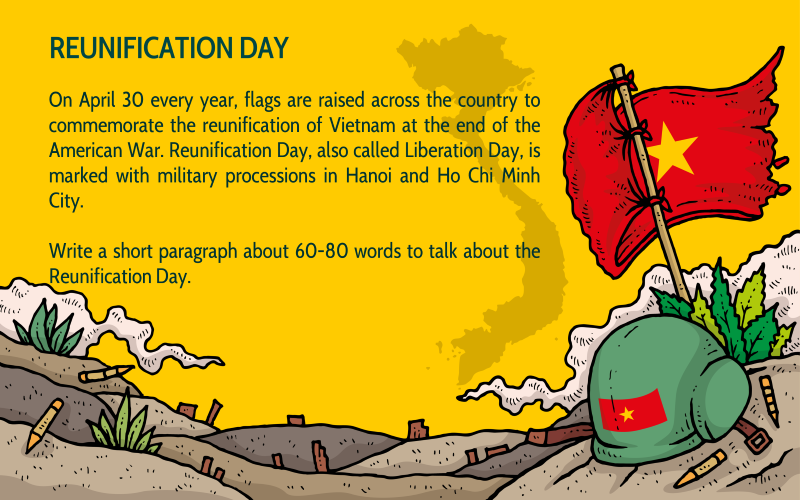
The day of reunification of Vietnam is celebrated on April 30. It is also the day of the liberation of the South. This day has great and profound meaning for the people of the whole country of Vietnam. It is a day commemorating a glorious and monumental victory of our nation. April 30 is the day Vietnam gained its independence after hundreds and thousands of years of imperial domination and rule. On this day, people hang a red flag with a yellow star in all the streets of Vietnam, to show their respect and respect for the country.
Vietnamese Reunification Day is celebrated on April 30 every year, marking the end of the Vietnam War and the reunification of North and South Vietnam in 1975. The day holds significant historical and emotional value for the Vietnamese people as it ended decades of war and brought unity to the country. On this day, people across Vietnam celebrate by attending parades, fireworks displays, and cultural performances. It is a time for reflection on the past and celebration of the country's progress and unity.
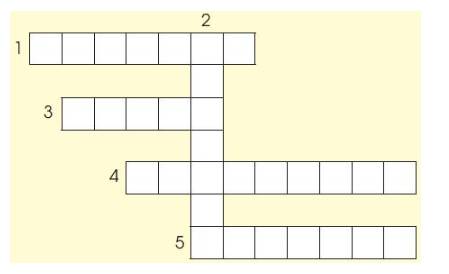


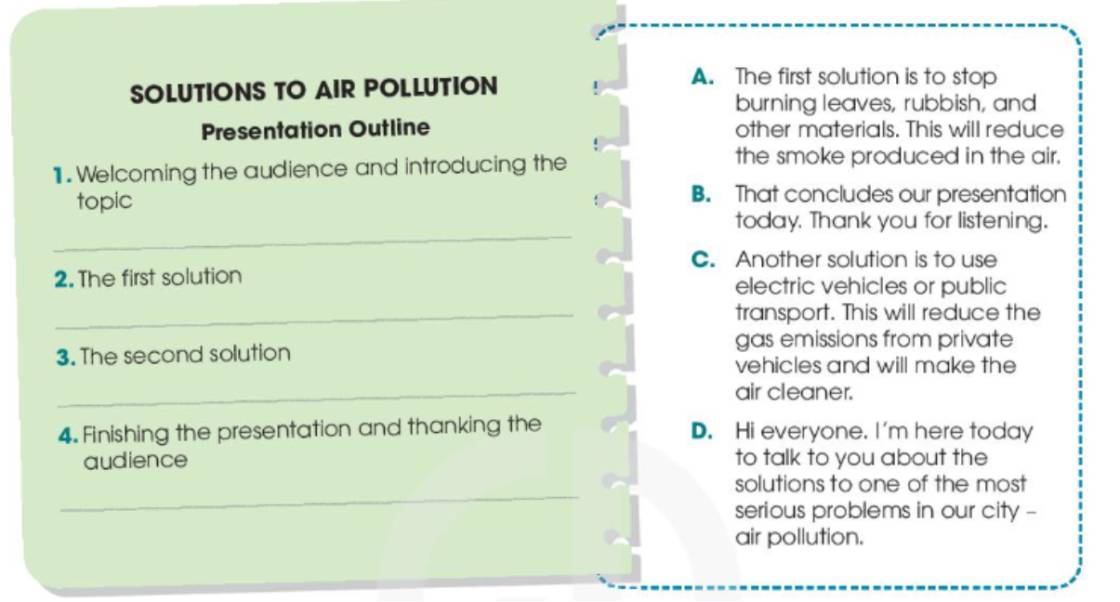
1. D | 2. A | 3. C | 4. B |
SOLUTIONS TO AIR POLLUTION
(Giải pháp cho ô nhiễm môi trường)
1. Welcoming the audience and introducing the topic
(Chào đón khán giả và giới thiệu chủ đề)
D. Hi everyone. I'm here today to talk to you about the solutions to one of the most serious problems in our city - air pollution.
(Xin chào tất cả mọi người. Hôm nay tôi đến đây để nói với bạn về các giải pháp cho một trong những vấn đề nghiêm trọng nhất ở thành phố của chúng ta - ô nhiễm không khí.)
2. The first solution
(Giải pháp đầu tiên)
A. The first solution is to stop burning leaves, rubbish, and other materials. This will reduce the smoke produced in the air.
(Giải pháp đầu tiên là ngừng đốt lá cây, rác và các vật liệu khác. Điều này sẽ làm giảm khói tạo ra trong không khí.)
3. The second solution
(Giải pháp thứ hai)
C. Another solution is to use electric vehicles or public transport. This will reduce the gas emissions from private vehicles and will make the air cleaner.
(Một giải pháp khác là sử dụng xe điện hoặc phương tiện giao thông công cộng. Điều này sẽ làm giảm lượng khí thải từ các phương tiện giao thông cá nhân và làm cho không khí trong sạch hơn.)
4. Finishing the presentation and thanking the audience
(Kết thúc bài thuyết trình và cảm ơn khán giả)
B. That concludes our presentation today. Thank you for listening.
(Bài thuyết trình ngày hôm nay đã kết thúc. Cảm ơn vì đã lắng nghe.)

The boy is going to play a prank in a bathroom. He puts a fake spider on the floor to scare anyone going to the bath. (Cậu bé đang tính chơi khăm trong nhà tắm. Cậu đặt một con nhện giả trên sàn để hù những ai đi tắm.)
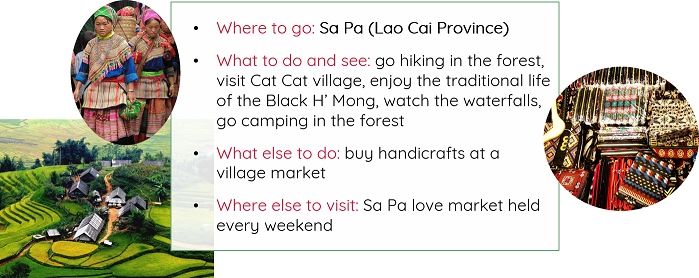

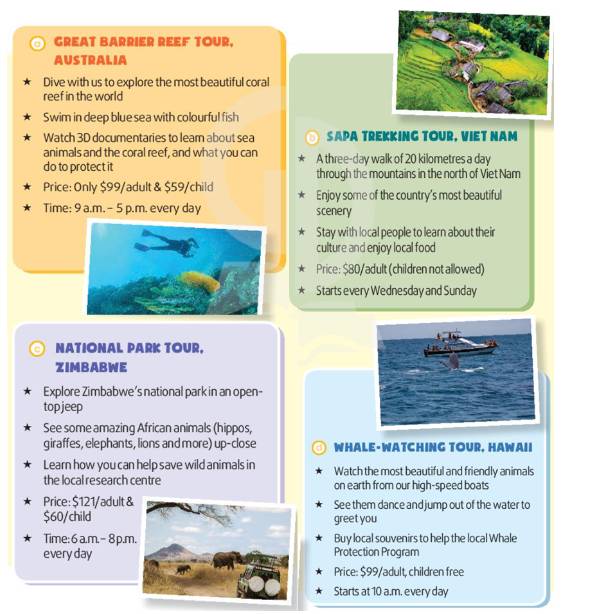
Our travel brochure is about an eco tour to Central Highlands. The tour leaves the ABC office at 5 a.m. every Saturday and gets back at 8 p.m. the next day. The two-day tour doesn’t cost too much: only VND 900,000 per person. During this trip, you can go biking in the forest and watch wildlife. You can also visit Don village, enjoy cooking and staying overnight with local ethnic families. If we have enough time, we may visit coffee plantations to enjoy fresh coffee. But you need to behave responsibly. You should speak softly while watching the animals. And remember to respect local people's life and not to litter.
Mông cô chấm điểm cho em ạ!Cảm ơn cô.
t
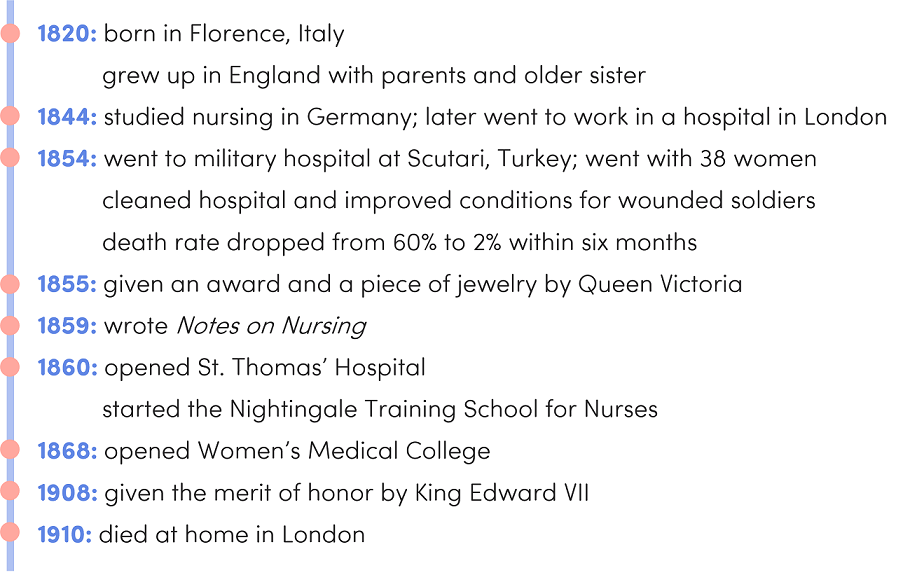
Florence Nightingale is most famous for being the founder of modern nursing.
She was born in 1820 in Florence, Italy. She grew up in England with her parents and older sister. In 1844, she studied nursing in Germany and later went to London to work in a hospital. In 1854, Florence went to the military hospital in Scutari, Turkey, with 38 other women. They cleaned the hospital and improved conditions for the wounded soldiers. The death rate dropped from sixty percent to two percent within six months. In 1855, Queen Victoria gave Florence an award and a piece of jewelry. Florence wrote Notes on Nursing in 1859 and in 1860, she opened St. Thomas' Hospital where she started the Nightingale Training School for Nurses. In 1908, she was given the merit of honor by King Edward VII. She died two years later in London. Florence Nightingale will be remembered for being the founder of modern nursing.
Florence Nightingale is most famous for being the founder of modern nursing.
She was born in 1820 in Florence, Italy. She grew up in England with her parents and older sister. In 1844, she studied nursing in Germany and later went to London to work in a hospital. In 1854, Florence went to the military hospital in Scutari, Turkey, with 38 other women. They cleaned the hospital and improved conditions for the wounded soldiers. The death rate dropped from sixty percent to two percent within six months. In 1855, Queen Victoria gave Florence an award and a piece of jewelry. Florence wrote Notes on Nursing in 1859 and in 1860, she opened St. Thomas' Hospital where she started the Nightingale Training School for Nurses. In 1908, she was given the merit of honor by King Edward VII. She died two years later in London. Florence Nightingale will be remembered for being the founder of modern nursing.
Florence Nightingale was born on May 12, 1820, in Florence, Italy, to a comfortably prosperous family. She was born while her parents, William Edward Nightingale and Frances Nightingale, were on an extended European honeymoon. (Her father changed his name from Shore to Nightingale after inheriting his great-uncle’s estate in 1815.)
The family returned to England the next year, dividing their time between a home in Derbyshire in central England and a grander estate in Hampshire in the south-central part of the country. She and her older sister Parthenope were educated by governesses and then by their father. She studied classical Greek and Latin and modern French, German, and Italian. She also studied history, grammar, and philosophy and received tutoring in mathematics when she was 20, after overcoming her parents' objections.
From a young age, Nightingale was active in philanthropy, working with the ill and poor in the nearby village. Then, on Feb. 7, 1837, Nightingale heard the voice of God, she later said, telling her she had a mission, though it took some years for her to identify that mission.
NursingBy 1844, Nightingale had chosen a different path from the social life and marriage expected by her parents. Again over their objections, she decided to work in nursing, at the time a less-than-respectable profession for women.
In 1849, Nightingale refused a marriage proposal from a "suitable" gentleman, Richard Monckton Milnes, who had pursued her for years. She told him he stimulated her intellectually and romantically, but her "moral…active nature" called for something beyond a domestic life.
Nightingale enrolled as a nursing student in 1850 and 1851 at the Institution of Protestant Deaconesses in Kaiserswerth, Germany. She then worked briefly for a Sisters of Mercy hospital near Paris. Her views began to be respected. In 1853, she returned to England and took a nursing job at London's Institution for the Care of Sick Gentlewomen. Her performance so impressed her employer that she was promoted to superintendent, an unpaid position.
Nightingale also volunteered at a Middlesex hospital, grappling with a cholera outbreak and unsanitary conditions that further spread the disease. She improved hygiene practices, significantly lowering the death rate at the hospital.
CrimeaOctober 1853 marked the outbreak of the Crimean War, in which British and French forces fought the Russian Empire for control of Ottoman territory. Thousands of British soldiers were sent to the Black Sea, where supplies quickly dwindled. After the Battle of Alma, England was in an uproar over the lack of medical attention and appallingly unsanitary conditions faced by the ill and injured soldiers.
At the urging of a family friend, Secretary of War Sidney Herbert, Nightingale volunteered to take a group of female nurses to Turkey. In 1854, 38 women, including Anglican and Roman Catholic sisters, accompanied her to the front. She reached the military hospital at Scutari, Turkey, on Nov. 5, 1854.
Deplorable ConditionsThey had been warned of horrible conditions, but nothing could have prepared them for what they found. The hospital sat atop a cesspool, which contaminated the water and the building. Patients lay in their own excrement. Basic supplies such as bandages and soap were scarce. More soldiers were dying from infectious diseases such as typhoid and cholera than from injuries sustained in battle.
Nightingale headed nursing efforts, improved sanitation, and ordered supplies using significant funds raised by the London Times, gradually winning over the military doctors.
She soon focused more on administration than on actual nursing, but she continued to visit the wards and to send letters home for the injured and ill soldiers. She insisted that she be the only woman in the wards at night, carrying a lamp as she made her rounds and earning the title "The Lady With the Lamp." The mortality rate at the hospital dropped from 60% at her arrival to 2% six months later.
Nightingale applied her education in mathematics to develop statistical analyses of disease and mortality, in the process popularizing the pie chart. She continued to fight the military bureaucracy and on March 16, 1856, she became general superintendent of the Female Nursing Establishment of the Military Hospitals of the Army.
Return to EnglandNightingale returned home in the summer of 1856, once the Crimean conflict was resolved. She was surprised to find that she was a heroine in England, but she worked against public adulation. The previous year, Queen Victoria had awarded her an engraved brooch that became known as the "Nightingale Jewel" and a $250,000 grant, which she used in 1860 to fund the establishment of St. Thomas' Hospital, which included the Nightingale Training School for Nurses.
She wrote a massive report in 1857 analyzing her Crimean War experience and proposing reforms that sparked a restructuring of the War Office's administrative department, including the establishment of a Royal Commission for the Health of the Army. She also wrote "Notes on Nursing," the first textbook for modern nursing, in 1859.
While working in Turkey, Nightingale had contracted brucellosis, a bacterial infection also known as Crimean fever, and would never fully recover. By the time she was 38 years old, she was homebound and routinely bedridden in London for the rest of her long life.
Working mostly from home, she founded the Nightingale School and Home for Nurses in London in 1860, using funds contributed by the public for her work in the Crimea. Nightingale collaborated with Elizabeth Blackwell, the first woman granted a medical degree in the United States, on starting the Woman's Medical College in their home country of England. The school opened in 1868 and operated for 31 years.
DeathNightingale was blind by 1901. In 1907 King Edward VII awarded her the Order of Merit, making her the first woman to receive that honor. She declined a national funeral and burial at Westminster Abbey, requesting that her grave be marked simply.
Her condition worsened In August 1910, but she seemed to recover and was in good spirits. On August 12, however, she developed a troubling array of symptoms and died around 2 p.m. the following day, August 13, at her home in London.
LegacyIt's difficult to overstate the contributions that Florence Nightingale made to medicine, including her work on sanitation and hygiene and on organizational structures, and especially to nursing. Her fame encouraged many women to take up nursing, and her success in founding the Nightingale School and Home for Nurses and the Woman's Medical College opened the field to women around the world.
The Florence Nightingale Museum, at the site of the Nightingale Training School for Nurses, houses more than 2,000 artifacts commemorating the life and career of the "Angel of the Crimea" and "Th...
Florence Nightingale is most famous for being the founder of modern nursing.
She was born in 1820 in Florence, Italy. She grew up in England with her parents and older sister. In 1844, she studied nursing in Germany and later went to London to work in a hospital. In 1854, Florence went to the military hospital in Scutari, Turkey, with 38 other women. They cleaned the hospital and improved conditions for the wounded soldiers. The death rate dropped from sixty percent to two percent within six months. In 1855, Queen Victoria gave Florence an award and a piece of jewelry. Florence wrote Notes on Nursing in 1859 and in 1860, she opened St. Thomas' Hospital where she started the Nightingale Training School for Nurses. In 1908, she was given the merit of honor by King Edward VII. She died two years later in London. Florence Nightingale will be remembered for being the founder of modern nursing.
Despite family reservations, Nightingale was eventually able to enroll at the Institution of Protestant Deaconesses at Kaiserswerth in Germany for two weeks of training in July 1850 and again for three months in July 1851. There she learned basic nursing skills, the importance of patient observation, and the value of good hospital organization. In 1853 Nightingale sought to break free from her family environment. Through social connections, she became the superintendent of the Institution for Sick Gentlewomen (governesses) in Distressed Circumstances, in London, where she successfully displayed her skills as an administrator by improving nursing care, working conditions, and efficiency of the hospital. After one year she began to realize that her services would be more valuable in an institution that would allow her to train nurses. She considered becoming the superintendent of nurses at King’s College Hospital in London. However, politics, not nursing expertise, was to shape her next move.
Despite family reservations, Nightingale was eventually able to enroll at the Institution of Protestant Deaconesses at Kaiserswerth in Germany for two weeks of training in July 1850 and again for three months in July 1851. There she learned basic nursing skills, the importance of patient observation, and the value of good hospital organization. In 1853 Nightingale sought to break free from her family environment. Through social connections, she became the superintendent of the Institution for Sick Gentlewomen (governesses) in Distressed Circumstances, in London, where she successfully displayed her skills as an administrator by improving nursing care, working conditions, and efficiency of the hospital. After one year she began to realize that her services would be more valuable in an institution that would allow her to train nurses. She considered becoming the superintendent of nurses at King’s College Hospital in London. However, politics, not nursing expertise, was to shape her next move.
Florence Nightingale is most famous for being the founder of modern nursing.
She was born in 1820 in Florence, Italy. She grew up in England with her parents and older sister. In 1844, she studied nursing in Germany and later went to London to work in a hospital. In 1854, Florence went to the military hospital in Scutari, Turkey, with 38 other women. They cleaned the hospital and improved conditions for the wounded soldiers. The death rate dropped from sixty percent to two percent within six months. In 1855, Queen Victoria gave Florence an award and a piece of jewelry. Florence wrote Notes on Nursing in 1859 and in 1860, she opened St. Thomas' Hospital where she started the Nightingale Training School for Nurses. In 1908, she was given the merit of honor by King Edward VII. She died two years later in London. Florence Nightingale will be remembered for being the founder of modern nursing.
Florence Nightingale is most famous for being the founder of modern nursing.
She was born in 1820 in Florence, Italy. She grew up in England with her parents and older sister. In 1844, she studied nursing in Germany and later went to London to work in a hospital. In 1854, Florence went to the military hospital in Scutari, Turkey, with 38 other women. They cleaned the hospital and improved conditions for the wounded soldiers. The death rate dropped from sixty percent to two percent within six months. In 1855, Queen Victoria gave Florence an award and a piece of jewelry. Florence wrote Notes on Nursing in 1859 and in 1860, she opened St. Thomas' Hospital where she started the Nightingale Training School for Nurses. In 1908, she was given the merit of honor by King Edward VII. She died two years later in London. Florence Nightingale will be remembered for being the founder of modern nursing.
Florence Nightingale is most famous for being the founder of modern nursing.
She was born in 1820 in Florence, Italy. She grew up in England with her parents and older sister. In 1844, she studied nursing in Germany and later went to London to work in a hospital. In 1854, Florence went to the military hospital in Scutari, Turkey, with 38 other women. They cleaned the hospital and improved conditions for the wounded soldiers. The death rate dropped from sixty percent to two percent within six months. In 1855, Queen Victoria gave Florence an award and a piece of jewelry. Florence wrote Notes on Nursing in 1859 and in 1860, she opened St. Thomas' Hospital where she started the Nightingale Training School for Nurses. In 1908, she was given the merit of honor by King Edward VII. She died two years later in London. Florence Nightingale will be remembered for being the founder of modern nursing.
Florence Nightingale is most famous for being the founder of modern nursing.
She was born in 1820 in Florence, Italy. She grew up in England with her parents and older sister. In 1844, she studied nursing in Germany and later went to London to work in a hospital. In 1854, Florence went to the military hospital in Scutari, Turkey, with 38 other women. They cleaned the hospital and improved conditions for the wounded soldiers. The death rate dropped from sixty percent to two percent within six months. In 1855, Queen Victoria gave Florence an award and a piece of jewelry. Florence wrote Notes on Nursing in 1859 and in 1860, she opened St. Thomas' Hospital where she started the Nightingale Training School for Nurses. In 1908, she was given the merit of honor by King Edward VII. She died two years later in London. Florence Nightingale will be remembered for being the founder of modern nursing.
Florence Nightingale is most famous for being the founder of modern nursing.
She was born in 1820 in Florence, Italy. She grew up in England with her parents and older sister. In 1844, she studied nursing in Germany and later went to London to work in a hospital. In 1854, Florence went to the military hospital in Scutari, Turkey, with 38 other women. They cleaned the hospital and improved conditions for the wounded soldiers. The death rate dropped from sixty percent to two percent within six months. In 1855, Queen Victoria gave Florence an award and a piece of jewelry. Florence wrote Notes on Nursing in 1859 and in 1860, she opened St. Thomas' Hospital where she started the Nightingale Training School for Nurses. In 1908, she was given the merit of honor by King Edward VII. She died two years later in London. Florence Nightingale will be remembered for being the founder of modern nursing.
Florence Nightingale was born on May 12, 1820, in Florence, Italy. She was a trailblazing figure in the field of nursing and social reform. Nightingale gained prominence during the Crimean War, where she and a team of nurses cared for wounded soldiers in deplorable conditions. Her efforts significantly reduced the mortality rate at the hospital, and she became known as "The Lady with the Lamp" for her nightly rounds to check on the patients.
After the war, Nightingale continued to advocate for improved healthcare and nursing practices. She founded the first secular nursing school in the world and wrote extensively on healthcare reform and nursing education. Her work laid the foundation for modern nursing practices and established her as a pioneer in the field.
Nightingale's contributions to healthcare and social reform earned her numerous accolades, including the Order of Merit from Queen Victoria. She passed away on August 13, 1910, leaving behind a lasting legacy as a compassionate caregiver and a champion for healthcare reform.
Florence Nighitingale, born in Florence, Italy in 1820 grew up in england with his parents and older sister. In 1844 Florece Nighitingala studied nursing in Germany, then worked at a hospital in Germany. In 1854 Florece Nighitingala entered the military hospital in Scutari, Turkey; accompanied 38 women to clean the hospital and improve conditions for casualty, the death rate from 60% to 20% within six months. In 1855 Queen Victoria awarded an award and a piece of jewelry. In 1859 wrote notes on nursing. In 1860 Florece Nighitingala opened a hospital St.Thomas Institute established the Nightingale Nursing Training School, 1868 opened the Women's Nursing College. In 1908, King Edward Vll awarded a certificate of merit. In 1910 Florece Nighitingala died at home in London.
Florence Nightingale is most famous for being the founder of modern nursing.
She was born in 1820 in Florence, Italy. She grew up in England with her parents and older sister. In 1844, she studied nursing in Germany and later went to London to work in a hospital. In 1854, Florence went to the military hospital in Scutari, Turkey, with 38 other women. They cleaned the hospital and improved conditions for the wounded soldiers. The death rate dropped from sixty percent to two percent within six months. In 1855, Queen Victoria gave Florence an award and a piece of jewelry. Florence wrote Notes on Nursing in 1859 and in 1860, she opened St. Thomas' Hospital where she started the Nightingale Training School for Nurses. In 1908, she was given the merit of honor by King Edward VII. She died two years later in London. Florence Nightingale will be remembered for being the founder of modern nursing.
Florence Nightingale is most famous for being the founder of modern nursing.
She was born in 1820 in Florence, Italy. She grew up in England with her parents and older sister. In 1844, she studied nursing in Germany and later went to London to work in a hospital. In 1854, Florence went to the military hospital in Scutari, Turkey, with 38 other women. They cleaned the hospital and improved conditions for the wounded soldiers. The death rate dropped from sixty percent to two percent within six months. In 1855, Queen Victoria gave Florence an award and a piece of jewelry. Florence wrote Notes on Nursing in 1859 and in 1860, she opened St. Thomas' Hospital where she started the Nightingale Training School for Nurses. In 1908, she was given the merit of honor by King Edward VII. She died two years later in London. Florence Nightingale will be remembered for being the founder of modern nursing.
Florence Nightingale is most famous for being the founder of modern nursing.
She was born in 1820 in Florence, Italy. She grew up in England with her parents and older sister. In 1844, she studied nursing in Germany and later went to London to work in a hospital. In 1854, Florence went to the military hospital in Scutari, Turkey, with 38 other women. They cleaned the hospital and improved conditions for the wounded soldiers. The death rate dropped from sixty percent to two percent within six months. In 1855, Queen Victoria gave Florence an award and a piece of jewelry. Florence wrote Notes on Nursing in 1859 and in 1860, she opened St. Thomas' Hospital where she started the Nightingale Training School for Nurses. In 1908, she was given the merit of honor by King Edward VII. She died two years later in London. Florence Nightingale will be remembered for being the founder of modern nursing.
The invention of smartphones and laptops has revolutionized the way we live, providing a myriad of benefits that have become integral to our daily routines. Firstly, the portability of these devices allows us to stay connected and productive on the go. With smartphones, we can make calls, send messages, and access information from virtually anywhere. Laptops, on the other hand, offer a larger screen and more extensive functionality, enabling users to work on complex tasks and creative projects while being mobile. Secondly, the vast array of applications and software available enhances our efficiency and convenience. From productivity tools to entertainment apps, these devices streamline various aspects of our lives. Lastly, the interconnectedness facilitated by smartphones and laptops fosters global communication and collaboration, breaking down geographical barriers. In conclusion, the invention of smartphones and laptops is undeniably crucial in our modern lives, offering unparalleled connectivity, versatility, and efficiency. These devices have become indispensable tools that significantly contribute to our daily activities and overall well-being.
djksncncndndkssk djndjsakapwmcmc dịewopqpsmfncjcjc siẹndnfkfkfdkdoa kdjdndndnfnfjf sộdnfnxjajennr doeknedjjsnencjfj diệosncnieowow eikdkcnznwkeocos dịndkndsnd đònkfkdkdkgnnskwndkckzks xoddjosnsjcnx. kekslakd
Florence Nightingale is most famous for being the founder of modern nursing.
She was born in 1820 in Florence, Italy. She grew up in England with her parents and older sister. In 1844, she studied nursing in Germany and later went to London to work in a hospital. In 1854, Florence went to the military hospital in Scutari, Turkey, with 38 other women. They cleaned the hospital and improved conditions for the wounded soldiers. The death rate dropped from sixty percent to two percent within six months. In 1855, Queen Victoria gave Florence an award and a piece of jewelry. Florence wrote Notes on Nursing in 1859 and in 1860, she opened St. Thomas' Hospital where she started the Nightingale Training School for Nurses. In 1908, she was given the merit of honor by King Edward VII. She died two years later in London. Florence Nightingale will be remembered for being the founder of modern nursing.
Florence Nightingale is most famous for being the founder of modern nursing.
She was born in 1820 in Florence, Italy. She grew up in England with her parents and older sister. In 1844, she studied nursing in Germany and later went to London to work in a hospital. In 1854, Florence went to the military hospital in Scutari, Turkey, with 38 other women. They cleaned the hospital and improved conditions for the wounded soldiers. The death rate dropped from sixty percent to two percent within six months. In 1855, Queen Victoria gave Florence an award and a piece of jewelry. Florence wrote Notes on Nursing in 1859 and in 1860, she opened St. Thomas' Hospital where she started the Nightingale Training School for Nurses. In 1908, she was given the merit of honor by King Edward VII. She died two years later in London. Florence Nightingale will be remembered for being the founder of modern nursing.
florence nightingale is most famous for being the founder of modern nursing. She was born in 1820 in Florence , Italy.She grew yp in england with her parents and older sister . in 1844 she studied nursing in gemany and later went to london to work in a hospital. in 1854 florence went to the military hospital in scutari, turkey, with 38 orther women. they cleaned the hospital and improved conditions for the wounded soldiers.the death rate dropped from sixty percent to two percent within six months . in 1855, queen victoria gave florence an award and a piece of jewelry florence wrote notes on nursing in 1859 and in 1860 she opened st,thomas hospital where started the nightingale training schoole for nursing
florence nightingale is most famous for being the founder of morden nursing.she was born in 1820 in florence, italy.she grew up in england whith her parents and older sister . in 1844 she studies nursing in germany and later went to london to work in a hospital,in 1854 florence went to milliraty hospital in scutari, turkey with 38 orther women.they cleaned the hospital and improved conditions for the wounded soldiers .the death rate dropped from sixty percent to two percent within six month . in 1855 quen victoria give florence am award and a piece of jewelry florence wrote notes on nursing in 1859 and in 1860nshe opened st thomas hospital whrer she started the nightingale trainning school gor nurses, in 1908 she was given the meirt of honor by king edward vii she died two yeaar later in london . florence nightingale will be remembered for being the founder of mordern nursing
Florence Nightingale (1820-1910) was a British nurse and social reformer who revolutionized the field of nursing and healthcare. Born into a wealthy and privileged English family, Nightingale defied societal expectations by pursuing a career in nursing, much to the dismay of her parents.
During the Crimean War (1853-1856), Nightingale gained fame for her pioneering work in improving medical care and sanitation in military hospitals. She tirelessly advocated for better hygiene practices, implemented efficient healthcare systems, and trained and supervised a team of nurses, earning her the title "The Lady with the Lamp."
Nightingale's tireless efforts and reforms significantly reduced the mortality rate in hospitals, and her work laid the foundation for modern nursing practices. She emphasized the importance of cleanliness, proper nutrition, and compassionate care, and her methods became the gold standard for nursing education worldwide.
In recognition of her contributions, Nightingale was the first woman to be awarded the Order of Merit by the British government. Her legacy continues to inspire generations of nurses, and her name is synonymous with compassion, dedication, and excellence in healthcare.
Florence Nightingale is most famous for being the founder of modern nursing.
She was born in 1820 in Florence, Italy. She grew up in England with her parents and older sister. In 1844, she studied nursing in Germany and later went to London to work in a hospital. In 1854, Florence went to the military hospital in Scutari, Turkey, with 38 other women. They cleaned the hospital and improved conditions for the wounded soldiers. The death rate dropped from sixty percent to two percent within six months. In 1855, Queen Victoria gave Florence an award and a piece of jewelry. Florence wrote Notes on Nursing in 1859 and in 1860, she opened St. Thomas' Hospital where she started the Nightingale Training School for Nurses. In 1908, she was given the merit of honor by King Edward VII. She died two years later in London. Florence Nightingale will be remembered for being the founder of modern nursing.