Conversation (Optional) (Hội thoại (Tự chọn))

F. Listen to a conversation between two peopl...">

K
Khách

Hãy nhập câu hỏi của bạn vào đây, nếu là tài khoản VIP, bạn sẽ được ưu tiên trả lời.

8 tháng 9 2023

Tạm dịch:

Rika: Mình không nghĩ rằng chúng ta sẽ sử dụng nhiều năng lượng không thể tái tạo trong tương lai 5 năm nữa, vì vậy chúng ta sẽ cần rất nhiều năng lượng mặt trời. Còn ở Scotland thì sao? Bạn sẽ sử dụng các loại năng lượng mới chứ? 

Alex: Ừ, có chứ. Nhưng có lẽ chúng tôi sẽ không sử dụng nhiều năng lượng mặt trời.

Rika: Bạn sẽ sử dụng năng lượng gió chứ? 

Alex: Có chứ. Và có lẽ chúng tôi cũng sẽ sử dụng năng lượng sóng.

Rika: Năng lượng sóng là gì? 

Alex: Đó là năng lượng từ những con sóng ở đại dương. 

Rika: Chà! Thật tuyệt.

1. Read the text and complete each blank of the fact file about Earth Hour with ONE word.(Đọc văn bản và hoàn thành từng ô trống của tệp thông tin thực tế về Giờ Trái đất bằng MỘT từ.)EARTH HOUREarth Hour is a global event organised by the World Wide Fund for Nature (WWF). Held every year, it encourages people and businesses to turn off their lights and other unnecessary electrical devices for one hour from 8:30 p.m. to 9:30 p.m. on the last Saturday of...
Đọc tiếp

1. Read the text and complete each blank of the fact file about Earth Hour with ONE word.

(Đọc văn bản và hoàn thành từng ô trống của tệp thông tin thực tế về Giờ Trái đất bằng MỘT từ.)

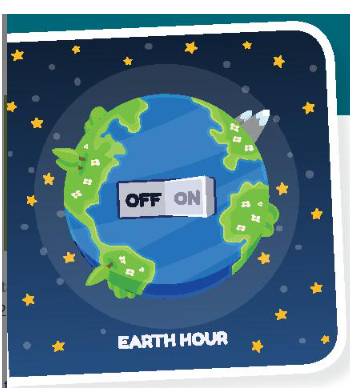
EARTH HOUR

Earth Hour is a global event organised by the World Wide Fund for Nature (WWF). Held every year, it encourages people and businesses to turn off their lights and other unnecessary electrical devices for one hour from 8:30 p.m. to 9:30 p.m. on the last Saturday of March. Earth Hour was started as a lights-out event in Sydney, Australia, in 2007. Since then, it has grown to become an international movement for the environment, happening in more than 7,000 cities and towns across 187 countries and territories.

Earth Hour has created a positive environmental impact. It shows the public support for protecting the environment and saving the planet. It also draws attention to climate change and global energy issues, and promotes green activities worldwide.

Viet Nam joined the event in 2009 and has been an active and keen supporter since then. Besides switching off lights, people can take part in a number of activities to raise awareness of environmental problems and call for action for climate, people and nature.


EARTH HOUR

Organsied by

World Wide Fund for Nature

Held from

8:30 p.m. to 9:30 p.m. on the last (1) ________ of March

Started in

Sydney, Australia, in 2007

Aims

- to show the public (2) ________ for protecting the environment and saving the planet

- to draw attention to (3) ________ change and global energy issues

- to promote green (4) ________ worldwide

First held in Viet Nam in

(5) ________ with a variety of activities nationwide

1
6 tháng 2 2023

1. Saturday

2. support

3. climate

4. activities

5. 2009

11 tháng 9 2023

 1. did not (didn't)

 2. did

 3. was/ were

 4. could/ couldn't

11 tháng 9 2023

a. We form the negative form of the past simple with (1) did not and the infinitive without to. (Chúng ta hình thành thể phủ định của thì quá khứ đơn với “did not” và động từ nguyên mẫu không to.)

I didn’t go out last night.

b. We form the interrogative form of the past simple with (2) did and the infinitive without to. (Chúng ta hình thành thể nghi vấn của thì quá khứ đơn với “did” và động từ nguyên mẫu không to.)

Did Harry text you? Yes, he did. I No, he didn't.

c. We do not use did/ didn't with the verbs (3) was/ were or (4) could/ couldn’t(Chúng ta không sử dụng “did/ didn’t” với các động từ “was/were hoặc could/couldn’t.)

Was Joe late for school? Yes, he was.

Could you read when you were three? No, I couldn't.

9 tháng 9 2023

1. promote

2. welcomes

3. commit

4. aims

5. enter

6 tháng 2 2023

1D

2E

3B

4C

5A

1. Read the text. Match the highlighted words with their meanings.(Đọc văn bản. Nối các từ được làm nổi bật với nghĩa của chúng.)The more people travel, the bigger impact they may have on the environment. How can we reduce it while travelling? Here are some advice.Reduce your carbon footprint while travelling. Since flying produces more carbon footprint than any other means of transport, you should only fly when the trip is long. During the trip, you should walk, cycle...
Đọc tiếp

1. Read the text. Match the highlighted words with their meanings.

(Đọc văn bản. Nối các từ được làm nổi bật với nghĩa của chúng.)

The more people travel, the bigger impact they may have on the environment. How can we reduce it while travelling? Here are some advice.

Reduce your carbon footprint while travelling. Since flying produces more carbon footprint than any other means of transport, you should only fly when the trip is long. During the trip, you should walk, cycle or use public transport as much as you can. This not only helps to keep the environment clean, but also allows you to enjoy the beauty of nature and interact with local people. 

Choose eco-friendly activities that benefit animals and the ecosystem. Avoid activities that allow you to touch or ride animals because they disturb their natural patterns and attract many people. Instead, visit wildlife parks or organic farms. These will help you understand and respect the nature more and stop doing things that harm the environment.

Words

Meanings

1. interact 

a. to be good for someone or something 

2. benefit 

b. to talk or do things with other people 

3. disturb 

c. to interrupt what people are doing and make them angry 

3
6 tháng 2 2023

1B

2A

3C

6 tháng 2 2023

1. Read the text. Match the highlighted words with their meanings.

(Đọc văn bản. Nối các từ được làm nổi bật với nghĩa của chúng.)

The more people travel, the bigger impact they may have on the environment. How can we reduce it while travelling? Here are some advice.

Reduce your carbon footprint while travelling. Since flying produces more carbon footprint than any other means of transport, you should only fly when the trip is long. During the trip, you should walk, cycle or use public transport as much as you can. This not only helps to keep the environment clean, but also allows you to enjoy the beauty of nature and interact with local people. 

Choose eco-friendly activities that benefit animals and the ecosystem. Avoid activities that allow you to touch or ride animals because they disturb their natural patterns and attract many people. Instead, visit wildlife parks or organic farms. These will help you understand and respect the nature more and stop doing things that harm the environment.
 

Answer:

1. interact ->b: to talk or do things with other people.
2. benefit ->a: to be good for someone or something.

3. disturb ->c: to interrupt what people are doing and make them angry.

1. Listen and read.(Nghe và đọc.) Ms Hoa: Listen, everyone! This year, we’re going on a fieldtrip to Phong Nha Cave, a tourist attraction in Quang Binh Province.Class: Hooray!Nam: I hope I can find some small pieces of stalactites. If I add some to my rock collection, it will be the best at school.Mai: I’ll buy a lot of snacks to share. We’ll have fun!Ms Hoa: We will have fun, but in a different way. This time, the fieldtrip is going to be eco-friendly.Nam: Ms Hoa, what’s an...
Đọc tiếp

1. Listen and read.

(Nghe và đọc.)

Ms Hoa: Listen, everyone! This year, we’re going on a fieldtrip to Phong Nha Cave, a tourist attraction in Quang Binh Province.

Class: Hooray!

Nam: I hope I can find some small pieces of stalactites. If I add some to my rock collection, it will be the best at school.

Mai: I’ll buy a lot of snacks to share. We’ll have fun!

Ms Hoa: We will have fun, but in a different way. This time, the fieldtrip is going to be eco-friendly.

Nam: Ms Hoa, what’s an eco-friendly fieldtrip?

Ms Hoa: Going on an eco-friendly fieldtrip means we’ll enjoy, explore and learn about the place, but in a way that will not damage it. So, Nam, I’m afraid you can’t take any stalactites because it takes hundreds or sometimes thousands of years for them to form.

Nam: Wow! I didn’t know that. I won’t even touch them, I promise.

Mai: But can we bring snacks?

Ms Hoa: Yes, but if I were you, I wouldn’t bring too many snacks. We don’t want to leave litter behind and damage the environment.

Mai: I agree. I’ll also try to bring snacks with less packaging.

Ms Hoa: That’s a good idea. Let’s hope our fieldtrip will be a fun educational experience for everyone.

1
10 tháng 9 2023

Tạm dịch:

Ms Hoa: Mọi người nghe này! Năm nay, chúng ta sẽ đi thực tế ở Động Phong Nha, một điểm thu hút khách du lịch ở tỉnh Quảng Bình.

Cả lớp: Hoan hô!

Nam: Em hy vọng en có thể tìm thấy một số mảnh nhỏ của thạch nhũ. Nếu em thêm một số vào bộ sưu tập đá của mình, nó sẽ là bộ sưu tập tuyệt nhất ở trường.

Mai: Em sẽ mua rất nhiều đồ ăn vặt để chia sẻ. Chúng ta sẽ vui vẻ!

Ms Hoa: Chúng ta sẽ vui vẻ, nhưng theo một cách khác. Lần này, chuyến đi thực địa sẽ thân thiện với môi trường.

Nam: Cô Hoa ơi, chuyến đi dã ngoại thân thiện với môi trường là gì ạ?

Ms Hoa: Có một chuyến dã ngoại thân thiện với môi trường có nghĩa là chúng ta sẽ tận hưởng, khám phá và tìm hiểu về địa điểm, nhưng theo cách không làm hư hại nó. Vì vậy, Nam, cô e rằng em không thể lấy được bất kỳ miếng thạch nhũ nào vì chúng phải mất hàng trăm hoặc đôi khi hàng nghìn năm để hình thành.

Nam: Chà! Em không biết điều đó. Em thậm chí sẽ không chạm vào chúng, em hứa.

Mai: Nhưng chúng ta có thể mang theo đồ ăn vặt không ạ?

Ms Hoa: Được, nhưng nếu cô là em, cô sẽ không mang quá nhiều đồ ăn vặt. Chúng ta không muốn bỏ lại rác và hủy hoại môi trường.

Mai: Em đồng ý. Em cũng sẽ cố gắng mang theo đồ ăn vặt với ít bao bì hơn.

Ms Hoa: Đó là một ý kiến hay. Chúng ta hãy hy vọng chuyến đi thực địa của chúng ta sẽ là một trải nghiệm giáo dục thú vị cho tất cả mọi người.

11 tháng 9 2023

1. Did Harry know the person who fell into the water? (Harry có biết ai là người bị ngã xuống nước không?)

Maybe that was a friend of Harry. (Có lẽ là một người bạn của Harry.)

2. Did they fight or help each other? (Họ đánh nhau hay giúp đỡ nhau?)

They were fighting. (Họ đang đánh nhau.)

3. What happened to the boat? (Chuyện gì đã xảy ra với con thuyền?)

The boat stopped moving. (Con thuyền ngừng di chuyển.)

4. Did Harry return to the shore or get on the boat? (Harry quay vào bờ hay lên thuyền?)

He got on the boat. (Anh ta lên thuyền.)

5. What happened next? (Chuyện gì xảy ra tiếp theo?)

Harry saved the person who fell into the water. (Harry đã cứu người bị rớt xuống nước.)

11 tháng 9 2023

 1. accomplishments

 2. employment

 3. preparation

 4. development

 5. dream

1. Listen and read.(Nghe và đọc.) Long: Hi, Nick. What are you doing?Nick: I’m watching the video that my geography teacher uploaded on Eclass.Long: Really? What is it about?Nick: It’s about global warming. My teacher asked us to watch the video and find more information about this topic.Long: So, is watching the video part of your homework?Nick: Yes, then next week, we’ll work in groups and discuss the topic in class.Long: Sounds interesting. You can watch the video many...
Đọc tiếp

1. Listen and read.

(Nghe và đọc.)

Long: Hi, Nick. What are you doing?

Nick: I’m watching the video that my geography teacher uploaded on Eclass.

Long: Really? What is it about?

Nick: It’s about global warming. My teacher asked us to watch the video and find more information about this topic.

Long: So, is watching the video part of your homework?

Nick: Yes, then next week, we’ll work in groups and discuss the topic in class.

Long: Sounds interesting. You can watch the video many times and also search for more information at home.

Nick: You’re right. I’m not good at taking notes in class, you know. So I prefer this way of learning. It gives me a chance to discuss with my classmates, who may have original ideas on the topic.

Long: Does your teacher often ask you to prepare materials at home and discuss in class, Nick?

Nick: Yes, she does. We’re doing a lot of projects that help us understand the lessons better. This way of studying, which gives us more control over our own learning, is quite useful.

Long: You’re lucky. My teachers use very traditional methods of teaching at my school. I wish I could try these new learning activities.

1
10 tháng 9 2023

Tạm dịch:

Long: Xin chào, Nick. Bạn đang làm gì đấy?

Nick: Tôi đang xem video mà giáo viên địa lý của tôi đã tải lên trên Eclass.

Long: Thật không? Nó nói về cái gì?

Nick: Nó về sự nóng lên toàn cầu. Giáo viên của tôi yêu cầu chúng tôi xem video và tìm thêm thông tin về chủ đề này.

Long: Vậy xem video có phải là một phần trong bài tập của bạn không?

Nick: Có, sau đó vào tuần tới, chúng tôi sẽ làm việc theo nhóm và thảo luận về chủ đề này trong lớp.

Long: Nghe có vẻ thú vị. Bạn có thể xem video nhiều lần và cũng có thể tìm kiếm thêm thông tin tại nhà.

Nick: Bạn nói đúng. Tôi không giỏi ghi chép bài trên lớp, bạn biết đấy. Vì vậy, tôi thích cách học này hơn. Nó cho tôi cơ hội thảo luận với các bạn cùng lớp, những người có thể có ý tưởng ban đầu về chủ đề này.

Long: Giáo viên của bạn có thường yêu cầu bạn chuẩn bị tài liệu ở nhà và thảo luận trên lớp không, Nick?

Nick: Có, cô ấy có. Chúng tôi đang thực hiện rất nhiều dự án giúp chúng tôi hiểu bài học hơn. Cách học này, cái mà giúp chúng tôi kiểm soát tốt hơn việc học của mình, khá hữu ích.

Long: Bạn thật may mắn. Các giáo viên của tôi sử dụng các phương pháp giảng dạy rất truyền thống ở trường tôi. Tôi ước tôi có thể thử những hoạt động học tập mới này.