a. Listen and repeat. (Nghe và lặp lại.)

K
Khách

Hãy nhập câu hỏi của bạn vào đây, nếu là tài khoản VIP, bạn sẽ được ưu tiên trả lời.

a. Listen and repeat. (Nghe và lặp lại.)

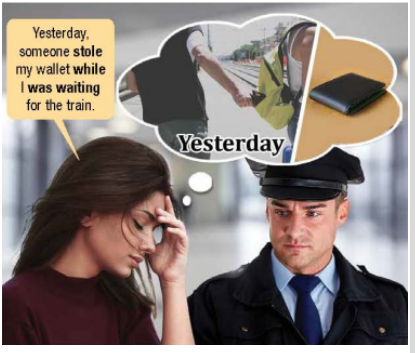
Yesterday, someone stole my wallet while I was waiting for the train. (Hôm qua, ai đó đã lấy trộm ví của tôi khi tôi đang đợi tàu.)

Past Simple and Past Continuous with when (Quá khứ đơn và Quá khứ tiếp diễn với when)

Meaning and Use (Ý nghĩa và Cách sử dụng)

We can use when to introduce an interruption to a past continuous action. We can use a sentence with when to start an interesting story. (Chúng ta có thể sử dụng when để đề cập sự gián đoạn của một hành động liên tục trong quá khứ. Chúng ta có thể sử dụng một câu với thời điểm bắt đầu một câu chuyện thú vị.)

We were driving to the beach when our car broke down. (Chúng tôi đang lái xe đến bãi biển thì xe của chúng tôi bị hỏng.)


Form (Cấu trúc)

I/He/She was talking on the phone when a monkey stole my/his/her bag. (Tôi/Anh ấy/Cô ấy đang nói chuyện điện thoại thì một con khỉ lấy trộm túi xách của tôi/anh ấy/cô ấy.)

What were you/they doing when you/they saw that? (Bạn/họ đã làm gì khi bạn/họ thấy điều đó?)

Past Simple and Past Continuous with while (Quá khứ đơn và Quá khứ tiếp diễn với while)

Meaning and Use (Ý nghĩa và Cách sử dụng)

We can use while to continue a story where the time period is important. We don't begin a story with while. (Chúng ta có thể sử dụng while để tiếp tục một câu chuyện trong đó khoảng thời gian là quan trọng. Chúng ta không bắt đầu câu chuyện bằng while.)

(We went to the beach.) While I was swimming, it started to rain. ((Chúng tôi đã đi đến bãi biển.) Trong khi tôi đang bơi, trời bắt đầu mưa.)


Form (Cấu trúc)

I/He/She decided to drive there. While l/he/she was driving, the car broke down. (Tôi/Anh ấy/Cô ấy quyết định lái xe đến đó. Trong khi tôi/anh ấy/cô ấy đang lái xe, chiếc xe bị hỏng.)

We/They went for a walk. While we/they were walking along the beach, we/they saw a dolphin! (Chúng tôi/Họ đã đi dạo. Trong khi chúng tôi/họ đi dạo dọc theo bãi biển, chúng tôi họ đã nhìn thấy một con cá heo!)


0
2. Read the Learn this! box. Then find all the examples of the past continuous in the text in exercise 1.(Đọc hộp Learn this! Sau đó tìm tất cả các ví dụ về thì quá khứ tiếp diễn trong đoạn trích trong bài 1.)LEARN THIS! Past continuous (Thì quá khứ tiếp diễn)a. We often use the past continuous to set the scene.(Chúng ta thường dùng thì quá khứ tiếp diễn để dựng bối cảnh.)It was snowing. Two men were walking towards the...
Đọc tiếp

2. Read the Learn this! box. Then find all the examples of the past continuous in the text in exercise 1.

(Đọc hộp Learn this! Sau đó tìm tất cả các ví dụ về thì quá khứ tiếp diễn trong đoạn trích trong bài 1.)

LEARN THIS! Past continuous (Thì quá khứ tiếp diễn)

a. We often use the past continuous to set the scene.

(Chúng ta thường dùng thì quá khứ tiếp diễn để dựng bối cảnh.)

It was snowing. Two men were walking towards the house. (Tuyết đang rơi, có hai người đàn ông đang tiến đến ngôi nhà.)

b. We use the past continuous to talk about an action that was in progress at a particular time. (Chúng ta sử dụng thì quá khứ tiếp diễn để nói về một hành động đang xảy ra tại một thời điểm nhất định trong quá khứ.)

At midnight, I was doing my homework. (Vào nửa đêm, tôi đang làm bài tập.)

c. When we use the past continuous with two or more actions, we do not need to repeat the subject (I, we, etc.) or was/were if the subject is the same. (Khi chúng ta dùng thì quá khứ tiếp diễn với hai hay nhiều hành động, chúng ta không cần lặp lại chủ ngữ hoặc động từ tobe nếu cùng một chủ ngữ.)

We were sitting on the sofa and eating pizza. (Chúng tôi đang ngồi trên ghế sofa và ăn pizza.)

1
11 tháng 9 2023

were hurrying, were sitting, was talking, wasn’t looking, was singing, (was) playing, were shouting, (were) waving, (were) carrying, (were) running, was standing, was he wearing, was looking

2. Read the Learn this! box. Match sentences 1 - 6 from the extract in exercise 1 with rules a - c.LEARN THIS! Contrast, past simple and past continuousa. We use the past simple for a sequence of events in the past. The events happened one after another. (Chúng ta dùng thì quá khứ đơn cho một chuỗi sự kiện trong quá khứ. Sự việc này xảy ra rồi đến sự việc khác.)We had lunch. Then we put on our coats and left. (Chúng tôi đã dùng bữa trưa. Sau đó...
Đọc tiếp

2. Read the Learn this! box. Match sentences 1 - 6 from the extract in exercise 1 with rules a - c.

LEARN THIS! Contrast, past simple and past continuous

a. We use the past simple for a sequence of events in the past. The events happened one after another. (Chúng ta dùng thì quá khứ đơn cho một chuỗi sự kiện trong quá khứ. Sự việc này xảy ra rồi đến sự việc khác.)

We had lunch. Then we put on our coats and left. (Chúng tôi đã dùng bữa trưa. Sau đó chúng tôi khoác áo và rời đi.)

b. We use the past continuous to describe a scene in the past. The events were in progress at the same time. (Chúng ta dùng thì quá khứ tiếp diễn để mô tả một cảnh trong quá khứ. Những cảnh này đang diễn ra cùng một lúc.)

It was raining. People were wearing raincoats and carrying umbrellas. (Trời đang mưa. Mọi người thì đang mặc áo mưa và mang dù.)

c. We use the past simple and the past continuous together for a single event that interrupted a longer event in the past.

(Chúng ta dùng quá khứ đơn và quá khứ tiếp diễn cùng với nhau cho một hành động cắt ngang hành động dài hơn trong quá khứ.)

As I was getting dressed (longer event), my friend phoned (interruption). (Khi tôi đang mặc đồ (hành động dài), thì bạn tôi gọi (hành động xen ngang).)

1
11 tháng 9 2023

 1.b

 2.b

3.a 

4.a

 5.c

 6.a

3. Read the Learn this! box. Find all the past simple forms in the text in exercise 2. Match them with rules a-d in the Learn this! box.(Đọc hộp Learn this!. Tìm tất cả các thể quá khứ trong bài đọc ở bài 2. Nối chúng với các quy tắc trong hộp.)LEARN THIS! Past simple (affirmative)(Thì quá khứ đơn - dạng khẳng định)a. We form the past simple form of regular verbs by adding -ed to the infinitive. (Ta hình thành thể quá khứ đơn của...
Đọc tiếp

3. Read the Learn this! box. Find all the past simple forms in the text in exercise 2. Match them with rules a-d in the Learn this! box.

(Đọc hộp Learn this!. Tìm tất cả các thể quá khứ trong bài đọc ở bài 2. Nối chúng với các quy tắc trong hộp.)

LEARN THIS! Past simple (affirmative)

(Thì quá khứ đơn - dạng khẳng định)

a. We form the past simple form of regular verbs by adding -ed to the infinitive. 

(Ta hình thành thể quá khứ đơn của động từ thường bằng cách thêm -ed vào động từ nguyên mẫu.)

want – wanted       talk – talked

b. There are some rules about spelling changes. 

(Có một vài quy tắc về việc thay đổi chính tả khi thêm -ed.)

1. drop – dropped; 2. marry – married; 3. move – moved

c. Some verbs have irregular past simple forms. 

(Một số động từ có bất quy tắc ở thể quá khứ đơn.)

go – went; begin – began; leave – left; take – took

d. The past simple of the verb be has two forms, singular and plural. 

(Thể quá khứ đơn của động từ tobe có 2 dạng, số ít và số nhiều.)

be – was/were

1
11 tháng 9 2023

a. returned, looked

b. studied, compared, stopped

c. bought, chose, won, felt, gave, found, spent, had

d. were, was

1. Read the text. Match the highlighted words with their meanings.(Đọc văn bản. Nối các từ được làm nổi bật với nghĩa của chúng.)The more people travel, the bigger impact they may have on the environment. How can we reduce it while travelling? Here are some advice.Reduce your carbon footprint while travelling. Since flying produces more carbon footprint than any other means of transport, you should only fly when the trip is long. During the trip, you should walk, cycle...
Đọc tiếp

1. Read the text. Match the highlighted words with their meanings.

(Đọc văn bản. Nối các từ được làm nổi bật với nghĩa của chúng.)

The more people travel, the bigger impact they may have on the environment. How can we reduce it while travelling? Here are some advice.

Reduce your carbon footprint while travelling. Since flying produces more carbon footprint than any other means of transport, you should only fly when the trip is long. During the trip, you should walk, cycle or use public transport as much as you can. This not only helps to keep the environment clean, but also allows you to enjoy the beauty of nature and interact with local people. 

Choose eco-friendly activities that benefit animals and the ecosystem. Avoid activities that allow you to touch or ride animals because they disturb their natural patterns and attract many people. Instead, visit wildlife parks or organic farms. These will help you understand and respect the nature more and stop doing things that harm the environment.

Words

Meanings

1. interact 

a. to be good for someone or something 

2. benefit 

b. to talk or do things with other people 

3. disturb 

c. to interrupt what people are doing and make them angry 

3
6 tháng 2 2023

1B

2A

3C

6 tháng 2 2023

1. Read the text. Match the highlighted words with their meanings.

(Đọc văn bản. Nối các từ được làm nổi bật với nghĩa của chúng.)

The more people travel, the bigger impact they may have on the environment. How can we reduce it while travelling? Here are some advice.

Reduce your carbon footprint while travelling. Since flying produces more carbon footprint than any other means of transport, you should only fly when the trip is long. During the trip, you should walk, cycle or use public transport as much as you can. This not only helps to keep the environment clean, but also allows you to enjoy the beauty of nature and interact with local people. 

Choose eco-friendly activities that benefit animals and the ecosystem. Avoid activities that allow you to touch or ride animals because they disturb their natural patterns and attract many people. Instead, visit wildlife parks or organic farms. These will help you understand and respect the nature more and stop doing things that harm the environment.
 

Answer:

1. interact ->b: to talk or do things with other people.
2. benefit ->a: to be good for someone or something.

3. disturb ->c: to interrupt what people are doing and make them angry.

6 tháng 2 2023

1D

2E

3B

4C

5A

11 tháng 9 2023

While Harry was climbing back onto the boat, he remembered something. (Khi mà Harry đang leo trở lại thuyền thì anh ta nhớ ra gì đó.)

When Harry found a case of money, he was swimming to the shore. (Khi Harry tìm thấy cặp đựng tiền thì anh ta đang bơi vào bờ.)

While Harry were fighting with three people, he heard gunshots. (Khi mà Harry đang đánh nhau với ba người kia, anh ta nghe thấy tiếng súng nổ.)

While Harry was helping the person in the sea, he saw a shark. (Khi mà Harry đang giúp người đó ở dưới nước, anh ta thấy một con cá mập.)

While Harry was putting on dry clothes, he saw a helicopter. (Khi mà Harry đang mặc đồ khô lên người thì anh ta thấy một chiếc trực thăng.)

10 tháng 9 2023

Blended learning is a way of studying a subject, which combines learning over the Internet and face-to-face learning, and brings several benefits to us. First, blended learning helps us have more control over our own learning. Learning materials are available at all times online. Students who are absent from school won’t miss lessons. Second, we can develop better communication and teamwork skills with blended learning. There are a lot of interesting learning activities giving us more flexibility to customize own learning experiences. This enables us to have more time for pairwork and group work. In short, it is undeniable that blended learning has crucial advantages including students’ control over their learning and soft skills development.

6 tháng 2 2023

1C

2D

3A

4E

5B

6 tháng 2 2023

1: popular

2: cultural

3: open to

4: easier

5: international

6: experiencing