2. Look at the examples of the past perfect highlighted in the text in exercise 1. Find all the other examp...">
K
Khách

Hãy nhập câu hỏi của bạn vào đây, nếu là tài khoản VIP, bạn sẽ được ưu tiên trả lời.

11 tháng 9 2023

LEARN THIS! Past perfect (Thì quá khứ hoàn thành)

a. We form the past perfect with (1) had or (2) hadn’t and the past participle.

(Chúng ta tạo thì quá khứ hoàn thành với had hoặc hadn’t với động từ ở thể quá khứ phân từ.)

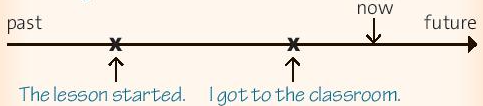
b. We use the past perfect when we are already talking about past events and we want to talk about an even earlier event.

(Chúng ta dùng thì quá khứ hoàn thành khi ai đó đang nói về những sự kiện xảy ra trong quá khứ và chúng ta muốn nói đến những sự kiện trước đó nữa.)

When I got to the classroom, the lesson had started.

(Khi mình đến lớp thì bài học đã bắt đầu.)

c. We often use the past perfect with after, before or when.

(Chúng ta thường dùng thì quá khứ hoàn thành với after, before hoặc when.)

Before I got to the bus station, the bus had already left.

(Trước khi mình đến trạm xe buýt, thì xe buýt đã đi mất.)

After I’d called Maggie, I watched a film on TV.

(Sau khi mình gọi cho Maggie, mình xem một bộ phim trên TV.)

had thrown … away; had risen; had increased; had spilled; had kept; had sold; had thrown; had … forgotten; hadn’t saved

11 tháng 9 2023

 1. did not (didn't)

 2. did

 3. was/ were

 4. could/ couldn't

11 tháng 9 2023

a. We form the negative form of the past simple with (1) did not and the infinitive without to. (Chúng ta hình thành thể phủ định của thì quá khứ đơn với “did not” và động từ nguyên mẫu không to.)

I didn’t go out last night.

b. We form the interrogative form of the past simple with (2) did and the infinitive without to. (Chúng ta hình thành thể nghi vấn của thì quá khứ đơn với “did” và động từ nguyên mẫu không to.)

Did Harry text you? Yes, he did. I No, he didn't.

c. We do not use did/ didn't with the verbs (3) was/ were or (4) could/ couldn’t(Chúng ta không sử dụng “did/ didn’t” với các động từ “was/were hoặc could/couldn’t.)

Was Joe late for school? Yes, he was.

Could you read when you were three? No, I couldn't.

3. Read the Learn this! box. Find all the past simple forms in the text in exercise 2. Match them with rules a-d in the Learn this! box.(Đọc hộp Learn this!. Tìm tất cả các thể quá khứ trong bài đọc ở bài 2. Nối chúng với các quy tắc trong hộp.)LEARN THIS! Past simple (affirmative)(Thì quá khứ đơn - dạng khẳng định)a. We form the past simple form of regular verbs by adding -ed to the infinitive. (Ta hình thành thể quá khứ đơn của...
Đọc tiếp

3. Read the Learn this! box. Find all the past simple forms in the text in exercise 2. Match them with rules a-d in the Learn this! box.

(Đọc hộp Learn this!. Tìm tất cả các thể quá khứ trong bài đọc ở bài 2. Nối chúng với các quy tắc trong hộp.)

LEARN THIS! Past simple (affirmative)

(Thì quá khứ đơn - dạng khẳng định)

a. We form the past simple form of regular verbs by adding -ed to the infinitive. 

(Ta hình thành thể quá khứ đơn của động từ thường bằng cách thêm -ed vào động từ nguyên mẫu.)

want – wanted       talk – talked

b. There are some rules about spelling changes. 

(Có một vài quy tắc về việc thay đổi chính tả khi thêm -ed.)

1. drop – dropped; 2. marry – married; 3. move – moved

c. Some verbs have irregular past simple forms. 

(Một số động từ có bất quy tắc ở thể quá khứ đơn.)

go – went; begin – began; leave – left; take – took

d. The past simple of the verb be has two forms, singular and plural. 

(Thể quá khứ đơn của động từ tobe có 2 dạng, số ít và số nhiều.)

be – was/were

1
11 tháng 9 2023

a. returned, looked

b. studied, compared, stopped

c. bought, chose, won, felt, gave, found, spent, had

d. were, was

2. Read the Learn this! box. Then find all the examples of the past continuous in the text in exercise 1.(Đọc hộp Learn this! Sau đó tìm tất cả các ví dụ về thì quá khứ tiếp diễn trong đoạn trích trong bài 1.)LEARN THIS! Past continuous (Thì quá khứ tiếp diễn)a. We often use the past continuous to set the scene.(Chúng ta thường dùng thì quá khứ tiếp diễn để dựng bối cảnh.)It was snowing. Two men were walking towards the...
Đọc tiếp

2. Read the Learn this! box. Then find all the examples of the past continuous in the text in exercise 1.

(Đọc hộp Learn this! Sau đó tìm tất cả các ví dụ về thì quá khứ tiếp diễn trong đoạn trích trong bài 1.)

LEARN THIS! Past continuous (Thì quá khứ tiếp diễn)

a. We often use the past continuous to set the scene.

(Chúng ta thường dùng thì quá khứ tiếp diễn để dựng bối cảnh.)

It was snowing. Two men were walking towards the house. (Tuyết đang rơi, có hai người đàn ông đang tiến đến ngôi nhà.)

b. We use the past continuous to talk about an action that was in progress at a particular time. (Chúng ta sử dụng thì quá khứ tiếp diễn để nói về một hành động đang xảy ra tại một thời điểm nhất định trong quá khứ.)

At midnight, I was doing my homework. (Vào nửa đêm, tôi đang làm bài tập.)

c. When we use the past continuous with two or more actions, we do not need to repeat the subject (I, we, etc.) or was/were if the subject is the same. (Khi chúng ta dùng thì quá khứ tiếp diễn với hai hay nhiều hành động, chúng ta không cần lặp lại chủ ngữ hoặc động từ tobe nếu cùng một chủ ngữ.)

We were sitting on the sofa and eating pizza. (Chúng tôi đang ngồi trên ghế sofa và ăn pizza.)

1
11 tháng 9 2023

were hurrying, were sitting, was talking, wasn’t looking, was singing, (was) playing, were shouting, (were) waving, (were) carrying, (were) running, was standing, was he wearing, was looking

2. Read the Learn this! box. Match sentences 1 - 6 from the extract in exercise 1 with rules a - c.LEARN THIS! Contrast, past simple and past continuousa. We use the past simple for a sequence of events in the past. The events happened one after another. (Chúng ta dùng thì quá khứ đơn cho một chuỗi sự kiện trong quá khứ. Sự việc này xảy ra rồi đến sự việc khác.)We had lunch. Then we put on our coats and left. (Chúng tôi đã dùng bữa trưa. Sau đó...
Đọc tiếp

2. Read the Learn this! box. Match sentences 1 - 6 from the extract in exercise 1 with rules a - c.

LEARN THIS! Contrast, past simple and past continuous

a. We use the past simple for a sequence of events in the past. The events happened one after another. (Chúng ta dùng thì quá khứ đơn cho một chuỗi sự kiện trong quá khứ. Sự việc này xảy ra rồi đến sự việc khác.)

We had lunch. Then we put on our coats and left. (Chúng tôi đã dùng bữa trưa. Sau đó chúng tôi khoác áo và rời đi.)

b. We use the past continuous to describe a scene in the past. The events were in progress at the same time. (Chúng ta dùng thì quá khứ tiếp diễn để mô tả một cảnh trong quá khứ. Những cảnh này đang diễn ra cùng một lúc.)

It was raining. People were wearing raincoats and carrying umbrellas. (Trời đang mưa. Mọi người thì đang mặc áo mưa và mang dù.)

c. We use the past simple and the past continuous together for a single event that interrupted a longer event in the past.

(Chúng ta dùng quá khứ đơn và quá khứ tiếp diễn cùng với nhau cho một hành động cắt ngang hành động dài hơn trong quá khứ.)

As I was getting dressed (longer event), my friend phoned (interruption). (Khi tôi đang mặc đồ (hành động dài), thì bạn tôi gọi (hành động xen ngang).)

1
11 tháng 9 2023

 1.b

 2.b

3.a 

4.a

 5.c

 6.a

11 tháng 9 2023

1. I dropped my phone and it broke. (Tôi đã đánh rớt điện thoại và nó bể.)

How annoying! (Thật khó chịu làm sao!)

2. My dad danced at my birthday party. (Bố mình đã nhảy múa ở bữa tiệc sinh nhật của mình.)

How amazing! (Thật kinh ngạc làm sao!)

3. My favourite football team lost a match last weekend. (Đội bóng ưa thích của mình đã thua một trận đấu vào tuần trước.)

How sad! (Thật đáng buồn làm sao!)

2. Read the text and circle the correct meanings of the highlighted words.(Đọc văn bản và khoanh tròn nghĩa đúng của các từ được đánh dấu.)Since UNICEF set up an office in 1975 in Viet Nam, it has run projects in various fields to provide the highest possible support for children in our country. The organisation particularly aims to create opportunities for all children in Viet Nam to attend school, learn and succeed. The following programmes help achieve the UNICEF's...
Đọc tiếp

2. Read the text and circle the correct meanings of the highlighted words.

(Đọc văn bản và khoanh tròn nghĩa đúng của các từ được đánh dấu.)

Since UNICEF set up an office in 1975 in Viet Nam, it has run projects in various fields to provide the highest possible support for children in our country. The organisation particularly aims to create opportunities for all children in Viet Nam to attend school, learn and succeed. The following programmes help achieve the UNICEF's education aims for Viet Nam.

Education for Disadvantaged Young People

UNICEF helps disadvantaged teenagers continue their education by offering them job training and career advice. They are also taught essential skills for the job market.

Providing Education Opportunities for Children with Disabilities

This programme gives children with disabilities a chance to get access to and benefit from a quality education. It also helps promote equal participation in society and a culture in which people respect each other.

Improving Learning Achievements

This is another practical programme supported by UNICEF. The aim is to better prepare children for the challenges in the future. UNICEF helps Viet Nam in joining regional educational programmes to improve children's learning achievements. When they leave school, they should have the necessary skills and knowledge to work in a fast-changing world.

1. create

a. make something happen 

b. increase something

c. refuse something

2. essential

a. usual

b. necessary

c. successful

3. respect

a. have a good opinion of somebody

b. look down on somebody

c. get on well with somebody

4. practical

a. connected with organisations

b. connected with ideas

c. connected with real situations

2
14 tháng 8 2023

1. a

2. b

3. a

4. c

10 tháng 9 2023

1. a

2. b

3. a

4. c

1. create (v): tạo ra

a. make something happen

(làm cho một cái gì đó xảy ra)

b. increase something

(tăng cái gì đó)

c. refuse something

(từ chối điều gì đó)

2. essential (adj): cần thiết

a. usual

(thường)

b. necessary

(cần thiết)

c. successful

(thành công)

3. respect (v): tôn trọng

a. have a good opinion of somebody

(có quan điểm tốt về ai đó)

b. look down on somebody

(khinh thường ai đó)

c. get on well with somebody

(có mối quan hệ tốt với người nào đó)

4. practical (adj): thực tiễn

a. connected with organisations

(kết nối với các tổ chức)

b. connected with ideas

(kết nối với các ý tưởng)

c. connected with real situations

(kết nối với các tình huống thực tế)

7 tháng 2 2023

LEARN THIS! -ed/ -ing adjectives

Many adjectives ending in (1) _-ed____ describe how peoplefeel. Adjectives ending in (2)__-ing__ describe something whichmakes them feel that way. Pairs of-ed / -ing adjectiveslike these are formed from verbs, e.g. disappoint.

I'm disappointed. My exam result is disappointing

Các tính từ đuôi -ing ở bài 2:tiring,moving,interesting,astonishing,exciting

Các tính từ đuôi -ed ở bài 2:bored,surprised,delighted,amazed 


6 tháng 2 2023

1.were-would live

2.work-will be

3.allow-will have

4.had-would go

6 tháng 2 2023

Put the verbs in brackets in the correct forms.

(Chia dạng đúng các động từ trong ngoặc.)

1. If I (be) __were____ you, I (live) ___would live___ with a host family so that I can learn more about the local culture.

2. If we (work) __work____ together, we (be) __will be____ able to reduce the negative impact of tourism on the environment.

3. If we (allow) __allow____ more people to crowd the city centre, we (have) __will have____ to deal with environmental pollution in the future.

4. If we (have) __had____ enough money, we (go) ___would go___ on an ecotour to Finland. Instead, were staying in Viet Nam in the summer. 

2. Read the texts. What are the two students talking about? Choose the correct answer.(Đọc văn bản. Hai học sinh đang nói về điều gì? Chọn câu trả lời đúng.)A. Ways of helping studentsB. Ways of learningC. How to enjoy learningKimI think face-to-face learning is better than online learning because I can communicate with teachers and other classmates immediately and directly when I have questions. In class, I can work in groups and discuss with friends. This helps me...
Đọc tiếp

2. Read the texts. What are the two students talking about? Choose the correct answer.

(Đọc văn bản. Hai học sinh đang nói về điều gì? Chọn câu trả lời đúng.)

A. Ways of helping students

B. Ways of learning

C. How to enjoy learning

Kim

I think face-to-face learning is better than online learning because I can communicate with teachers and other classmates immediately and directly when I have questions. In class, I can work in groups and discuss with friends. This helps me understand the lessons better. When I have a problem, I can ask for answers or help immediately. I can't do this in online classes. I have to email my teachers and wait for their reply. Learning in a traditional classroom also has fewer distractions than learning online. My teachers have many strategies to keep us focused on the lessons. I really enjoy my lessons and learn a lot.


Laura

I think online learning has more advantages than disadvantages. My school is trying to change from face-to-face to blended learning, so sometimes we have online classes. I don't have to go to school, but I don't feel I'm missing any lessons by taking online classes. Furthermore, I think I learn online as much as I learn in a traditional class. I can't talk to my teacher and classmates, but I can email them at any time. I also have an online discussion board where I can exchange comments and ideas about my projects with my classmates. The only disadvantage is I really need to have a fast Internet connection.

1
6 tháng 2 2023

B